
Claim your Official Artist Channel, publish a multi-format release around Shorts and a Premiere, and reserve paid ads for amplifying content that already proves itself organically. Treat YouTube as a funnel: Shorts pull in new viewers, your official video and playlists hold their attention, and consistent engagement turns watchers into subscribers and streams. Loca-Nation's chart system works alongside this as a free, engagement-based validation layer.
TL;DR:
- Prioritize claiming your Official Artist Channel and schedule a multi-format release before investing in paid ads to ensure organic growth.
- Use Shorts to generate frequent, low-cost content with clear hooks and captions, aiming for three to five videos weekly during active promotion cycles.
- Optimize your video titles, thumbnails, and descriptions for discovery, focusing on engaging first 15 seconds and strong visual branding.
- Build genuine community through artist collaborations, guest features, and engaging with fan comments within 48 hours to enhance algorithmic promotion.
- Use YouTube analytics such as click-through rate and view duration to refine content strategies, and direct viewers toward Loca-Nation for chart recognition and additional exposure.
Table of Contents
- What Is YouTube Music Promotion for Independent Artists?
- How Do You Set Up an Official Artist Channel?
- What Video Formats Should You Prioritize as an Artist?
- What Should Your Release-Day Checklist Include?
- How Should You Use YouTube Shorts to Grow Your Channel?
- How Do You Optimize Titles, Tags, and Thumbnails for Music Videos?
- How Do Collaborations and Community Building Help?
- How Do YouTube Ads Fit Into a Music Promotion Budget?
- Which YouTube Analytics Actually Matter for Musicians?
- How Does Loca-Nation Fit Into a YouTube Promotion Plan?
- What Should Independent Artists Actually Prioritize First?
- Turn YouTube Traction Into Chart Recognition With Loca-Nation
- Sources
What Is YouTube Music Promotion for Independent Artists?
Promoting music on YouTube means more than uploading a video and hoping the algorithm notices. It's the combined work of channel setup, release timing, short-form discovery content, search optimization, and community building that together decide whether a song finds an audience or disappears into the upload queue. For independent musicians without a label's marketing budget, YouTube is often the single highest-leverage platform available, because it rewards consistent execution more than it rewards spend.
The starting point for almost every serious artist is the Official Artist Channel, or OAC. This is the foundation the rest of the strategy sits on, so it's worth getting right before anything else.
How Do You Set Up an Official Artist Channel?
An OAC consolidates every version of your channel that YouTube might otherwise scatter across search results into one verified home for your subscribers, videos, and releases. To qualify, you need a music-focused channel and at least one official release delivered through a recognized distributor, since distributors typically initiate the OAC request on your behalf rather than artists applying directly.
Once your OAC is live, treat the channel home page like a storefront window, not a filing cabinet.
- Set your best-performing or newest official video as the featured video so first-time visitors land on your strongest asset.
- Build a release-specific playlist for every single or EP, and keep it pinned near the top of your shelves.
- Update your banner art and channel links every time you have a new release, tour date, or milestone worth highlighting.
- Write an About section where the first line does real work: name your genre, your standout achievement, and a clear call to action.
- Use your first external link slot for a smart link that routes visitors to streaming platforms, tickets, or your Loca-Nation profile.
Order your shelves so "Releases" and "Shorts" sit above older, lower-performing content. New visitors judge a channel in seconds, and a cluttered layout costs you subscribers you'll never get back.
What Video Formats Should You Prioritize as an Artist?
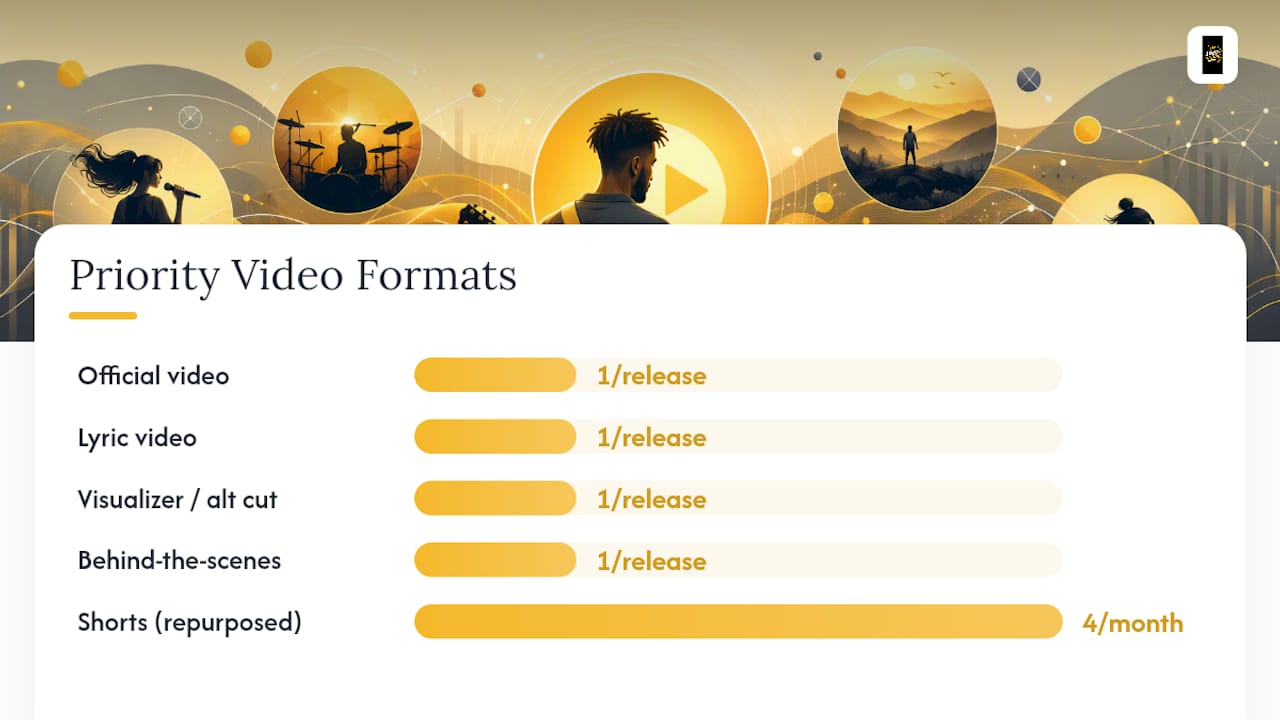
Your official music video still carries the most weight for storytelling, brand building, and monetization, but it can't carry the whole promotional load by itself. Independent artist guides consistently recommend pairing the official video with lyric videos, visualizers, and performance clips, each serving a different search intent and a different type of listener.
A practical release calendar looks like this:
- Two to three weeks out: post a teaser Short built from a rough cut or studio clip to start building anticipation.
- Release day: launch the official video as a Premiere alongside a matching Short and, ideally, a lyric video.
- Days two through seven: publish a visualizer or alternate cut, plus behind-the-scenes footage from the same session.
- Weeks two through four: repurpose leftover footage into two or three additional Shorts to keep the release visible in feeds.
Cadence depends on your resources. A Shorts-heavy approach (four to five per week) suits artists without video budgets, since a single phone camera and a studio session can generate weeks of content. A long-form-heavy approach fits artists who invest in one strong video per release and batch-edit b-roll into supporting Shorts afterward.
Pro Tip: Film ten to fifteen minutes of extra footage during any studio or rehearsal session specifically for Shorts. That single session can fund a month of posting if you edit in small batches rather than scrambling weekly.
Quick content ideas that scale from one session: a 15 second hook clip, a slowed-down acoustic snippet, a lyric reveal caption over the same clip, a "reaction to hearing it back" clip, and a behind-the-scenes voiceover explaining the writing process.
What Should Your Release-Day Checklist Include?
YouTube's own release-day guidance centers on a multi-format release and a coordinated Premiere, because posting several formats at once gives YouTube's recommendation system more paths to surface your song to different audiences. A Premiere also concentrates viewers into a live chat window, and concentrated engagement in a short window sends a stronger signal than the same views trickling in over days.
Run through this checklist before your release goes live:
- Set the official video as your channel's featured video the morning of release.
- Schedule the Premiere at least 24 hours ahead so YouTube can build a waiting-room audience.
- Set up Live Redirect so viewers land straight in your live chat once the Premiere ends.
- Draft a pinned comment with a smart link to streaming platforms and your Loca-Nation profile, ready to post the moment the Premiere starts.
- Update your channel banner and pin the new release playlist before the countdown begins.
- Assign a moderator or trusted fan to keep chat active and answer early comments while you're focused on engaging viewers.
A workable release-day timeline: post the teaser Short at 8 a.m., open the Premiere waiting room by noon, go live at 6 p.m. when your audience is most active, and follow up with a "thank you" community post and a fresh Short within two hours of the Premiere ending. Coordinate that same 6 p.m. window across Instagram and TikTok so your traffic arrives simultaneously rather than staggered across the day.
How Should You Use YouTube Shorts to Grow Your Channel?
Shorts function as the front door to your channel, not a side project. YouTube for Artists is direct about this: what someone watches in Shorts shapes what YouTube recommends them next, including your long-form videos, which makes Shorts the cheapest discovery tool available to an unsigned artist.
Build each Short around three fixed elements:
- An 8 to 15 second hook that leads with the most memorable moment of the song, not the intro.
- Burned-in captions and vertical framing, since most viewers watch with sound off before they decide to turn it on.
- A clear next step, whether that's a caption pointing to "full video on my channel" or a pinned comment linking your playlist.
Where possible, release your song as an Official Sound so other creators can use it in their own Shorts. Every remix or duet using your sound adds a data point YouTube reads as demand, and it costs you nothing beyond releasing the track properly through your distributor.
Aim for three to five Shorts a week during an active release cycle, dropping to one or two during quieter stretches. Reaction-style Shorts, where you respond to a fan comment or a stat about the song's performance, tend to outperform polished promotional clips because they read as unscripted.
Pro Tip: End every Short with the same visual cue, a color flash, a logo sting, whatever fits your brand, so returning viewers recognize your content in the feed before they even read the caption.
How Do You Optimize Titles, Tags, and Thumbnails for Music Videos?
Discovery lives or dies on three elements: the title, the thumbnail, and the description's first two lines. Channel optimization guidance from YouTube for Artists is specific here: lead titles with artist name plus song title, then add a content descriptor only when it disambiguates a version, such as "(Official Music Video)" or "(Lyric Video)."
Structure your description with a two-line call to action above the fold, since that's all mobile viewers see before tapping "more." Below that, write at least 200 words covering writing and production credits, streaming links, and three relevant hashtags placed near the top rather than buried at the bottom.
Your thumbnail checklist:
- One clear focal subject, usually your face or a striking visual moment from the video.
- High contrast between subject and background so the thumbnail reads at a glance on mobile.
- Minimal text, at most three or four words, since anything longer becomes unreadable at thumbnail size.
- A consistent color palette across releases so returning viewers recognize your channel instantly.
- Test two versions against each other for major releases rather than guessing which works.
Retention matters just as much as the click. Independent promotion guides note that the first 15 seconds of any video decide whether a viewer sticks around, which is why the same hook discipline you use in Shorts belongs at the start of your long-form videos too. Chapters and timestamps in longer videos also lift session quality, since viewers who jump straight to the chorus via a chapter marker are less likely to bounce entirely.
How Do Collaborations and Community Building Help?
Collaborations extend your reach because they place your music in front of an audience that already trusts the creator you're working with. YouTube's own eligibility guidance around OACs points to a broader principle worth internalizing: success on the platform often comes from "algorithmic tying," building visible connections with similar artists and creator communities so YouTube's systems learn to group you together.
Practical ways to build those ties:
- Pitch guest features on tracks with artists in an adjacent genre and similar subscriber range.
- Offer creators a free stem or clip to use in their own Shorts, in exchange for a tag or credit.
- Co-host a livestream or Q&A with another independent artist to cross-pollinate both audiences.
- Reply to every meaningful comment on your videos within the first 48 hours, when engagement weight is highest.
- Feature standout fan covers or reaction videos in a community post or dedicated playlist.
When you grant a creator permission to use your track, keep it simple and in writing: a short message stating the specific clip, the platform, and that you grant a non-exclusive right to use it with credit is enough to protect both sides.
How Do YouTube Ads Fit Into a Music Promotion Budget?
You can launch a promotion two ways: tap Promote directly under an uploaded video, or build a campaign through YouTube Studio's Promotes tab, both of which require a linked Google Ads account to run.
The tactic worth prioritizing over raw view-buying is what's known as the playlist-first method. Instead of sending paid clicks straight to a single video, route them to a playlist you control, so the "Up Next" queue keeps playing your other tracks once the first one ends. That single decision can multiply watch time per paid click, since small-budget campaigns get more value optimizing for watch time per click than for raw impressions.
A workable approach:
- Run a small test campaign, $20 to $50, aimed at listeners of similar artists rather than broad genre targeting.
- Track cost per quality view (a view that passes 30 seconds) rather than total view count.
- Only scale spend on assets that already show strong organic retention, never on unproven uploads.
- Re-test targeting every two weeks rather than letting a stale campaign run on autopilot.
Geographic targeting matters for more than reach. RPM (revenue per thousand views) varies significantly by market, so a campaign aimed purely at low-cost impressions can generate views that contribute little to actual ad revenue once monetization kicks in.
Which YouTube Analytics Actually Matter for Musicians?
Four metrics tell you almost everything you need: impressions CTR (are your thumbnails earning clicks), average view duration (is your hook working), subscriber conversion rate (are viewers becoming fans), and returning viewer percentage (is your channel building loyalty rather than one-off traffic).
- If impressions CTR sits below 4%, your thumbnail or title is the problem, not your content.
- If average view duration drops sharply before the 30 second mark, rework your opening hook before anything else.
- Track Official Sound usage in Shorts as a leading indicator of organic demand building ahead of a release.
- Use subscriber conversion rate to decide whether a video type deserves more budget or more frequency.
Monetization runs through two main paths for musicians: AdSense revenue from standard ad placements once you clear YouTube Partner Program thresholds, and Art Track royalties tied to official audio uploads through a distributor. Content ID also matters here, since it flags unauthorized uses of your music and can route ad revenue from those uses back to you. Build a simple release dashboard tracking watch time, CTR, and click-throughs to streaming platforms so every release teaches you something for the next one.
How Does Loca-Nation Fit Into a YouTube Promotion Plan?
YouTube builds your audience; Loca-Nation gives that audience a place to prove itself competitively. As an independent chart platform built on genuine listener voting rather than industry connections or ad spend, it works as a free complement to everything above, not a replacement for it.
Three actions to run in parallel with your YouTube release: claim your artist profile and upload your track, direct YouTube viewers toward voting and streaming on Loca-Nation through your pinned comments and Shorts captions, and treat your chart position as an additional data point when pitching press or sync opportunities. Artists working through a specific niche can start with Genre Onboarding, explore placement opportunities through the Sync Catalogue, and build press momentum through the Press Centre once traction shows.
What Should Independent Artists Actually Prioritize First?
Most artists burn their limited time on tactics that feel productive but don't move the needle. Claim your OAC first, schedule a multi-format release second, and commit to a consistent Shorts cadence third. Everything else, paid ads, elaborate collaborations, custom merch tie-ins, can wait.
Hold off on paid ads until your organic content already proves itself. Spending on an unproven video just buys fast confirmation that it doesn't work. Hire outside help for editing or ad management only once your channel shows a repeatable pattern of what performs, since that's the point where extra hands multiply a working system instead of guessing at one that isn't there yet.
The mistake I see most often isn't laziness, it's sequencing. Artists jump to ads before they've validated a hook, or chase collaborations before their own channel has anything worth linking to.
— Jason
Turn YouTube Traction Into Chart Recognition With Loca-Nation
Loca-Nation gives your YouTube momentum somewhere to compound instead of evaporating after the release week ends. Every view, Short, and comment you're earning on YouTube can convert into votes and streams that push you up a genre or regional chart, all without spending a cent on placement or exposure.
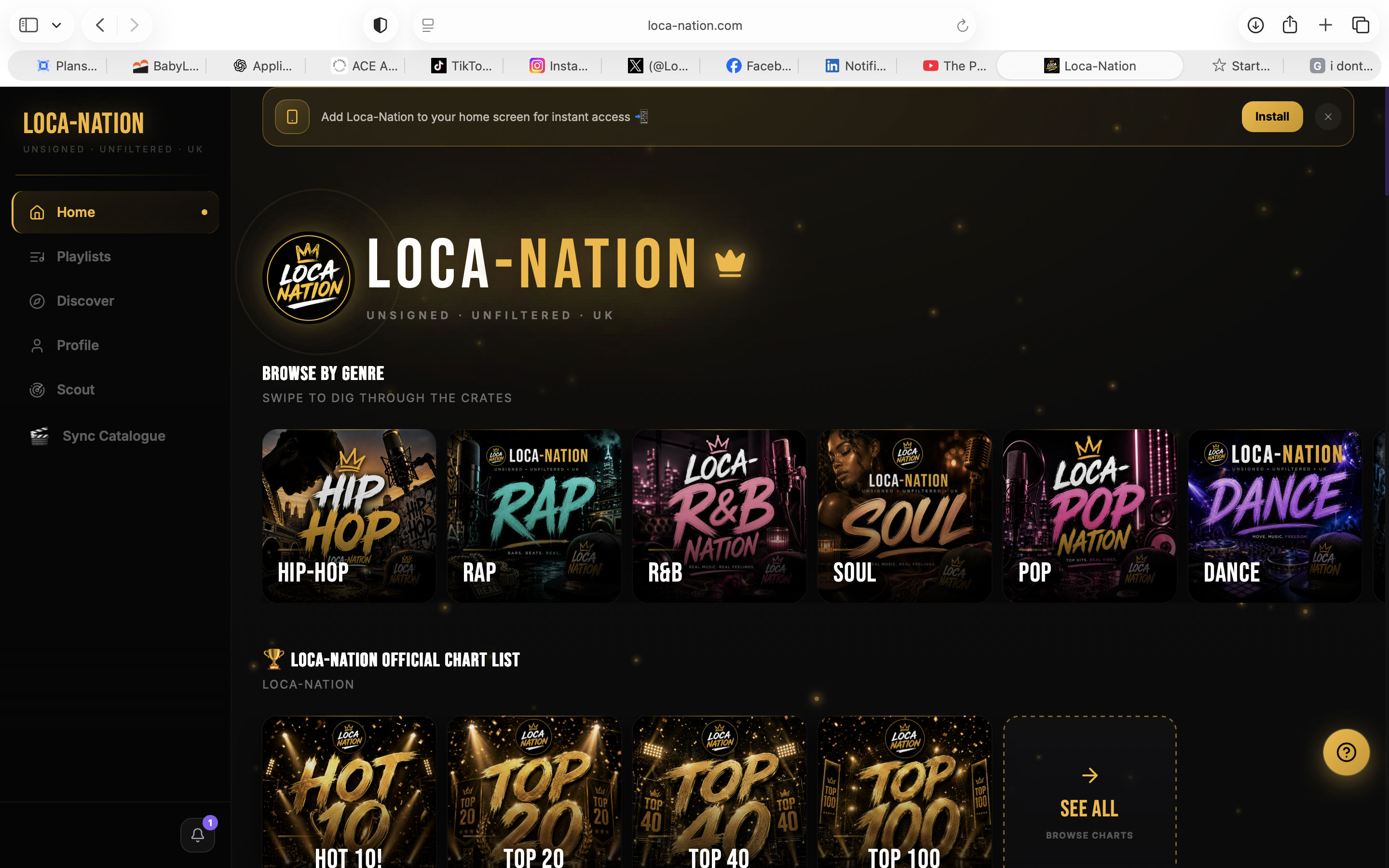
Start with Genre Onboarding to get your profile positioned in the right chart from day one, then point your release-day pinned comments and Shorts captions toward your Loca-Nation page alongside your streaming links. If sync placements are part of your goals, the Sync Catalogue puts your catalog in front of professionals actively looking for unsigned talent. For repurposing longer YouTube content into captions and lyric overlays, a browser tool like Youtube to Transcript speeds up pulling text straight from your existing videos.
Create your artist profile and upload your latest release on Loca-Nation today, and give your next YouTube drop a second place to build real, chart-verified momentum.
Sources
- YouTube Help: Introduction to Official Artist Channels (OAC)
- YouTube for Artists — Release day strategy
- YouTube music promotion (Dynamoi guide)