

A sync license lets a filmmaker, brand, or game studio pair your song with moving images, and almost every placement needs two separate permissions: one for the composition, one for the recording. If you write and record your own music, you can grant both. Your next move is simple: get sync-ready. That means clearing your rights, registering your songs with a Performing Rights Organization (PRO), and preparing clean files with full metadata before you pitch anyone.
Three quick wins move you from "hopeful" to "clearable" in a weekend:
- Register with PRS for Music or your local PRO so backend royalties have somewhere to land.
- Create an instrumental and a clean edit of your best tracks. Supervisors ask for both constantly.
- Write a split sheet for every song, listing writers, percentages, and contact details.
Speed decides who gets the placement. Music supervisors often work to 48-hour clearance windows, and a track that isn't ready to clear on day one is a track that gets passed over for one that is.
Key Takeaways
Sync licensing pays independent artists through upfront fees and backend PRO royalties, but only artists with clean rights and fast clearance capture both consistently.
| Point | Details |
|---|---|
| Two rights, always | Nearly every placement needs both a sync license (composition) and a master use license (recording). |
| One-stop is an advantage | Controlling both rights yourself speeds clearance and beats splitting negotiations across a publisher and label. |
| Backend royalties require PRO registration | Register with PRS for Music or your PRO before a placement airs, or you forfeit ongoing royalty income. |
| Metadata prevents missed opportunities | Complete ISRC, ISWC, splits, and mood tags stop your track from getting lost in supervisor searches. |
| Loca-Nation supports discovery and sync readiness | The Sync Catalogue and Genre Onboarding help artists package tracks and submit directly into the pool industry professionals browse. |
Table of Contents
- What Is Sync Licensing and How Does It Differ From Master Use?
- How Does Sync Licensing Pay: Fees and Royalties Explained
- What Should Be in Your Sync-Ready Catalog Checklist?
- Where Do Independent Artists Find Sync Opportunities?
- What Contract Terms Actually Protect Your Sync Income?
- Why Do Clearance Speed and Preparation Win Placements?
- How Loca-Nation Helps Artists Get Sync-Ready and Discovered
- What Legal Risks Threaten Your Sync Income?
- How Should You Manage Taxes on Sync Licensing Income?
- A Practical Approach to Sync Licensing for Artists
- Get Your Music Sync-Ready on Loca-Nation
- Sources
What Is Sync Licensing and How Does It Differ From Master Use?
Sync licensing covers the composition, the underlying song as written, words and melody, independent of any particular recording. A master use license covers the actual audio recording, the specific performance captured in the studio. Use a cover version of a song in a commercial, and you need a sync license from the songwriter's publisher plus a master use license from whoever owns that specific recording, even though neither party wrote the melody the other person owns.
Here's where it gets useful for you as an independent artist: if you wrote the song and recorded it yourself, you hold both rights. That's called a one-stop clearance, and it's a genuine competitive advantage. Independent artists who control both composition and master can offer one-stop clearance, which shortens negotiations dramatically because a music supervisor deals with one contact instead of chasing down a publisher and a label separately who may not even agree on price.
Compare that to licensing a famous recording. A supervisor who wants to use a well-known song from a major artist has to negotiate with the publisher for the sync side and the label for the master side, and both parties usually want separate fees, separate approvals, and separate paperwork. That process alone can take weeks. A non-one-stop deal with two unrelated rights holders is slower by nature, and slow kills sync deals more often than price does.
Two other pieces of the puzzle round out the picture:
- PRO registration. Registering your compositions with PRS for Music, ASCAP, BMI, or your national equivalent puts you in the system that tracks performances and pays you when your music airs.
- Cue sheets. Whoever licenses your music for broadcast files a cue sheet, a document listing every piece of music used in a show or film, the exact timing, and who owns it. Your PRO uses that cue sheet to calculate what it owes you.
Miss either step, and you can grant a perfect license and still never see the backend money it was supposed to generate.
How Does Sync Licensing Pay: Fees and Royalties Explained
Sync income arrives in two separate payments, and understanding both changes how you value a placement offer. The upfront sync fee is a one-time payment for the right to use your music in a specific production. The backend performance royalty is ongoing money paid every time that production airs, streams, or gets broadcast again, collected through your PRO.
Upfront fees vary enormously by placement type, and the gap between a micro-sync and a national commercial is not small.
| Placement Type | Typical Upfront Fee Range |
|---|---|
| Micro-sync (YouTube, indie web content) | a range from small micro-sync fees to mid-level licensing fees. |
| Regional or digital ad campaign | several thousand to tens of thousands of dollars for regional or digital ad campaigns. |
| Streaming TV series | several thousand to up to fifty thousand dollars for streaming TV series placements. |
| Major film or national commercial | a wide range from mid-five figures to half a million dollars or more for major films or national commercials. |
These figures shift based on usage length, exclusivity terms, and how prominently the music features, according to industry fee benchmarks. A 15-second music bed under dialogue pays far less than a needle-drop moment where your song is the emotional centerpiece of a scene, even on the same show.
The backend royalty is where patient artists win. Backend performance royalties can contribute materially to total sync earnings over time, and they're only collectible if you're registered with a PRO before the placement airs. A song that lands in a mid-tier cable show and reruns for three years can generate more from backend royalties than the original sync fee ever paid. This is the part new artists overlook. They chase the check on signing and forget the residual income tied to every future broadcast.
Pro Tip: Never treat the upfront fee as the whole deal. A smaller fee attached to a show with strong rerun potential can outperform a bigger one-time payment from a project that airs once and disappears.
Market growth backs up why this matters more now than five years ago. Streaming platforms, branded content, and game studios have multiplied the number of productions that need music, and budget-conscious productions increasingly look past major labels toward independent catalogs that are easy to clear and reasonably priced. That shift favors artists who show up prepared.
What Should Be in Your Sync-Ready Catalog Checklist?
Getting a music supervisor interested is only half the job. The other half is making sure that once they say yes, nothing slows the deal down. Incomplete paperwork kills more sync opportunities than bad music does.
Start with metadata. Every track you submit should carry:
- ISRC code (International Standard Recording Code), which identifies the specific recording.
- ISWC code (International Standard Musical Work Code), which identifies the underlying composition.
- Writer and publisher splits, spelled out by percentage, not left vague.
- Direct contact information for whoever handles licensing decisions.
- BPM, key, and mood tags, which help supervisors search and match your track to a scene faster.
That last point matters more than artists expect. Supervisors and library curators often search by mood and tempo before they search by genre, and a track with no tags simply doesn't surface in those searches. Incomplete metadata fields cause an estimated 25 to 30 percent of missed sync opportunities, which means a well-tagged average song can outperform a brilliant song nobody can find.
File formats and versions come next. Deliver a 24-bit WAV as your primary master, then build out the alternate versions supervisors ask for constantly:
- Full instrumental (no vocals at all)
- Stems (drums, bass, vocals, and instruments split into separate tracks)
- A cappella version, if vocals are strong enough to stand alone
- A clean edit with any profanity removed
Providing these alternates isn't busywork. A track with an instrumental and a clean edit fits far more briefs than one that only exists as the original mix, because alternate versions turn near-misses into placements when a scene needs dialogue space or a broadcast standard rules out explicit lyrics.
Split sheets and sample clearances round out the legal side. A split sheet lists every writer on a song and their exact percentage of ownership, signed by all parties.
Samples deserve their own warning. If your track includes a sample, clearing it for streaming does not clear it for sync. A sample cleared for one use does not automatically clear for another, and submitting a track with an uncleared sample can expose both you and the production to legal liability if it gets caught after the fact.
Pro Tip: Build a single shareable folder, a rights one-pager, for every track: metadata, splits, alternate versions, and a one-line usage history. When a supervisor asks "can you clear this by Friday," you send a link instead of scrambling for three days.

Where Do Independent Artists Find Sync Opportunities?
Four channels dominate how sync deals actually happen, and each one fits a different stage of your career and a different kind of song.
- Non-exclusive libraries. You upload tracks to a library's catalog, they stay non-exclusive so you can license the same song elsewhere too, and the library pitches on your behalf in exchange for a cut. This is a volume game. You won't land the biggest placements this way, but you'll get consistent smaller ones.
- Sync agents. An agent works a smaller, curated roster and pitches directly to supervisors for premium, higher-fee placements. Getting signed by one is harder than uploading to a library, but the payoff per placement tends to be significantly higher.
- Direct pitching to music supervisors. You research a specific show, film, or campaign and pitch your track straight to the person making decisions, no middleman.
- Platform submission pathways. Discovery and talent platforms let supervisors browse artist catalogs directly, matching tracks to briefs through search and curation rather than cold outreach.
Non-exclusive libraries work best for volume, while curated agent representation helps secure higher-profile placements, and most working sync artists use a hybrid of both rather than betting everything on one channel.
Direct pitching demands more discipline than the other three combined. When you find a supervisor brief, whether through a job board, a personal connection, or a network, read it twice before you send anything. A brief asking for "melancholic, minimal, female vocal, under 3 minutes" is not a brief you answer with your upbeat pop single, no matter how good that single is.
A few submission habits separate artists who get responses from artists who get ignored:
- Send one track per submission, your single best fit for that specific brief, never a batch of five "just in case."
- Include the metadata and split sheet in the same email, not as a follow-up after they ask.
- Keep your pitch note to three sentences: what the song is, why it fits, and where to hear it.
- Follow up once, after a week, and then let it go if you hear nothing back.
Supervisors juggle dozens of pitches per brief. The ones who reply are the ones who make saying yes effortless.
What Contract Terms Actually Protect Your Sync Income?
Every sync agreement hinges on five terms, and understanding what each one controls is the difference between a fair deal and one that quietly costs you money for years.
Term sets how long the license lasts. Territory defines where the production can air, one country, a region, or worldwide. Media specifies which platforms the license covers, broadcast TV, streaming, social, theatrical. Exclusivity determines whether you can license that same song to anyone else during the term. Reversion spells out what happens to the rights once the term ends, ideally returning fully to you.
Watch for a most-favored-nation (MFN) clause too. It guarantees you're paid the same rate as any other artist licensed for the same production, which protects you from being lowballed relative to peers in the same show or campaign.
A handful of red flags should make you pause before signing anything:
- A request to waive backend performance royalties entirely, not just delay them.
- Perpetual, worldwide exclusivity for a fee that only makes sense for a limited term.
- No stated payment routing or timeline, just a vague promise of "payment upon use."
- No reversion clause at all, meaning the rights never come back to you.
Negotiation tactics that actually work start with pricing by scope, not by guesswork. A 10-second background cue in one regional market is worth less than a 60-second theme used worldwide across broadcast and streaming, and your fee should reflect that gap. Step deals let you grant limited rights first, say festival use only, with an option for the production to expand territory or term later for an additional fee. That structure protects your upside without pricing yourself out of an indie production's tight budget.
Pro Tip: If a deal involves six figures, worldwide exclusivity, or unclear ownership on the other side, get an entertainment lawyer to review the contract before you sign. The fee is almost always smaller than the mistake it prevents.
Why Do Clearance Speed and Preparation Win Placements?
Music supervisors don't have the luxury of waiting on you. Deadlines frequently run to 48 hours, and a production moving that fast will drop a perfect song for an adequate one that's ready to go right now.
Being the fast option starts with consolidation. If you control both the composition and the master, say so immediately and put one email address on the table. A supervisor choosing between an artist who can confirm clearance today and a scenario requiring approval from a publisher and a separate label will pick the artist every time, all else being equal.
A few operational habits keep you ready when the clock starts:
- Have your split sheet, ISRC, and ISWC codes saved and ready to attach, not something you have to hunt down.
- Know your standard rate ranges in advance so you're not stalling on price during a tight window.
- Confirm any samples in the track are cleared for sync specifically, not just for streaming.
Cue sheets matter here too. Once your track airs, whoever licensed it files a cue sheet with the relevant PRO, and that document triggers your backend royalty payments. Distributors also increasingly require Errors and Omissions (E&O) insurance before airing licensed content, and E&O coverage typically depends on proof of full clearance. No clean paperwork, no insurance, no air date. Preparation isn't just about winning the pitch. It's what lets the placement actually happen once you've won it.
How Loca-Nation Helps Artists Get Sync-Ready and Discovered
Getting noticed and getting cleared are two different problems, and Loca-Nation's platform is built around solving the first one in a way that makes the second one easier too.
Every artist profile on Loca-Nation carries analytics tied to genuine listener engagement, chart performance by location and genre, and a track record supervisors can actually evaluate before reaching out. That matters because sync decisions increasingly favor artists who can demonstrate real audience traction, not just polish. Chart movement, vote counts, and regional standing all function as a form of social proof that a cold submission simply can't provide.
The platform's Sync Catalogue gives artists a direct submission pathway into the pool that industry professionals browse when sourcing tracks for placement. Genre Onboarding helps artists package their catalog so it surfaces correctly against the kind of briefs supervisors actually search for, tempo, mood, and genre alignment done right from the start rather than fixed after a missed opportunity.
A few features do the heaviest lifting for sync-readiness specifically:
- Public artist profiles that centralize your track record, so a supervisor doesn't have to piece together your credibility from scattered links.
- Chart-based discovery that surfaces artists based on listener engagement rather than industry connections or paid promotion.
- Direct visibility to labels, scouts, and industry professionals browsing for talent worth signing or placing.
The artists who win sync placements aren't always the most talented in the room. They're the ones whose paperwork, metadata, and rights documentation are ready before the supervisor even asks. Discovery gets you seen; readiness gets you paid.
What Legal Risks Threaten Your Sync Income?
Unauthorized use of your music is the most common legal threat you'll face once your catalog starts circulating, and the fix starts before a placement ever happens, not after.
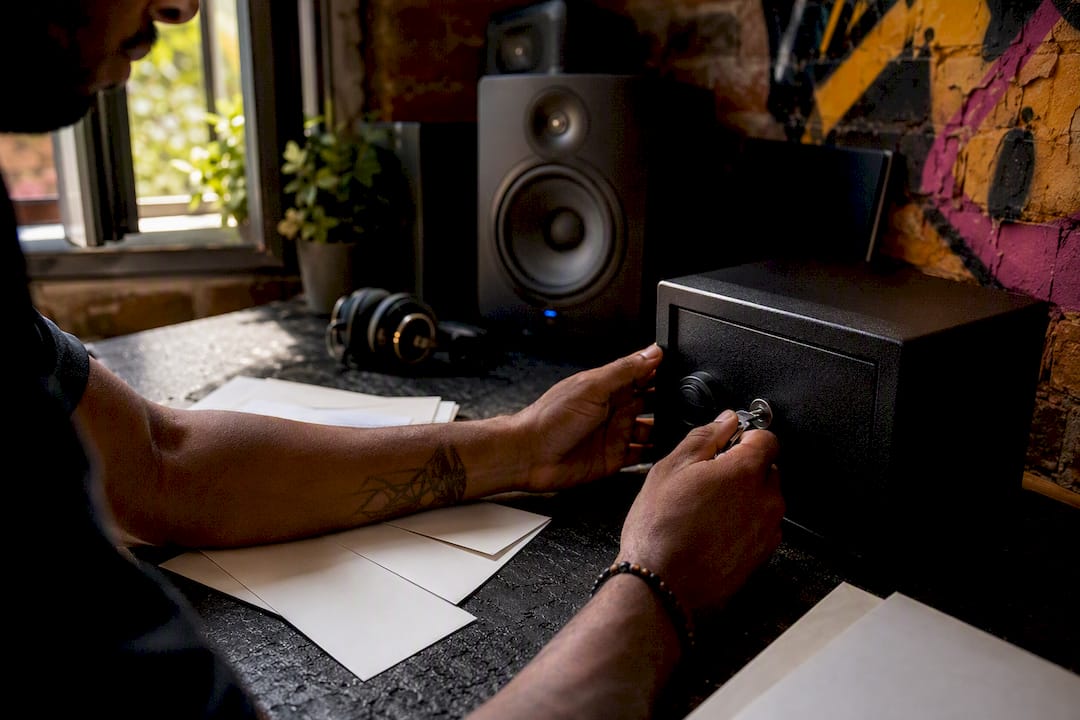
Register every composition with your PRO and consider registering recordings with a content identification system if you distribute through a service that offers one. That registration creates a documented ownership trail, which is your first line of defense if a production uses your track without a license. Keep dated proof of authorship too: session files, drafts, and correspondence with collaborators all help establish who created what and when, should a dispute ever arise.
Sample clearance deserves repeating here because it cuts both ways. If your track contains an uncleared sample, you're the one exposed to liability, not just the production licensing it from you. Document every clearance in writing and keep those documents with your split sheet.
Watch your contracts for scope creep too. A license granted for one commercial shouldn't quietly extend to a sequel campaign or a different territory without a new agreement and a new fee. Read renewal and option clauses carefully, since vague language here is often where artists lose value without noticing.
If you discover unauthorized use, document it immediately: dates, platforms, screenshots. A clear paper trail makes it far easier for a lawyer or your PRO to pursue payment or a takedown, and it shows any future licensing partner that you actively protect your catalog.
How Should You Manage Taxes on Sync Licensing Income?
Sync income counts as self-employment or business income in most cases, not casual earnings, and treating it that way from your first placement saves you a painful surprise later. Both the upfront sync fee and any backend performance royalties from your PRO are taxable income, reported separately if they arrive from different sources.
Keep a dedicated record of every sync-related payment, the production it came from, and the date received. Backend royalties often arrive months or even years after the original placement, sometimes from a PRO you registered with long before, and reconciling those payments against your original agreements gets difficult fast if you're not tracking them as they land.
Set aside a portion of every sync payment for tax obligations rather than treating the full amount as spendable income. Because sync money arrives irregularly, sometimes a large check, sometimes small quarterly royalty statements, it's easy to underestimate your total annual income until a tax bill catches up with you.
Deductible expenses tied to your sync work, studio time, mixing and mastering costs, agent commissions, and even a portion of your home studio setup, can offset that income if you track them properly throughout the year. A basic spreadsheet or dedicated bookkeeping software separating sync income from streaming and performance income gives you a clearer picture of what this revenue stream is actually worth to your business. An accountant familiar with creative or self-employment income is worth the cost once your sync earnings become a regular part of your income.
A Practical Approach to Sync Licensing for Artists
The conventional advice tells artists to write generic, mood-board music aimed squarely at supervisor briefs, chasing sync as a genre unto itself. That's not wrong, exactly, but it skips the part that actually determines whether you get paid: readiness. A brilliant song with no split sheet, no instrumental, and no PRO registration loses to a decent song that's ready to clear in an hour.
What gets underestimated is how much of sync success is administrative, not artistic. Metadata, splits, and alternate versions aren't paperwork you deal with after landing a deal. They're the reason you land it in the first place, especially against 48-hour deadlines where the artist who can say "yes, cleared, here's everything" simply wins by default.
Prioritize in this order: register with your PRO first, build your split sheets second, and only then start pitching. Authenticity still matters to supervisors, so don't abandon your sound chasing briefs. Just make sure the sound you already have is one anyone can license without friction.
— Jason
Get Your Music Sync-Ready on Loca-Nation
Most artists trying to break into sync face a scattered process: register here, build a profile there, hunt for submission emails somewhere else, with no single place tying discovery and licensing readiness together. Loca-Nation's Genre Onboarding fixes the packaging problem by helping you tag and position your catalog so it actually matches what supervisors search for, while the Sync Catalogue gives your finished tracks a direct pathway into the pool industry professionals browse.
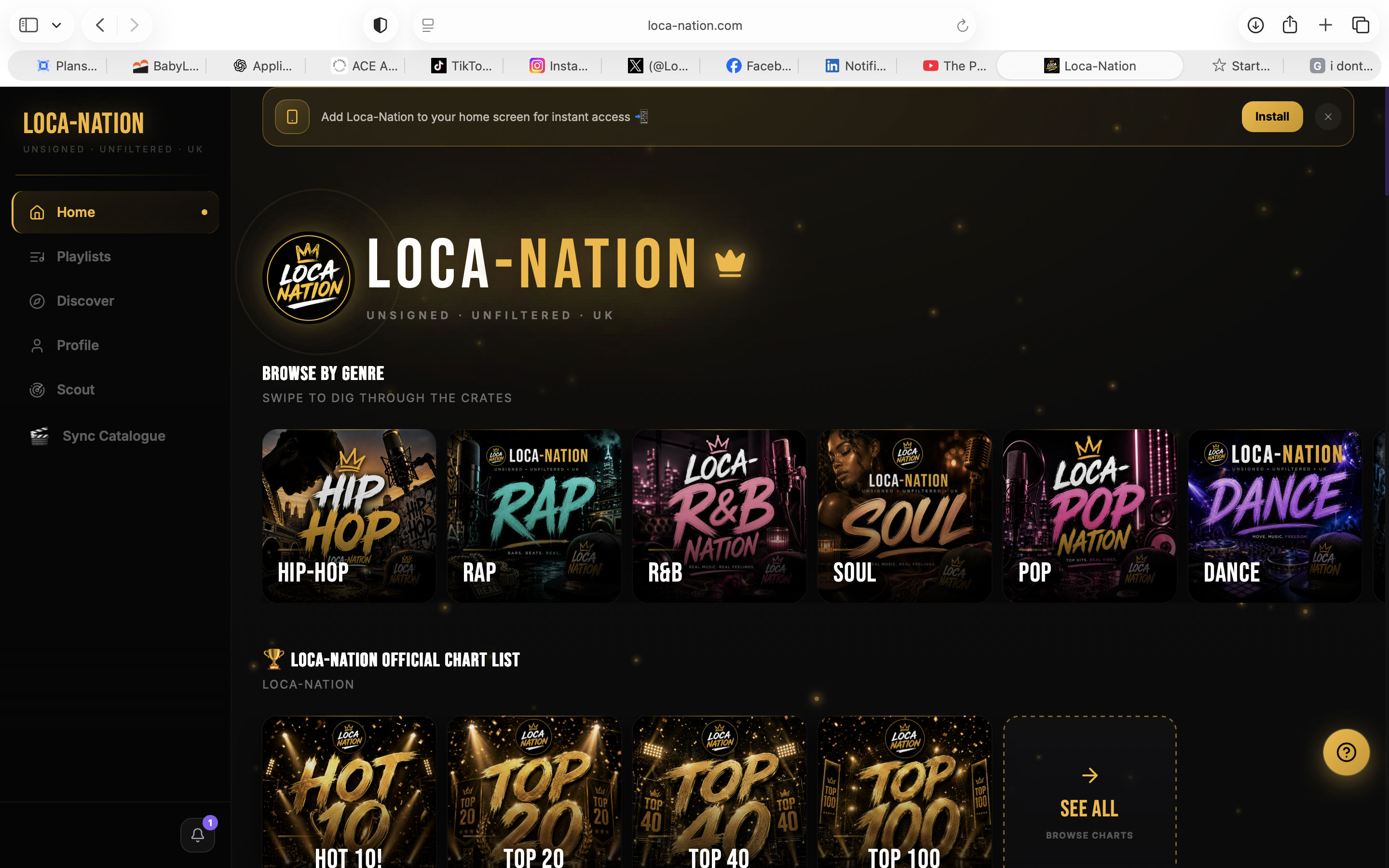
Getting started takes four steps: sign up and build your artist profile, upload your tracks with complete metadata, run through the sync-ready checklist above, splits, alternate versions, cleared samples, and then submit your best-fit tracks to the Sync Catalogue. Chart performance and listener engagement on your profile build the credibility that gets a submission a second look instead of a scroll past. Start with your strongest, most sync-friendly track and let your readiness do the rest.
Sources
Independent artists and writers covering sync licensing should anchor claims in sources that separate composition rights from master rights clearly and reflect current industry fee structures.
- Artist
- Music Sync Licensing in 2026: The Complete Guide — Gray Group International
- Sync Licensing for Independent Musicians: A Guide — Promise Legal