
The fastest way to give a station what it needs is a short, personalized pitch with a streaming reference plus a stable download link to a broadcast-ready radio edit. That's it. That's the whole first move.
Before you send anything, gather this minimum package:
- A radio edit in WAV or MP3, cleared of explicit content if the show requires it
- Complete metadata: ISRC code, exact release date, artist name matching your streaming profile
- A short bio (two to three sentences) and a working contact email
- A stable, non-expiring download link (never a login-gated or time-limited one)
Send it to the station's official submission form or the music department's direct email, not a generic "info@" inbox. Community and specialist shows usually list a named presenter contact. Find it, and use it.
Key Takeaways
Getting radio airplay depends on a broadcast-ready file, a targeted station list, personalized outreach timed four to six weeks pre-release, and disciplined follow-up.
| Point | Details |
|---|---|
| Send a complete package | Radio edit, metadata, EPK, and a stable download link tested on multiple devices. |
| Target smart, not wide | Prioritize community, college, and specialist shows over big commercial stations first. |
| Time your outreach | Start four to six weeks before release and follow up once after 7 to 10 days. |
| Register for royalties | Sign up with a performing rights organization before spins start counting toward income. |
| Build audience proof first | Use Loca-Nation's free chart platform to generate listener engagement data before pitching stations. |
Table of Contents
- How to Prepare Your Music Submission for Radio
- Which Radio Stations Should You Target First?
- What Goes Into a Radio-Ready Submission Package
- When and How to Follow Up After Submitting
- How Do You Track Airplay and Collect Royalties?
- What I've Learned Pitching Independent Radio
- Build the Audience Evidence Radio Programmers Respect
- Sources
How to Prepare Your Music Submission for Radio
Programmers reject tracks for boring reasons: bad files, missing metadata, dead links. Fix those first.

A radio edit strips profanity, trims intros longer than 15 seconds, and generally lands under four minutes. If your track runs long or has a curse word in the hook, cut a clean version before you pitch anyone. Check your loudness too. Overly hot masters clip on broadcast chains and get flagged.
To prepare a submission that clears technical review:
- Export a radio edit as WAV (preferred) or high-quality MP3, no lower than 320kbps
- Confirm the ISRC code and release date match what's registered with your distributor
- Name the file clearly:
ArtistName_TrackTitle_RadioEdit.wav - Host it on a stable link (Dropbox, Google Drive) rather than an expiring transfer service
- Build a one-page EPK: bio, press photo, release date, comparable artists, contact info
Digital delivery with permanent links is now the industry standard, since most stations no longer accept physical CDs at all.
Pro Tip: Test your download link from a different device before you hit send. A link that works on your laptop but fails on a station intern's phone is the most common reason tracks get ignored.
Which Radio Stations Should You Target First?
Not every station is worth your time yet, and that's fine. Independent artists get the warmest reception at community, college, and internet radio, since those outlets are built around discovering new music rather than protecting a locked playlist.
Before you send a single email, spend a week listening:
- Tune into two or three shows on your shortlist and note what they actually play
- Check whether your genre and energy fit the show's existing rotation
- Find the specific submission channel (form, email, or presenter DM) rather than guessing
- Record station name, contact, submission method, and any stated preferences in one place
Independent and community stations tend to be far more receptive than commercial outlets, which run on rigid formats and slower decision cycles. A specialist show that regularly features unsigned artists in your genre beats a big commercial station with a three-month backlog, every time.
Build a list of 10 to 15 stations you've actually researched instead of blasting 200 cold emails. Quality targeting gets replies. Mass blasts get deleted.

What Goes Into a Radio-Ready Submission Package
Once you know who you're pitching, assemble a package that takes a programmer under two minutes to evaluate. Here's exactly what to include and how to name it:
- Radio edit —
ArtistName_TrackTitle_RadioEdit.wav - Clean/explicit variant (if applicable) —
ArtistName_TrackTitle_Clean.wav - One-sheet/EPK PDF — bio, photo, release date, comparable artists
- Streaming link — Spotify or SoundCloud reference track
- Stable download link — tested on desktop and mobile
Keep the pitch email itself short:
- Subject line:
New Single for [Show Name]: [Track Title] by [Artist Name] - One paragraph: who you are, what the track sounds like, why it fits their show
- Streaming link and download link, clearly labeled
- Contact info and release date
If your track includes a cover song, confirm mechanical licensing before you pitch it. Stations can decline submissions with unresolved rights questions, and it's not worth the delay.
Stations consistently favor concise, well-organized submissions that include a streaming reference, download link, short bio, and clear contact details. Vague or overloaded folders slow everything down.
Only send the versions a station will actually use. One primary radio edit plus a clearly labeled clean variant is enough. Five different mixes with unclear names is the fastest way to get skipped over, because a program director isn't going to open six files to figure out which one to play.
Clean metadata matters beyond first impressions, too. When your ISRC and release date match what's registered with your distributor, any airplay you earn gets tracked and reported correctly, which directly affects whether you get paid for it.
When and How to Follow Up After Submitting
Timing makes or breaks a radio campaign. Start outreach four to six weeks before release, since that gives programmers time to actually review and slot your track instead of scrambling at the last minute.
A few rules that separate artists who get responses from artists who get ignored:
- Address the actual host or music director by name, never "Dear Radio Team"
- Mention one specific reason the track fits their show, not a generic pitch
- Start with your local and specialist targets before expanding to bigger outlets
- Keep a simple spreadsheet tracking who you contacted, when, and their response
Follow up exactly once, seven to ten days after your first email. Programmers deal with heavy submission volume and repeated nagging reads as desperation, not persistence.
If you've built solid streaming numbers but still can't get traction after several campaigns, a radio plugger can be worth the cost. Pluggers have existing relationships with program directors and can get a foot in the door faster than a cold email ever will. That said, they're rarely cheap, so weigh the fee against your existing momentum before hiring one.
Pro Tip: Personalized pitches that name the show and explain the fit consistently outperform mass emails, even when the mass email goes to triple the stations.
How Do You Track Airplay and Collect Royalties?
Getting played is only half the job. Register with a performing rights organization, such as PRS in the UK, before you start campaigning, so any spins you earn actually convert into royalty payments.
Once you're registered:
- Use airplay monitoring tools or ask stations directly for confirmed spin dates
- Watch for streaming bumps that line up with a broadcast, that's your proof it worked
- Thank the station and share the broadcast on your own channels
- Save confirmed airplay as evidence for your next round of pitches to bigger outlets
Tracking airplay and registering for royalties turns a one time spin into both income and leverage. A confirmed play at one station becomes proof of concept for the next.
What I've Learned Pitching Independent Radio
Every artist wants the big commercial station first. That's backwards. The community and specialist shows are where you actually build a track record, and they're far more likely to say yes to an unknown name with a solid submission.
The pattern I keep seeing: artists who treat their first few stations as a testing ground, not a lottery ticket, end up with better material for their next pitch. A confirmed spin from a specialist show is worth more in a follow up email than a perfect mix nobody's heard.
This is exactly the gap Loca-Nation's genre onboarding fills before you ever email a program director. It's an official chart platform for unsigned and independent artists, built on genuine listener engagement rather than industry connections. Artists also get analytics and sync licensing opportunities that translate directly into pitch material: chart position, listener numbers, engagement data. That's evidence a program director can actually weigh.
— Jason
Build the Audience Evidence Radio Programmers Respect
Every point above assumes you already have something to show a program director beyond a good track. That's the piece most independent artists skip, and it's the one that gets you past the first email.
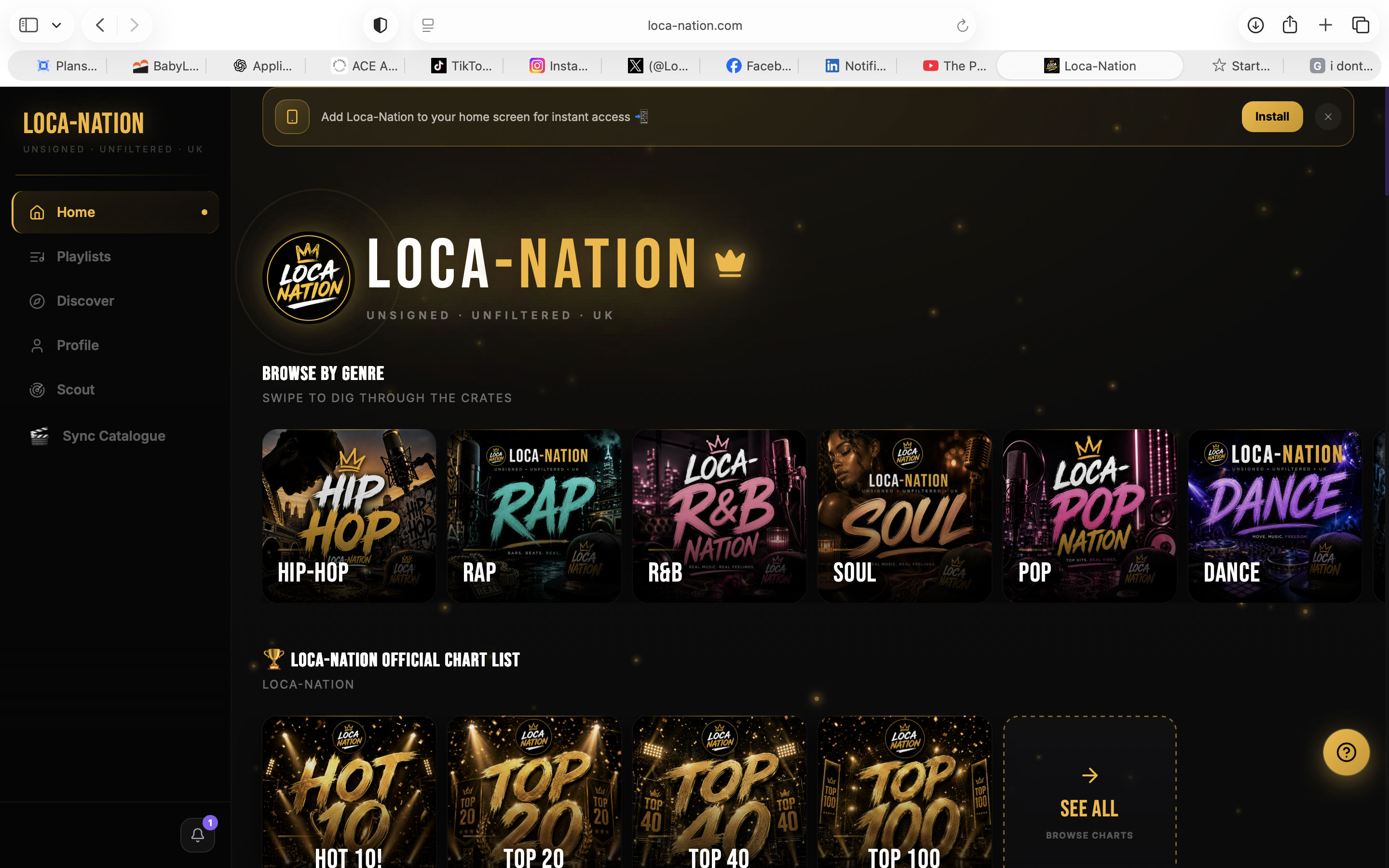
Loca-Nation gives you a free way to build that evidence before you ever pitch a station. Upload your music, compete on the chart by genre and location, and let real listener votes generate the kind of engagement data a "streaming numbers" line in your EPK can't fake. Unlike a paid plugger or a submission blast service, there's no fee to start and no algorithm deciding who gets seen. Chart position comes from actual listeners choosing your track.
Once you have a chart position or listener numbers worth mentioning, that becomes a line in your next radio pitch. It's also worth pairing with the Press Centre resources if you need help building out your one-sheet. Head to Genre Onboarding to create your profile and enter your first chart competition today.
Sources
- Fbi
- Radio Airplay: How to Get Radio Plays & Have Your Songs Heard
- Radio Promotion 2025: How to Get Your Music on Air
- The Modern Guide to Getting Your Music Played on Radio