

A pre-save campaign converts fan interest into guaranteed day-one listens by letting supporters authorize an upcoming release to auto-add to their library the moment it goes live. The single best immediate action: pick a smart link that supports Spotify Countdown Pages and email capture. Then open the campaign 3–4 weeks before release.
Three tool categories to start with:
-
Spotify Countdown Pages or a distributor landing page (DistroKid HyperFollow): the cleanest listener experience, highest conversion, and no extra cost for users already on those platforms.
-
A third-party smart link (Feature.fm, Linkfire, ToneDen, Hypeddit, or Presave.io): adds email capture, multi-platform support, custom branding, and ad pixel integration when you need them.
-
Loca-nation Genre Onboarding: the publisher layer that sits alongside your pre-save link, feeding chart exposure, editorial alignment, and industry discovery signals that a smart link alone cannot provide.
Key Takeaways
A pre-save campaign works best when it opens 3–4 weeks before release, captures emails, and treats the pre-save count as a data asset rather than a vanity metric.
| Point | Details |
|---|---|
| Open the campaign early | Launch your pre-save link 3–4 weeks before release to allow enough time to build momentum across channels. |
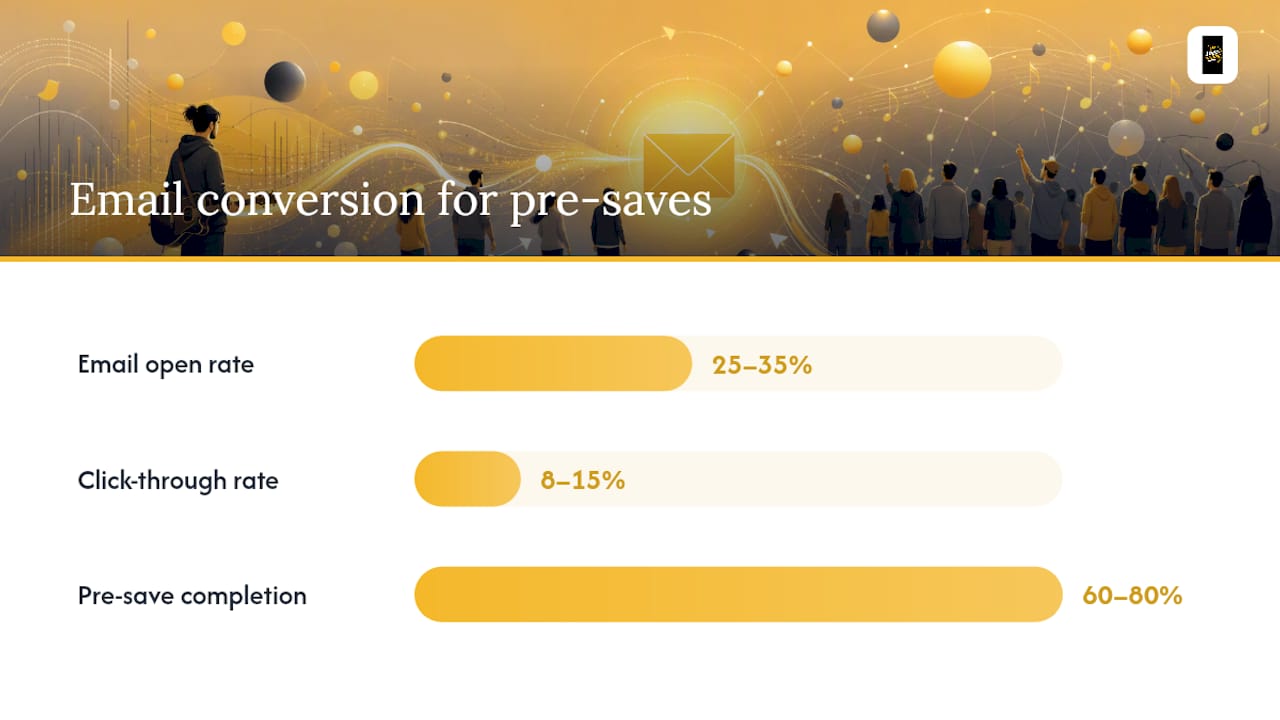
| Email converts best | Email open rates of 25–35% and 60–80% completion among clickers make it the highest-converting owned channel. |
| First-week streams are the signal | Pre-saves concentrate early engagement into the window Spotify’s algorithm watches most closely for playlist consideration. |
| Never buy pre-saves | Fake engagement is detectable by platforms and risks editorial exclusion; real pre-savers who stream the track are the only ones that count. |
| Loca-nation extends the campaign | Genre Onboarding, chart competition, and sync catalogue tools convert pre-save momentum into lasting discovery and industry visibility. |
Table of Contents
Which pre-save platforms should you use?
The table below compares all eleven options across the dimensions that matter most for an independent artist running a pre release campaign.
Loca-nation is not a direct replacement for a smart link. It is the amplification layer that runs alongside one. Use it to feed your release into a structured chart competition, gain editorial placement, and put your music in front of labels and sync scouts. No other tool on this list does that.
Presave.io suits artists who want a dedicated pre-save landing page with multi-platform support and are comfortable paying for email capture features.
Show.co was one of the first platforms to offer free pre-saves for indie artists and still works well for straightforward campaigns with basic email list integration.
ToneDen is the strongest choice if you are running paid social ads alongside your music pre save. Its ad-friendly smart links and Meta/TikTok pixel integration let you retarget anyone who clicked but did not convert.
Hypeddit is popular in electronic and DJ communities for a reason: the setup takes minutes, the giveaway mechanic drives pre-saves efficiently, and the free tier is genuinely usable.
Feature.fm steps up when you need detailed conversion analytics and retargeting for a paid campaign. It is the tool labels and more established indie acts tend to reach for.
Linkfire is enterprise-grade. The reporting is thorough, the branding options are polished, and it supports pre-save campaigns across every major platform. The price reflects that.
Groover sits in a different lane. Its core value is direct curator and playlist pitching, which makes it a useful companion to a pre-save campaign rather than the pre-save tool itself. See Groover’s Spotify pre-save guidance for how they frame the two together.
Soundplate Clicks and SmartURL are both lightweight options for artists who need a shareable link fast and do not require advanced analytics.
DistroKid HyperFollow is the obvious default for anyone already distributing through DistroKid. It is free, it works, and it requires no additional account setup.
Pro Tip: Email capture and Countdown Page support are the two features worth paying for. Email converts better than any social channel, and Countdown Pages deliver the smoothest listener experience with the highest follow-through rate.
How does a pre-save actually work?
A pre-save grants a streaming platform permission to automatically add an unreleased track or album to a user’s library the moment it goes live. The fan does not need to remember to save it on release day.
Three technical paths exist:
-
Spotify Countdown Pages: the native, official route. Spotify generates a page that shows a countdown timer and a single “Pre-Save” button. The fan authorizes via their Spotify account (OAuth), Spotify stores the token, and at release time the track is added automatically. Countdown Pages also frequently trigger push notifications, which is a meaningful conversion advantage.
-
Third-party smart links (Feature.fm, ToneDen, Linkfire, Presave.io, etc.): these use the Spotify API to replicate the authorization flow while adding email capture, multi-platform support, and custom branding. The fan experience is similar but the data goes to the artist, not just Spotify.
-
Distributor landing pages (DistroKid HyperFollow): built into the distributor’s ecosystem. Free for existing users, minimal setup, but limited customization and data capture.
The release-day flow in plain terms: a fan clicks your pre-save link, authorizes their account, and the platform stores an access token. When your release goes live, the platform uses that token to add the track to their library and, where eligible, sends a push notification. The pre-save itself does not count as a stream. What it does is put the track in the right place so the fan is far more likely to press play.
Tracks with strong first-week performance are more likely to be picked up by Spotify’s algorithmic playlists because the algorithm reads concentrated early saves and streams as a signal of genuine demand. Pre-saves compress that engagement into the critical first 24–48 hours.
Statistic callout: Countdown Pages and distributor HyperFollow pages consistently deliver the highest conversion rates because the listener experience is frictionless. Third-party smart links add value through email capture and multi-platform reach, not through a better authorization flow.
How to set up your pre-save link step by step
Upload and schedule your release with your distributor first. Distributors generally recommend scheduling at least 2–4 weeks in advance; for a real pre-save campaign, 3–4 weeks of active promotion is the practical target.
-
Get your Spotify URI and ISRC. Your distributor provides both once the release is scheduled. You need the URI to create a Countdown Page or configure a third-party smart link.
-
Choose your tool. Countdown Page if your distributor supports it and you do not need email capture. Third-party smart link (Feature.fm, ToneDen, Presave.io, Hypeddit) if you want email capture, custom branding, or multi-platform support.
-
Enable email capture. This is the most valuable data asset the campaign produces. Make sure the opt-in language is clear and GDPR-compliant.
-
Customize branding. Add artwork, release date, and a short description. A recognizable page converts better than a generic one.
-
Install tracking pixels and UTM parameters. Add your Meta Pixel and/or TikTok Pixel if you plan to run ads. Set UTM parameters on every link so you can attribute traffic sources in Google Analytics or your smart link’s dashboard.
-
Test the full authorization flow. Click through on both desktop and mobile. Confirm the track appears in your library after authorizing. A broken flow on launch day is a silent conversion killer.
-
Verify Countdown Page eligibility. Not all releases qualify. Check with your distributor that the release date and catalog setup meet Spotify’s requirements.
Before you go live, run through this checklist:
-
Mobile display looks correct and the CTA is visible without scrolling
-
Privacy policy link is present on the page
-
Release date is clearly shown
-
One clear call to action only (no competing links)
-
Email opt-in consent language is explicit
On costs: Countdown Pages and DistroKid HyperFollow are free. Most third-party tools offer a free tier that covers basic pre-save functionality. Email capture, advanced analytics, and retargeting integrations typically sit behind a paid plan. Feature.fm and Linkfire are paid-first; ToneDen, Hypeddit, Show.co, and Presave.io all have usable free tiers.
Pro Tip: Use a consistent UTM source tag across every channel (e.g., utm_source=email, utm_source=instagram) from day one. It takes two minutes to set up and saves hours of guesswork when you are trying to figure out which channel actually drove pre-saves.
How to structure a 4–6 week pre-save campaign
Treat the pre-save link as infrastructure, not a post. A coordinated pre-save campaign runs across owned, earned, paid, and PR channels with a clear weekly cadence.
| Week | Activity |
|---|---|
| Week 1 | Announce the release. Share artwork and release date. Soft-launch the pre-save link to your email list first. |
| Week 2 | Open pre-save to all channels. Post across socials. Send a dedicated email with a single CTA. |
| Week 3 | Escalate. Collaborator posts, playlist submission pitches, first paid social test with a small budget. |
| Week 4 | Final countdown content. Countdown timer posts, behind-the-scenes clips, urgency-driven email reminder. |
| Week 5–6 (if applicable) | Sustain with new content angles. Fan reposts, lyric reveals, live Q&A. Increase paid spend if organic is converting. |
Tier 1: Owned channels are your email list and social profiles. Email is the highest-converting channel for pre-saves. According to music.co.uk’s deep-dive, typical email open rates run 25–35%, click-through rates 8–15%, and roughly 60–80% of people who click complete the pre-save. A list of 500 engaged subscribers can realistically produce 25–60 pre-saves from a single send.
For practical guidance on improving email conversion and sequencing your sends, this email marketing playbook covers automation and timing in useful detail.
Tier 2: Amplification means collaborators, featured artists, and playlist curators. A single repost from a collaborator with a similar audience can double your pre-save count in a day.
Tier 3: Paid includes Meta and TikTok ads. Keep the budget small until organic engagement proves the creative works. Cold paid traffic to a pre-save link converts poorly without strong creative and tight targeting.

Tier 4: PR covers blog features, playlist pitching, and editorial outreach. Start pitching at the same time you open the pre-save, not the week before release.
Content formats that convert across channels: countdown timer graphics, short-form video previews (15–30 seconds), lyric snippets, behind-the-scenes studio clips, and direct “save this before Friday” posts with the link in bio.
Pro Tip: Run paid spend only after you have organic proof. Once you see which post format is driving clicks, put budget behind that exact creative. Use lookalike audiences built from your email list or engaged followers for the tightest targeting.
What should you measure, and how do you handle attribution?
Primary measurement is total pre-save count plus first-week streams. Prioritize first-party sources over ad platform attribution.
Key metrics to track:
-
Pre-save count: total authorizations by release day
-
Link CTR: clicks divided by impressions across each channel
-
Email capture rate: percentage of pre-savers who also opt in to your list
-
Conversion rate: clicks to completed pre-saves (click-to-save)
-
First-week streams: the real algorithmic signal
-
Save-to-stream follow-through: how many pre-savers actually played the track
Measure pre-save count daily from the moment the link goes live. Pull first-week streams from Spotify for Artists on day 8. Compare email captures against your pre-save total to gauge list growth efficiency.
Post-iOS privacy changes mean ad platform attribution routinely undercounts real conversions. The practical fix: track total pre-save volume in your smart link dashboard, compare it against ad spend, and use server-side conversion events where your tool supports them. First-party signals from your email list and Spotify for Artists are more reliable than any ad platform report.
Measurement callout: Never judge a pre-save campaign by ad platform attribution alone. Total pre-save count and first-week streams are the two numbers that tell you whether the campaign worked.
Measurement checklist for post-campaign reporting:
-
Total pre-saves vs. target
-
Email list growth from the campaign
-
Top traffic source by UTM tag
-
First-week streams vs. previous release
-
Save-to-stream follow-through rate
What are realistic pre-save numbers for indie artists?
For independent artists, realistic pre-save totals from a single campaign typically range from dozens to a few hundred, depending on audience size and how actively the campaign is promoted.
Practical conversion ranges by channel:
-
Email list (500 subscribers): 25–60 pre-saves per send, assuming a 25–35% open rate and 60–80% completion rate among clickers
-
Instagram (1,000–5,000 engaged followers): 10–80 pre-saves from organic posts, depending on post format and link placement
-
TikTok (active account with 2,000–10,000 followers): highly variable; a single video that gains traction can produce 50–200+ pre-saves in 48 hours
-
Collaborator repost (similar-sized audience): 20–100 additional pre-saves per collaborator
The algorithmic impact threshold is not a fixed number, but concentrated first-day saves and streams from genuine listeners is what moves the needle toward Release Radar and Discover Weekly consideration. Pre-saves do not guarantee playlist placement. They improve the conditions for it by compressing engagement into the window the algorithm watches most closely.
The long-term value compounds. Each campaign builds your email list, and each subsequent release starts with a larger owned audience. An artist who runs three disciplined campaigns typically sees meaningfully stronger day-one numbers on the third release than the first, even without growing their social following.
What mistakes kill a pre-save campaign, and what are the privacy rules?
The most common and costly errors:
-
Launching too late: opening a pre-save link less than two weeks before release gives you almost no time to build momentum. Three to four weeks is the minimum viable window.
-
No email capture: running a pre-save without collecting emails means the campaign produces zero lasting data asset. The email list is the point.
-
Buying pre-saves: platforms can detect fraudulent activity and it risks editorial exclusion or removal. Fake pre-savers do not stream the track when it drops, which means the algorithmic signal is negative, not neutral.
-
Weak or buried CTA: a pre-save link buried in a caption with five other links will not convert. One link, one action, one clear instruction.
-
No mobile test: most fans will click from a phone. A page that breaks on mobile loses the majority of potential pre-savers before they authorize.
Red flags when evaluating pre-save services:
-
Promises of guaranteed large pre-save numbers for a flat fee
-
No GDPR consent mechanism on the email capture form
-
No analytics or reporting at all
-
No clear data retention or deletion policy
Privacy checklist for email capture and pixel use:
Your pre-save page must include explicit opt-in consent for email marketing, separate from the Spotify authorization. Pixel tracking (Meta, TikTok) requires a cookie consent notice if you are targeting EU/UK audiences. Keep a record of when and how each subscriber consented. Use a tool that has a Data Processing Agreement (DPA) available, and check that your email platform stores data in a compliant jurisdiction. This is not legal advice; confirm current requirements with a qualified professional or your platform’s own compliance documentation.
Pro Tip: If a service promises 500 pre-saves for $20, walk away. Real pre-saves come from real fans who will actually stream the track. Fake numbers look good for a day and hurt you for months.
How Loca-Nation extends your pre-save campaign
A pre-save link drives day-one listens. Loca-Nation drives what comes after: chart position, editorial visibility, and industry discovery.
Use cases for sequencing Loca-Nation alongside a pre-save campaign:
-
Launch day: direct pre-savers to your Loca-Nation artist profile alongside the live track. Pre-savers who are already invested in the release are the most likely to vote and push the track up the chart.
-
Post-release: use Loca-Nation’s chart analytics alongside your Spotify for Artists data to identify which audiences are engaging most. Feed that insight into your next campaign’s targeting. Submit the track to the sync catalogue for licensing opportunities, and use the press centre for editorial pitching tied to chart momentum.
Sequence checklist:
-
Complete Genre Onboarding at least 2 weeks before release
-
Include your Loca-nation profile link in the pre-save page description
-
On release day, send a second email directing pre-savers to vote on the chart
-
At week 2 post-release, review chart analytics and identify top-engaging regions or genres
-
Submit to sync catalogue if the track has commercial or licensing potential
The combination of a pre-save campaign and Loca-nation chart activity creates two distinct data streams: streaming behavior from Spotify for Artists, and genuine listener engagement from chart votes. Together they give you a clearer picture of where your real audience is.
What do successful pre-save campaigns actually look like?
The most instructive examples from independent artists are not the viral outliers. They are the repeatable ones.
An electronic producer with a 600-person email list and 3,000 Instagram followers runs a four-week campaign for a new single. Week one: email announcement with a single pre-save CTA. Week two: three Instagram posts with countdown graphics and a Reels preview. Week three: a collaborating DJ reposts to their audience. Week four: a final email reminder 48 hours before release. No paid ads. No fake engagement. The compounding effect shows up on the next release, which starts with a larger list and a warmer audience.
A singer-songwriter with a smaller following (300 email subscribers, 1,200 Instagram followers) uses DistroKid HyperFollow because it is free and already connected to their distribution. The campaign is simpler: two emails, daily Instagram Stories with a swipe-up link, and one collaborator mention. Pre-saves land around 60. First-week streams are modest but concentrated, and the track appears in three listeners’ Release Radar feeds, which drives an additional 200 streams in the first two weeks.
The pattern across both: the pre-save link opens 3–4 weeks out, email is the first channel activated, and the campaign treats the pre-save count as a secondary metric to the email list growth and first-week stream concentration. Repeated campaigns compound into progressively stronger day-one numbers because each release builds the owned audience for the next.
When is a pre-save campaign actually worth running?
Run a pre-save campaign when you have an engaged audience or a clear plan to drive traffic to the link. Skip it for low-priority releases where you have no promotional capacity and no timeline to execute.
Decision checklist:
-
Do you have at least 200 email subscribers or 500 engaged social followers? If yes, a pre-save campaign will produce measurable results.
-
Do you have artwork, a release date, and distributor confirmation at least 4 weeks out? If no, wait until you do.
-
Can you commit to posting consistently for 3–4 weeks? A pre-save link with no promotion is just a link.
-
Is this a single, EP, or album? Singles warrant a focused 3–4 week campaign. EPs and albums justify a longer runway (5–6 weeks) and more content variety.
For singles, keep the campaign tight: one landing page, one email sequence, and a clear social cadence. For EPs and albums, you have more content to work with. Use individual track teasers, tracklist reveals, and pre-save incentives (exclusive content, early access) to sustain attention across a longer window.
The honest answer for very early-stage artists with under 100 followers and no email list: the pre-save mechanics still work, but the campaign will produce very few pre-saves. The more valuable use of that time is building the email list and social following so the next release has a real audience to activate.
Loca-Nation amplifies what your pre-save starts
Pre-save tools get your release into listeners’ libraries. Loca-Nation gets your music in front of the people who can move your career forward.
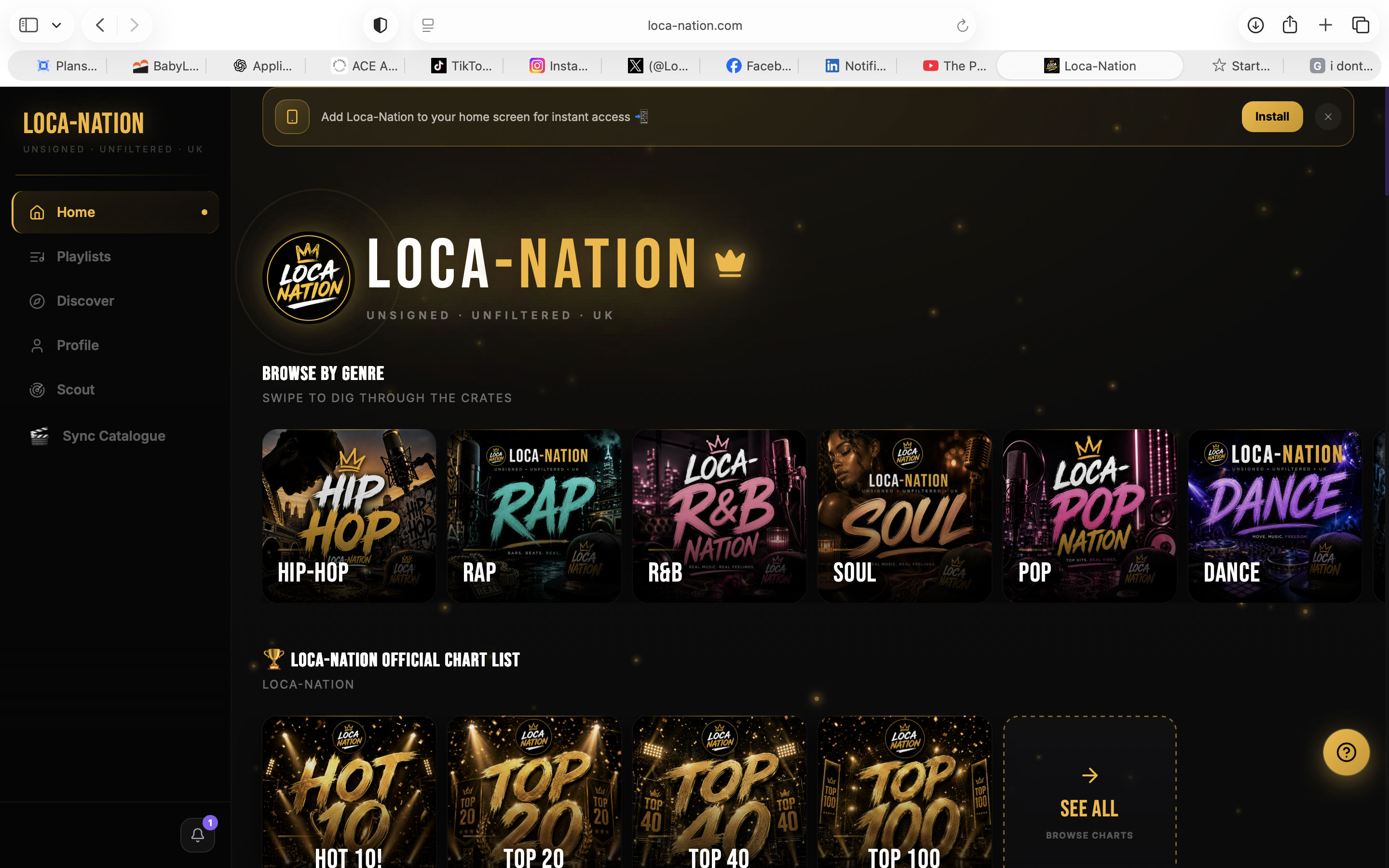
After your pre-save campaign closes and the release drops, the work is not over. Loca-nation’s independent chart gives your track a structured competition to enter, with chart positions earned by genuine listener engagement, not by budget. Genre Onboarding aligns your release with the right audience from the start, so the listeners you attract through your pre-save campaign are the same ones who will vote and engage on the chart. The sync catalogue opens licensing opportunities for tracks that gain traction, and the press centre connects chart momentum to editorial pitching. For older releases that still have an audience, Reactivate helps re-engage listeners and extend the campaign lifecycle. Start with Genre Onboarding before your next release goes live.
Sources
Start here when setting up your campaign:
-
How to Pre-Save on Spotify (2026): Countdown Pages, Links & Tips | MusicFab
-
Pre-Save Campaigns: Complete Setup and Promotion Guide for 2026 | Tools 4 Music Blog | Tools 4 Music
-
How to Build a Spotify Pre-Save Campaign That Actually Converts | Streaming Calculator
-
How to Run a Successful Pre-Save Campaign for Your Next Release - That Eric Alper
Which link to use first: if your distributor supports Countdown Pages, start there. If you need email capture or multi-platform support, go to your distributor’s HyperFollow page or a third-party smart link that supports email opt-in. Countdown Pages and HyperFollow are free; email capture and advanced analytics typically require a paid plan on third-party tools.