
Organic music promotion grows real listeners without paid ads. It rests on five pillars: streaming optimization, short-form social content, owned channels like email and your website, playlisting, and live or community engagement. Release singles regularly rather than dropping albums infrequently, since maintaining a steady cadence gives streaming algorithms repeated chances to notice you.
TL;DR:
- Consistently release singles every 6 to 8 weeks to maintain algorithmic visibility and give each track ample time to build momentum.
- Prioritize optimizing your artist profile, pitching playlists early, and producing engaging short-form social videos centered on strong storytelling.
- Focus on building your owned channels like a website and email list to convert casual listeners into loyal fans, rather than relying solely on social platforms.
- Use analytics to identify engagement patterns such as save rates and completion rates, then adjust your strategy accordingly for better results.
- Strengthen your organic growth by fostering community engagement through shows, collaborations, and storytelling that create lasting fan connections.
Table of Contents
- Your Organic Music Promotion Checklist For One Release
- How Do You Get Discovered On Streaming Platforms?
- What Social Content Actually Converts To Streams?
- Why Should Your Website And Email List Be The Hub?
- How Do Shows And Communities Multiply Your Reach?
- How Do You Pitch Curators Without Paying For Placement?
- How Do You Get Press And Radio Coverage For Free?
- Why Does A 6 To 8 Week Release Cadence Work?
- What Metrics Actually Tell You The Campaign Is Working?
- How Does Loca-Nation Fit Into An Organic Campaign?
- How Do You Build A Real Fan Community, Not Just Followers?
- Why Do Collaborations Multiply Your Organic Reach?
- How Do You Use Analytics To Adjust Your Strategy?
- How Does Storytelling Build A Lasting Independent Brand?
- A Long-Game Note On Organic Growth
- Try Loca-Nation's Genre Onboarding And Reactivate Tools
- Sources
Your Organic Music Promotion Checklist For One Release
Running an organic release comes down to sequencing. Miss the pitch window and even a great song stalls. Here's the order that works, broken into three phases.
Pre-release (4 to 6 weeks out):
- Finalize mixed and mastered audio, plus artwork and any lyric video assets.
- Build a pre-save landing page with smart links to every major DSP.
- Submit playlist pitches through Spotify for Artists and other DSP dashboards.
- Draft your press one-sheet and start warming up curator and blog contacts.
Release week:
- Post a rollout of short-form clips (teaser, release-day, behind-the-scenes) across your social channels.
- Send a release-day email to your mailing list with direct streaming links.
- Follow up with any playlist curators who responded during pitching.
Post-release (weeks 1 to 3):
- Review your DSP analytics for early save rates and skip patterns.
- Encourage fan-made content (covers, duets, story shares) and repost the best of it.
- Start pre-production on your next single so the release cadence never stalls.
How Do You Get Discovered On Streaming Platforms?
Streaming discovery starts with a profile that looks finished, not half-built. Fill out your artist bio, add a strong header image, and pin an "artist's pick" track so new visitors land somewhere intentional. Incomplete profiles read as unfinished projects to both listeners and the algorithm.
Timing matters as much as polish. Submit editorial pitches through your distributor 3 to 4 weeks before release, and give the pitch a real story hook rather than a generic song description, according to the Musicians Institute's guide to organic music marketing. A pitch that says "written after moving cities alone at 22" gets read differently than "new single out Friday."
Once the track is live, three metrics tell you whether it's actually working:
- Save rate — saves per listener signal genuine interest, not just a passive stream.
- Completion rate — how many listeners make it to the end matters more than raw play counts.
- Playlist adds — especially from user-curated and niche playlists, not just editorial ones.
Statistic Callout: Independent artists who stack editorial, algorithmic, and user playlists together see compounding reach that a single editorial placement alone rarely produces.
What Social Content Actually Converts To Streams?
Short-form video is the fastest lane to new listeners, but only if the first three seconds earn attention. A strategist behind 30 million organic views built that reach entirely without paid media, using scripted, episodic storytelling instead of one-off clips. The lesson: a better story outperforms a bigger budget.
Practical formats that work for independent artists:
- Cut your strongest lyric line into a standalone 15-second clip and repeat it across a week of posts.
- Plan episodic content (a mini-series around writing or recording the song) instead of unconnected posts.
- Invite duets or "sing this part" prompts to encourage fan-made content.
- Repurpose live footage and rehearsal clips into vertical video, since raw footage often outperforms polished edits.
Track sound usage on the platform, profile visits after each post, and pre-save clicks. Those three numbers tell you whether a clip is actually pulling people toward your music, not just racking up views. A TikTok script generator can help structure hooks if writing them from scratch feels slow.
Pro Tip: Write the caption before you film the clip. If you can't summarize the hook in one sentence, the video probably doesn't have one either.
Why Should Your Website And Email List Be The Hub?
Social platforms rent you attention. Your website and mailing list are the only channels you fully own, and owned channels convert better than social for turning casual listeners into repeat fans, largely because there's no algorithm deciding who sees your message.
Build these elements first:
- A release landing page with smart links, streaming buttons, and a short EPK for press and curators.
- A Bandcamp page or direct sales option for exclusives, physical merch, or early access.
- A three-email sequence around each release: teaser, release-day, and a follow-up with bonus content (a demo, a story, tour dates).
- An email capture point at every show and on every social bio link, not just your homepage.
A 7-day email list plan makes the setup faster if you're starting from zero subscribers.
How Do Shows And Communities Multiply Your Reach?
Every gig is a data-collection opportunity, not just a performance. Capture emails at the merch table, and film short clips you can cut into content the next day.
- Set up a QR code or sign-up sheet at every show, no exceptions.
- Build a Discord or Patreon-style space that trades early listens and Q&As for loyalty, not just access.
- Partner with local record shops or cafes for small co-promotions, listening parties, or pop-up sets.
- Turn live clips into social posts and DSP-adjacent content within 48 hours, while the moment is still fresh.
Analog moments like these scale surprisingly well once digitized. A case study on Phoebe Bridgers' campaign showed how live and partner activations, turned into content, fed directly back into streaming and social momentum.
How Do You Pitch Curators Without Paying For Placement?
Playlist pitching works when you treat curators like people with taste, not gatekeepers to spam. Segment your target list by genre fit and actual engagement, not just follower count.
- Personalize each pitch with a specific reason the curator's playlist fits your sound.
- Attach a clean one-sheet, a working smart link, and nothing that requires downloading a file.
- Pitch 3 to 4 weeks before release, never the week of.
- Use small wins, college radio spins, local DJ sets, as proof points when pitching bigger playlists next.
- Track which placements actually move your save rate, not just which ones look good on a résumé.
A directory of verified curator contacts saves hours of guesswork compared to cold-searching social bios.
How Do You Get Press And Radio Coverage For Free?
Journalists and radio hosts respond to a clear hook, not a generic bio. Keep your one-sheet to one page: who you are, what the song is about, and why now.
- Pitch 3 to 4 weeks before release, then send one respectful follow-up if you hear nothing.
- Prioritize college radio and niche blogs over national outlets. They reply more often and care more about new artists.
- Repurpose any coverage, a quote, a logo, a link, as social proof in your next playlist pitch or press round.
Why Does A 6 To 8 Week Release Cadence Work?
A steady single cadence gives each track its own window to build momentum before the next one arrives, and it keeps you visible to algorithmic feeds that reward regular releases over infrequent album drops. Here's a simple way to map a year:
- Weeks 1 to 6: release Single A, run its full content and pitch cycle.
- Weeks 7 to 8: transition period, start teasing Single B.
- Weeks 9 to 14: release Single B, reuse proven content formats from Single A.
- Repeat the cycle roughly six times across 12 months, adjusting timing around tours or holidays.
Reusing formats, not footage, cuts production time without cutting quality.
What Metrics Actually Tell You The Campaign Is Working?
Raw stream counts flatter you and tell you almost nothing. Track these instead: saves per listener, completion rate, playlist adds, email signups, and merch or direct sales. Prioritizing saves and completion rate over stream totals gives a far clearer read on whether fans actually like the song or just clicked past it.
- Low completion rate usually means your intro is too slow, or the hook doesn't land in the first 15 seconds.
- High skip rate on a specific DSP often points to a mismatched playlist placement, not a bad song.
- Flat email signups despite strong streams suggests your landing page isn't asking for the email clearly enough.
Statistic Callout: Labels increasingly watch for sustained "motion," consistent streams and engagement over time, before reaching out, according to MusicWeek's reporting on data-driven A&R. One viral week means far less than three steady months.
How Does Loca-Nation Fit Into An Organic Campaign?
A chart system built specifically for unsigned and independent artists ranks positions by local, regional, and national listener engagement rather than budget. That structure gives you a free discovery channel that rewards the same "motion" A&R scouts are already watching for.
- Upload tracks and build a public profile that can serve as a discovery-friendly EPK.
- Use analytics to see how your chart position tracks against other KPIs.
- Access sync licensing opportunities and visibility to labels and scouts browsing charts.
- Build chart momentum by directing fans to listen and vote, turning email lists and shows into chart traffic.
How Do You Build A Real Fan Community, Not Just Followers?
Followers are a vanity number. Community is people who show up twice. The difference matters because a fan who comments on your third post, replies to your email, or shows up to a second gig is worth far more than a thousand passive scrollers.
Building that kind of relationship takes consistency, not clever tricks. Reply to comments personally in the first hour after posting, when the algorithm is deciding whether to push your content further. Ask real questions in captions instead of "link in bio," and actually read the answers.
Consider running a recurring touchpoint: a monthly voice memo to your email list, a Sunday livestream, or a Discord hangout timed to new releases. Predictability builds habit, and habit builds loyalty. Managing that kind of ongoing conversation across platforms takes more structure than most artists expect once the list grows past a few hundred people.
Give your most engaged fans something exclusive: early access to a demo, a say in setlists, or a shoutout in your next release notes. Small gestures compound. A fan who feels seen becomes a fan who brings three friends to your next show, and that kind of word-of-mouth growth costs nothing but attention.
Why Do Collaborations Multiply Your Organic Reach?
Every collaboration introduces you to an audience that already trusts someone else's taste. That trust transfers faster than any cold pitch ever will.
Start small and local. A feature with another independent artist in your city, a joint livestream, or a co-headlined show all cost nothing but coordination. Look for artists at a similar stage, not just bigger names, since mutual promotion works best when both sides have something real to gain.
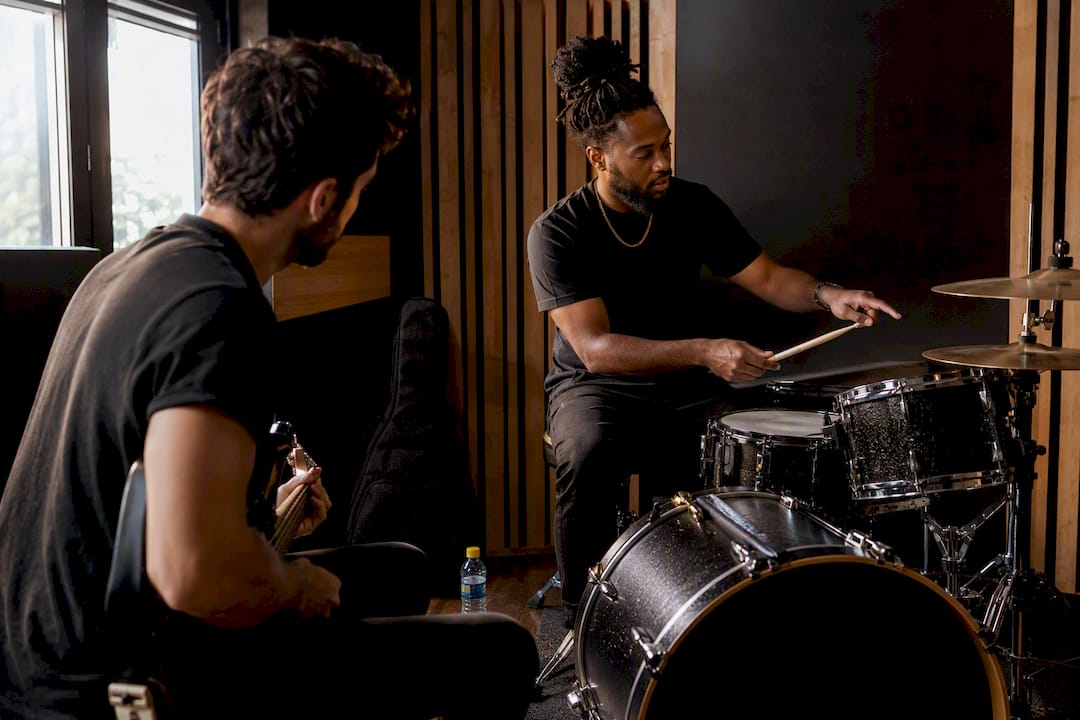
Influencer collaborations work the same way, minus the shared songwriting credit. A creator who already makes content in your genre's orbit can introduce your track to their audience through a duet, a reaction video, or a simple "artist I'm loving right now" post. The relationship matters more than the reach number. A creator with 8,000 highly engaged followers in your exact niche often outperforms one with 200,000 scattered ones.
Treat every collaborator relationship as ongoing, not transactional. Check in after the release, share their wins, and show up for their shows. The independent music scene runs on reciprocity, and artists who only reach out when they need something get remembered for exactly that.
How Do You Use Analytics To Adjust Your Strategy?
Data only helps if you check it on a schedule, not just when something goes viral or flops. Set a weekly fifteen-minute review: DSP analytics, email open rates, and social insights side by side.
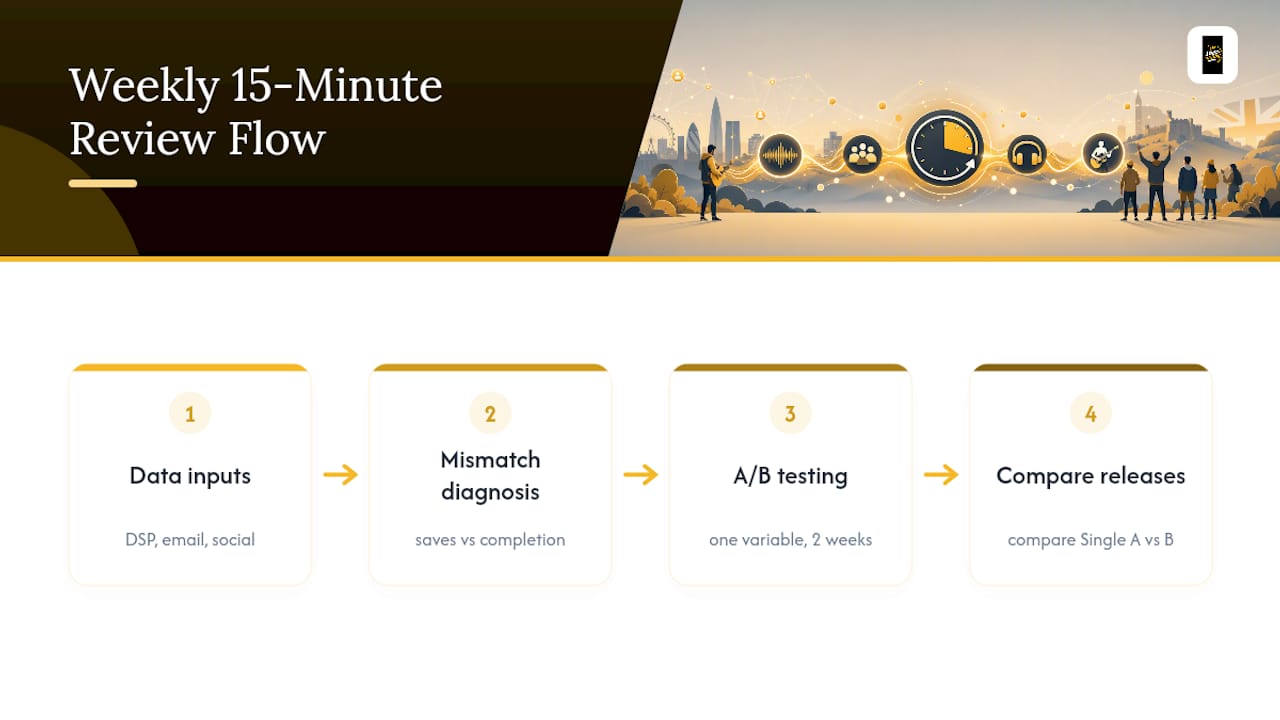
Look for mismatches first. If a song has strong saves but weak completion rate, the problem usually sits in the arrangement, not the marketing. If email opens are high but click-throughs are low, your subject lines are working but your call to action isn't clear enough.
Adjust one variable at a time. Change your posting time for two weeks before touching your content format, so you actually know what caused the shift. Independent artists who chase every metric at once usually can't tell which change helped and which one didn't matter.
Compare campaigns against each other, not against arbitrary goals. If Single B's completion rate beats Single A's, ask what changed: song structure, pitch timing, or the platforms you leaned on. That comparison, repeated every release, is how a scattershot approach turns into an actual strategy over six or seven singles.
How Does Storytelling Build A Lasting Independent Brand?
A song is a moment. A brand is what a listener remembers about you after the song ends. That distinction is why some independent artists build lasting careers on modest streaming numbers, while others with a viral hit disappear within a year.
Storytelling starts with consistency, not clever branding. What's the thread across your last five releases, a theme, a visual style, a recurring collaborator, a personal story you keep returning to? If you can't answer that in one sentence, neither can your fans.
Document your process, not just your finished product. The demo that didn't work, the show that went sideways, the decision to write a song about a specific breakup, these details are what make an artist feel like a real person instead of a content feed. Narrative-first campaigns that build anticipation before release outperform burst-style promotion for exactly this reason: story creates memory, and memory creates return listeners.
Play the long game across releases, not within one. Each single should feel like a chapter, not a standalone product launch. That's what turns a listener who found you once into someone checking your profile before every future release.
A Long-Game Note On Organic Growth
Sustainable growth rarely looks dramatic week to week. It looks like a save rate creeping up release over release, a mailing list that grows by dozens instead of thousands, and a small local show that sells out before a bigger one does. The artists who stick with the cadence for a year, not a month, are the ones who eventually show real motion. Keep releasing, keep tracking, keep showing up.
— Jason
Try Loca-Nation's Genre Onboarding And Reactivate Tools
Loca-Nation gives independent artists a free way to prove the "motion" this whole playbook is built around, real listener engagement, ranked without a budget requirement. If you're new to the platform, Genre Onboarding places you into the right genre and regional charts from the start, so your early streams count toward a chart position instead of getting lost in a general feed. If you've got older material that never got its fair shot, Reactivate helps you relaunch that campaign and pull dormant fans back in.
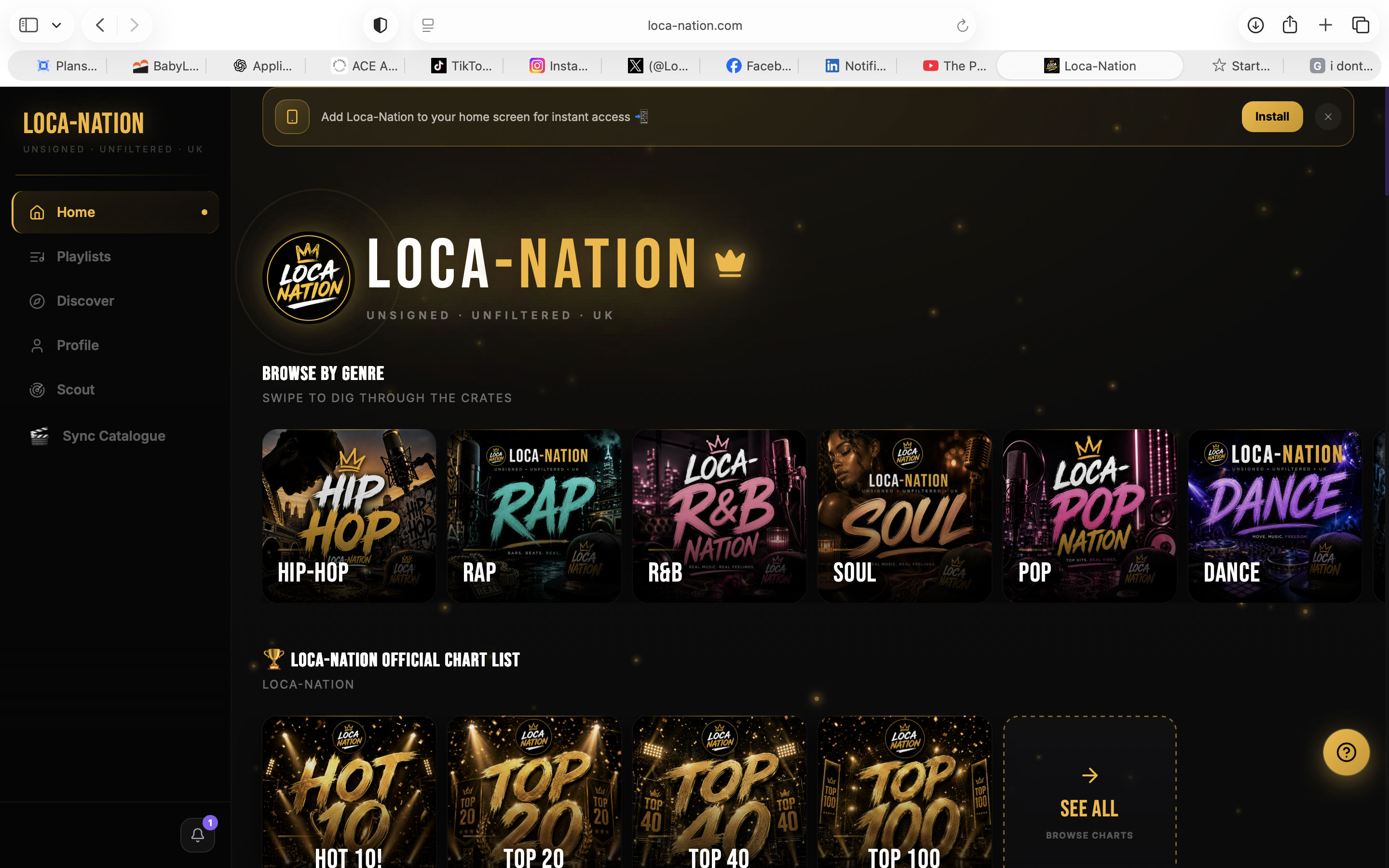
Both work well alongside everything above: a release-day playlist push, a fan vote request to your email list, or a show announcement all translate directly into chart activity. Try the free profile and analytics tools first, then explore Genre Onboarding or Reactivate to see where your current momentum places you.
Sources
Berklee's course on independent artist marketing covers release cadence in depth. The Musicians Institute's promotion guide breaks down playlist pitch timing. MusicWeek's A&R reporting explains how labels now scout talent through data.
- Berklee College course MB-421 (industry guidance)
- Musicians Institute: Key strategies for organic music marketing