
Join forums for deep technical feedback, real-time servers like Discord for fast collaboration, and profile-based networking platforms for discovery, and pair them with a no-pay-to-play platform like Loca-nation for genuine exposure. Each category solves a different problem: forums build skill, collaboration spaces build tracks, and discovery platforms build a career. This guide breaks down how to find, vet, and actually use each type without wasting months in the wrong group.
TL;DR:
- Active forums offer detailed, technical critique but move slowly, making them ideal for skill-building rather than quick collaborations.
- Discord and similar platforms facilitate rapid feedback and sessions but require careful moderation to maintain usefulness and respect.
- Profile-based platforms prioritize discovery and direct contact, making them suited for finding co-writers or industry connections over community discussion.
- Loca-nation’s no-pay-to-play model rewards genuine listener engagement and provides a clear path from local recognition to national charts without advertising budgets.
- Building trust and reciprocity by giving feedback, organizing events, and sharing resources enhances long-term value in online music communities.
Table of Contents
- Types of Online Communities for Musicians
- How to Pick the Right Community for Your Goals
- How to Get Real Value From Any Music Community
- Why Loca-Nation Matters for Independent Musicians
- Safety, Rights, and Etiquette When Sharing Music Online
- Moderation and Community Guidelines That Actually Work
- Growing Within a Community, Not Just Consuming It
- Common Pitfalls in Online Music Communities
- Privacy and Security Considerations for Musicians Online
- Author Perspective: Building a Fair, Engaged Music Community
- Find Your Next Collaborator on Loca-Nation
- Further Reading and Primary Sources
- Sources
Types of Online Communities for Musicians
Not every community serves the same purpose, and picking the wrong one wastes time you could spend finishing tracks. Here's how the major categories break down.
- Forums and long-form discussion boards. Sites like Guitar & Musician Forums run deep threads on gear, theory, and recorded-track critique. They're slow-paced compared to chat apps, but the feedback tends to be more technical and considered because posters aren't racing a scrolling feed.
- Discord, Slack, and Telegram servers. These favor speed. Members post stems mid-session, run timed writing challenges, and organize listening parties in real time. Reddit's r/WeAreTheMusicMakers documents recurring events like 2HourTrackSundays, where members build a full track inside a fixed window.
- Networking apps and profile-based platforms. Built around discoverable artist profiles, these prioritize direct contact over group discussion. You're browsing people, not threads.
- Collaboration workspaces. Tools built around version control, stem management, and automatic crediting solve the specific headache of five people editing the same session file. Platforms in this space, such as musiciansXchange, focus on DAW-agnostic workflows so a Logic user and an Ableton user can trade files without friction.
- Remix and licensing-focused communities. Sites like ccMixter exist specifically for stem-sharing and remix culture, with license terms spelled out up front so nobody argues about usage rights later.
How to Pick the Right Community for Your Goals
Before joining anything, ask what you actually need this month. Feedback on a mix, a co-writer, paid session work, and sync placement all point to different communities, and chasing the wrong one burns time you won't get back.
- Match the type to the goal. Forums suit feedback and skill-building; Discord-style servers suit fast collaboration; profile platforms suit discovery and direct outreach.
- Check activity level and moderation. A server with 40,000 members and a dead general channel is worse than a tight 500-person group with active moderators enforcing feedback etiquette.
- Confirm the skill level fits. Posting a polished mix in a beginner-heavy group gets you empty praise, not useful critique.
- Look for geographic or genre filters if you want collaborators in your time zone or scene.
- Verify rights and licensing policies before uploading a single stem anywhere.
- Watch for real discovery signals such as showcases, charts, or documented sync pipelines rather than vague promises of "exposure."
Pro Tip: Spend your first week in a new community lurking and commenting on other people's posts before asking anything of your own. Members remember who gave feedback before they asked for it.
How to Get Real Value From Any Music Community
Showing up isn't enough. The musicians who get real value treat every community like a small professional network, not a place to dump a SoundCloud link and wait.
Start with a profile that does the work for you. A tight, mobile-ready EPK should include a two-line bio, your three strongest tracks, any real credits, and a working contact method. The EPK guide walks through the format in detail, but the short version is: cut anything a stranger wouldn't read in under 30 seconds.
When you ask for feedback, be specific. "Thoughts?" gets ignored. "Does the drop at 1:40 land, and is the vocal too loud in the second verse?" gets answered, especially if you offer to return the favor on someone else's track first. Editorial roundups on musician networking consistently point to targeted, reciprocal exchanges as the biggest driver of useful feedback versus generic praise.
Collaboration runs smoother with basic discipline: consistent file naming, a shared version log, and clear credit splits agreed on before anyone touches a session. When a contact turns promising, follow up with a concrete ask, not a vague "let's work together sometime." Suggest a specific track, a specific deadline, and a specific role.
- Name files with version numbers and dates, not "final_v2_FINAL."
- Agree on credit splits in writing before recording starts.
- Send a follow-up within 48 hours of a positive exchange, with a specific next step attached.
Why Loca-Nation Matters for Independent Musicians
Most discovery platforms quietly reward whoever spends the most on ads. Loca-nation runs the opposite model: a chart and competition system built on genuine listener engagement, not budget. That distinction matters if you're an independent artist without a marketing budget competing against acts that have one.
The platform gives independent artists a structured path from local recognition to regional and eventually national chart standing, based on real votes from real listeners. Along the way, several features support the kind of community-driven growth this article covers:
- Public artist profiles that double as a discoverable portfolio.
- Chart competitions filtered by location and genre.
- Analytics that show which listeners are actually engaging.
- Promotional resources built for artists without a label budget.
- Sync licensing opportunities that connect tracks to industry professionals.
No pay-to-play means an artist with no advertising budget and a genuinely engaged following can outrank a heavily funded act. That's the entire premise behind Loca-nation's chart system.
Jason, who works closely with Loca-nation's artist community, points new members toward the platform's no pay-to-play explainer as a starting point for understanding how the chart mechanics actually work before diving in.
Safety, Rights, and Etiquette When Sharing Music Online
Sharing stems or a rough mix in a public community always carries some risk, but a few habits close most of the gap.
Timestamp your work before sharing it. A dated project file, a private cloud upload, or a simple email to yourself with the attached track creates a record that predates any dispute. Before uploading stems anywhere, check the community's licensing terms. Creative Commons publishes clear guidance on how shared-license practices work in collaborative music projects, and platforms like ccMixter spell out reuse terms explicitly rather than leaving them ambiguous.
Watch for red flags when money enters the conversation: anyone requesting payment upfront for "guaranteed placement," a profile with no history or verifiable credits, or a collaborator who won't put a credit split in writing before you send stems.
- Timestamp and back up files before sharing.
- Read the license terms before uploading, every time.
- Never send payment to secure a "guaranteed" placement.
- Put credit splits in writing before recording begins.
Pro Tip: A short, polite decline is better than silence. Musicians who respond even to rejection tend to get invited back to future projects; ghosting collaborators quietly ends the relationship.
Moderation and Community Guidelines That Actually Work
The best music communities aren't the biggest ones. They're the ones with moderators who actually enforce a posted set of rules instead of letting the channel turn into a free-for-all of unsolicited link drops.
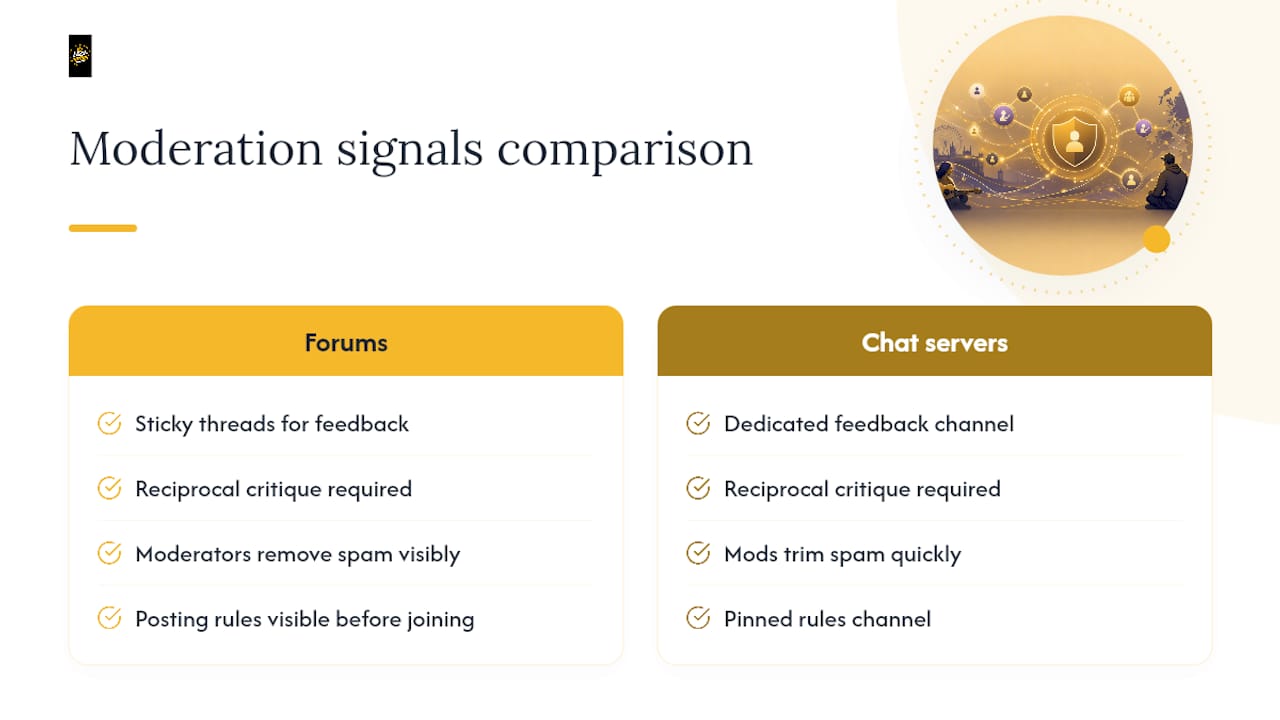
Look for communities with clear posting structures: a dedicated feedback channel separate from general chat, a rule requiring reciprocal critique before self-promotion, and moderators who visibly remove spam rather than letting it pile up. Forums tend to formalize this with sticky threads and posting guidelines readers see before joining; Discord-style servers usually handle it with role-based permissions and a pinned rules channel.
Respectful disagreement is part of healthy moderation, not a sign it's failing. A moderator's job isn't to make every critique gentle, it's to keep critique specific and on-topic instead of personnel. Communities that ban harsh but useful feedback often end up with weaker, praise-only threads that don't help anyone improve.
Before joining, skim the pinned rules and a few recent moderator actions if they're visible. A group where the last moderator post was eight months ago is effectively unmoderated, whatever the sidebar says. One where mods are actively trimming spam and redirecting off-topic posts within hours is worth your time.
Good etiquette runs both directions. Follow the posting format the community asks for, credit anyone whose feedback shaped your final track, and don't cross-post the identical request in five servers within the same hour. Communities notice, and reputation travels faster than most new members expect.
Growing Within a Community, Not Just Consuming It
The musicians who get the most out of these spaces eventually start giving back, and that shift changes how the whole community treats them.
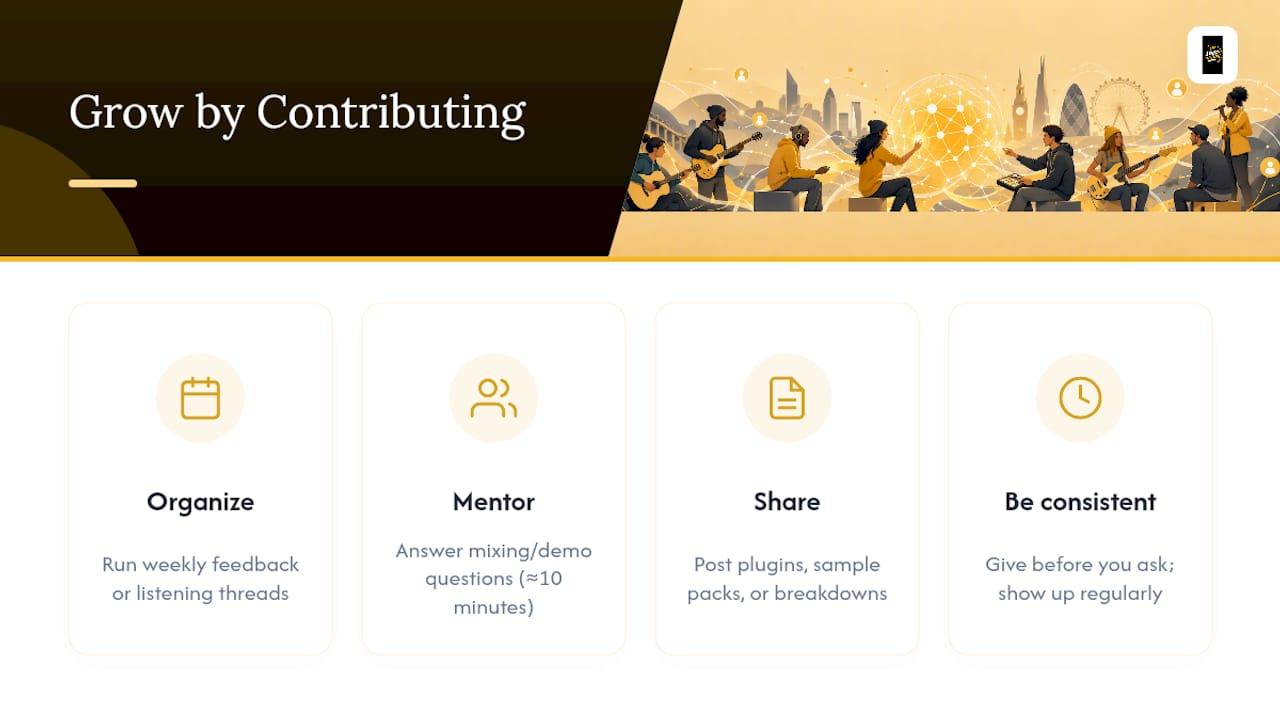
Organizing a small event, even something as simple as a weekly feedback thread or a genre-specific listening session, builds visibility faster than posting tracks alone. Reddit's r/WeAreTheMusicMakers built exactly this kind of recurring structure around timed collaboration challenges, and the members who ran those threads became recognizable names in the group long before anyone knew their music.
Mentoring newer members costs almost nothing and pays back quickly. Answering a beginner's mixing question in detail, pointing someone toward the right subforum, or reviewing a rough demo takes ten minutes and builds the kind of reputation that gets you invited into private collaboration circles later.
Sharing resources works the same way. Posting a useful plugin recommendation, a sample pack under a permissive license, or a breakdown of how you approached a tricky arrangement gives people a reason to remember your name. Communities built around open sharing, like opsound, exist specifically because contribution, not consumption, is what keeps them alive.
None of this requires being the most skilled person in the room. It requires showing up consistently and giving something back before you ask for the next favor.
Common Pitfalls in Online Music Communities
The biggest mistake is joining ten communities and being active in none of them. Depth beats breadth. Two servers where people know your name will do more for your career than twenty where you're a stranger who posted once.
Over-promotion is the second trap. Dropping a Spotify link with no context in every channel you can find reads as spam, and most moderators will treat it that way. Lead with a specific ask or a specific offer of feedback, not a bare link.
Feedback fatigue is real, but it cuts differently than people expect: it's usually the giver, not the receiver, who burns out first. Rotate which threads you critique instead of trying to answer every request in a busy channel.
Finally, watch for communities that promise discovery but deliver nothing measurable, no charts, no showcases, no documented path from posting to being seen by anyone outside the group. That's a sign to redirect your time toward a platform with an actual structure behind its exposure claims.
Privacy and Security Considerations for Musicians Online
Musicians share more identifying information than most community members realize, and it's worth thinking about before you post.
A public profile with your real name, city, and a link to your home studio setup tells strangers more than most people intend. Keep location details general (a region, not a street) and avoid posting studio photos that reveal your address through visible mail or landmarks.
Direct messages from unknown accounts offering "guaranteed" opportunities deserve suspicion by default, especially when they ask you to move the conversation off-platform immediately. Legitimate collaborators and industry contacts rarely object to a few public exchanges before going private.
Use a dedicated email for community sign-ups rather than your primary address, and check what a platform actually does with uploaded audio before sharing unreleased work. Some sites claim broad usage rights in their terms; read that section before you upload anything you haven't already registered or timestamped elsewhere.
Author Perspective: Building a Fair, Engaged Music Community
Most "exposure" in music promotion is really just a budget contest dressed up as discovery. What drew Jason to Loca-nation's approach is simple: it measures engagement, not ad spend, which is closer to how music actually earns an audience.
If you take one action from this guide, make it this: update your EPK this week and enter a chart challenge on Loca-nation. Fair competition only works if artists show up for it.
— Jason
Find Your Next Collaborator on Loca-Nation
Forums and Discord servers are great for feedback and quick collaborations, but neither gives you a structured path to actual discovery. Loca-nation fills that gap: a chart system where genuine listener votes, not ad budgets, decide who rises, giving independent artists a fair shot at getting in front of labels, scouts, and sync buyers.
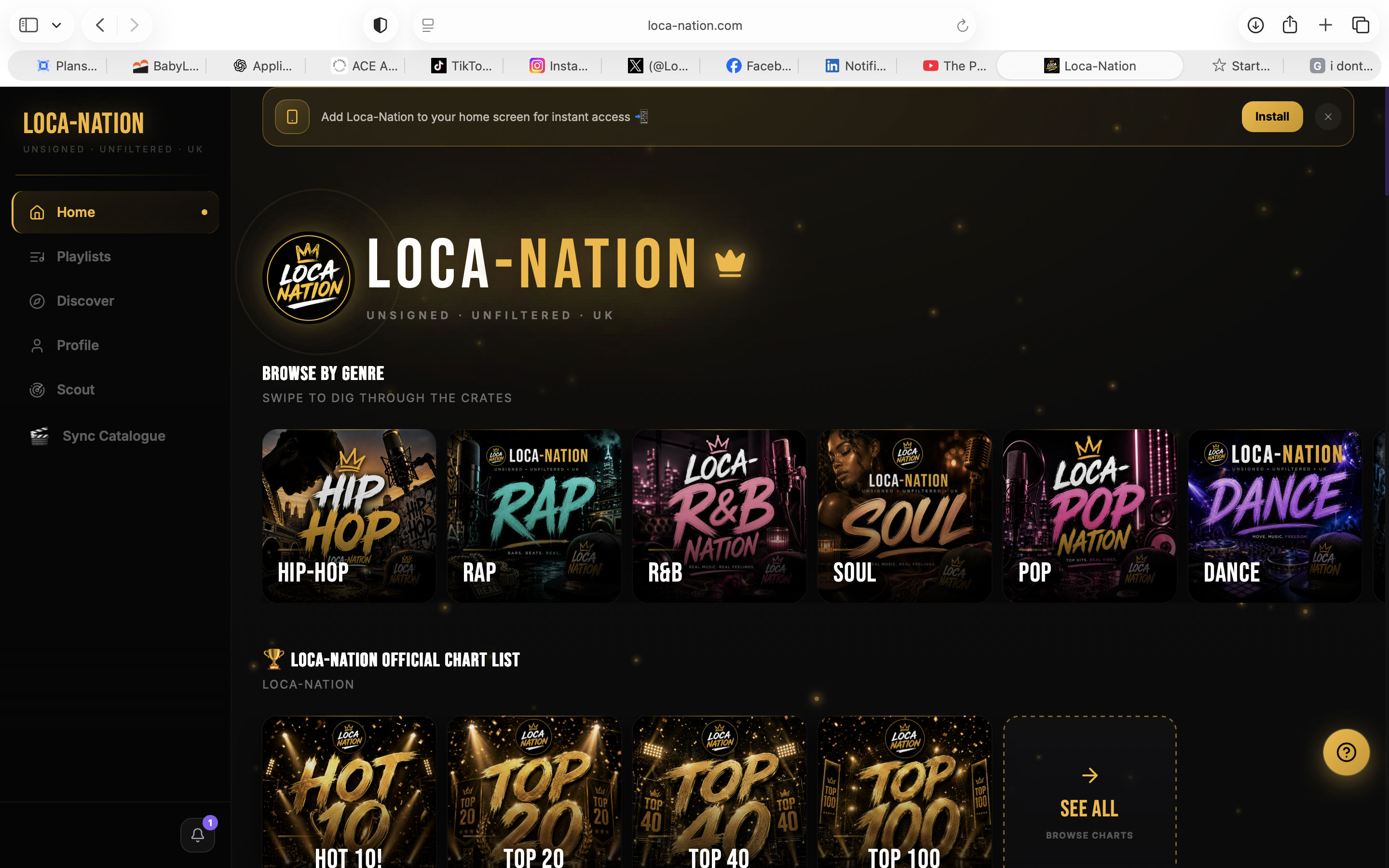
Getting started takes one real step. Head to Genre Onboarding, pick your genre and region, and upload your strongest track to enter the chart competition. Once your profile is live, pair it with the independent artist promotion guide to turn early chart movement into a real audience.
Further Reading and Primary Sources
- Creative Commons: Music Communities
- Free Music Archive
- ccMixter
- Guitar & Musician Forums
- r/WeAreTheMusicMakers discussion
Sources
- Music communities | Creative Commons - Arts & Culture resources
- ccMixter
- Guitar & Musician Forums - Music Theory, Songwriting, Gear, Tone & Recording
- What online music communities do you use and why? - r/WeAreTheMusicMakers