
No pay to play means chart placement earned by verified listener engagement, not by payment or opaque algorithmic deals. If a chart or platform ranks you because real people voted, streamed, and saved your track, that's a fair chart. If it ranks you because you paid a fee or handed over royalty points for "consideration," that's payola with new branding.
The immediate move: stop chasing paid playlist placements and start checking whether a platform publishes its methodology. Any chart worth your time should tell you exactly how votes are verified and how it catches fake activity. Academic researchers have traced this problem straight through from radio-era payola into streaming playlist economies, and the pattern repeats: whoever controls distribution can quietly monetize access. Loca-Nation was built to run the other way, with charts driven by listener votes instead of invoices.
Before you submit anywhere, run this check:
- Does the platform publish a dated, public methodology for how tracks chart?
- Are votes or streams tied to verified user actions, not passive bot traffic?
- Is there any language suggesting paid tiers improve placement odds?
- Does the platform explain how it detects and removes fraudulent engagement?
TL;DR:
- Platforms must publish clear, dated methodologies and verify votes through active user actions rather than passive or bot traffic to ensure fair charting.
- Paid playlist placements, especially those linked to discounts, royalties, or undisclosed partnerships, undermine artist trust and distort success signals.
- Genuine engagement metrics, such as save and completion rates, are crucial for assessing a track’s true popularity and avoiding artificially inflated numbers.
- Reputable distributors and platforms like Loca-Nation focus on real listener votes, offer transparent analytics, and reject paid-for promotional tiers.
- Long-term success relies on building authentic fan support through ethical campaigns, strong metadata, and clear calls to action, not short-term paid boosts.
Table of Contents
- Why Modern Pay-to-Play Practices Harm Independent Artists
- How Do You Verify a Chart Is Actually Fair?
- Practical Tactics to Earn Chart Traction Without Paying
- Where Loca-Nation Fits the No Pay to Play Standard
- Start Building Your Chart Journey on Loca-Nation
- Key Takeaways
- Sources
Why Modern Pay-to-Play Practices Harm Independent Artists
Payola never disappeared. It just moved from brown envelopes at radio stations to opaque promotional programs inside streaming apps. Reporting from The Guardian detailed accusations that Spotify's Discovery Mode program let artists trade lower royalty rates for algorithmic boosts, a deal that favors labels with the leverage to negotiate and leaves independent musicians guessing at the real rules.
Paid plays and bot-driven streams do more than waste money. They distort the exact signals platforms use to judge whether a song deserves wider reach: skip rate, save rate, and completion percentage. A track padded with fake streams looks strong for a week, then collapses once the artificial activity stops, and the algorithm often reads that collapse as a rejection.
The downstream risks compound fast:
- Distributors can withhold royalties tied to flagged streams.
- Platforms may remove tracks or suspend accounts entirely.
- Algorithmic reach for future releases can take a lasting hit.
- Industry contacts who discover manipulated numbers rarely forget it.
Reporting from Rolling Stone shows distributors are tightening enforcement against bot-driven fraud, with penalties ranging from fees to outright account removal. The cost of gaming the system now regularly exceeds whatever short-term visibility it buys.
How Do You Verify a Chart Is Actually Fair?
Most artists never ask a platform how its chart works. That single question separates the fair ones from the ones hoping you won't check.
- Find the public methodology. A legitimate chart explains, in plain language, how positions are calculated and how often the rules get updated. If you can't find this on the platform's site, that's your first red flag.
- Confirm votes require active user action. Genuine engagement means someone clicked, listened, or voted deliberately. Passive algorithmic boosts that a platform can quietly enable for paying clients are not the same thing.
- Compare engagement ratios, not raw numbers. Look at save rate against play count, and completion rate against skip rate. A track with heavy streams but almost no saves is a signal something's off, whether that's your own release or a platform's featured artist.
- Trace referral sources. Genuine growth usually comes from a mix of direct search, social shares, and playlist discovery. Numbers that spike from a single unexplained source deserve scrutiny.
- Ask support directly. Email the platform and ask how vote verification and fraud detection work. Vague or evasive answers tell you what a polished landing page won't.
Legal commentary on the music industry's payola settlements makes a similar point: transparency, not just prohibition, is what actually restores trust between artists and the platforms ranking them.
Watch for these red flags specifically: guaranteed chart placement, undisclosed partnerships with labels or promoters, "pay-for-consideration" language buried in fine print, and pressure to accept reduced royalties in exchange for promotional slots.
Pro Tip: Ask any platform three direct questions before you submit a single track: how are votes verified, how is fraud detected, and where's the dated methodology document? If they dodge all three, walk away.
Practical Tactics to Earn Chart Traction Without Paying
Earning real placement starts before release day. Clean metadata, compelling artwork, and a smart link that routes fans to their preferred platform all remove friction between someone hearing about your song and actually streaming it. Build a pre-save page with one clear call to action: listen, save, and vote once the track is live.

Audience activation matters more than any paid placement ever will. Run ethical, clearly labeled ads targeting people who already resemble your existing fans rather than buying vague "promotion" from a third-party seller. Short-form video content built around a hook from the song tends to drive saves and follows more efficiently than static posts. Keep a mailing list or fan club going so you're not rebuilding your audience from zero with every release, and don't underestimate a local show or a collaboration with another independent act. Both convert casual listeners into people who'll actually vote for you.
Turning listeners into chart support requires a direct ask, not a hope. Time-limited campaigns work because they concentrate genuine engagement into the window that actually matters for chart movement. A tight campaign, typically three to seven days, that pairs organic posts with one targeted ad and a single explicit CTA to vote or save tends to outperform a scattered, months-long push. Contests and fan rewards that cost you nothing but attention can drive the same result without cash changing hands anywhere in the chain.
Fraud prevention deserves equal weight in this playbook:
- Distribute through reputable, established distributors, not unverified middlemen.
- Check your streaming reports weekly during a release window for unusual spikes.
- Avoid any service promising guaranteed streams, votes, or playlist adds for a fee.
- Report suspicious activity on your own tracks immediately rather than waiting it out.
Pro Tip: If a promotional service guarantees a specific chart position or stream count, that's not marketing confidence. That's a fraud risk with your name attached to it.
Where Loca-Nation Fits the No Pay to Play Standard
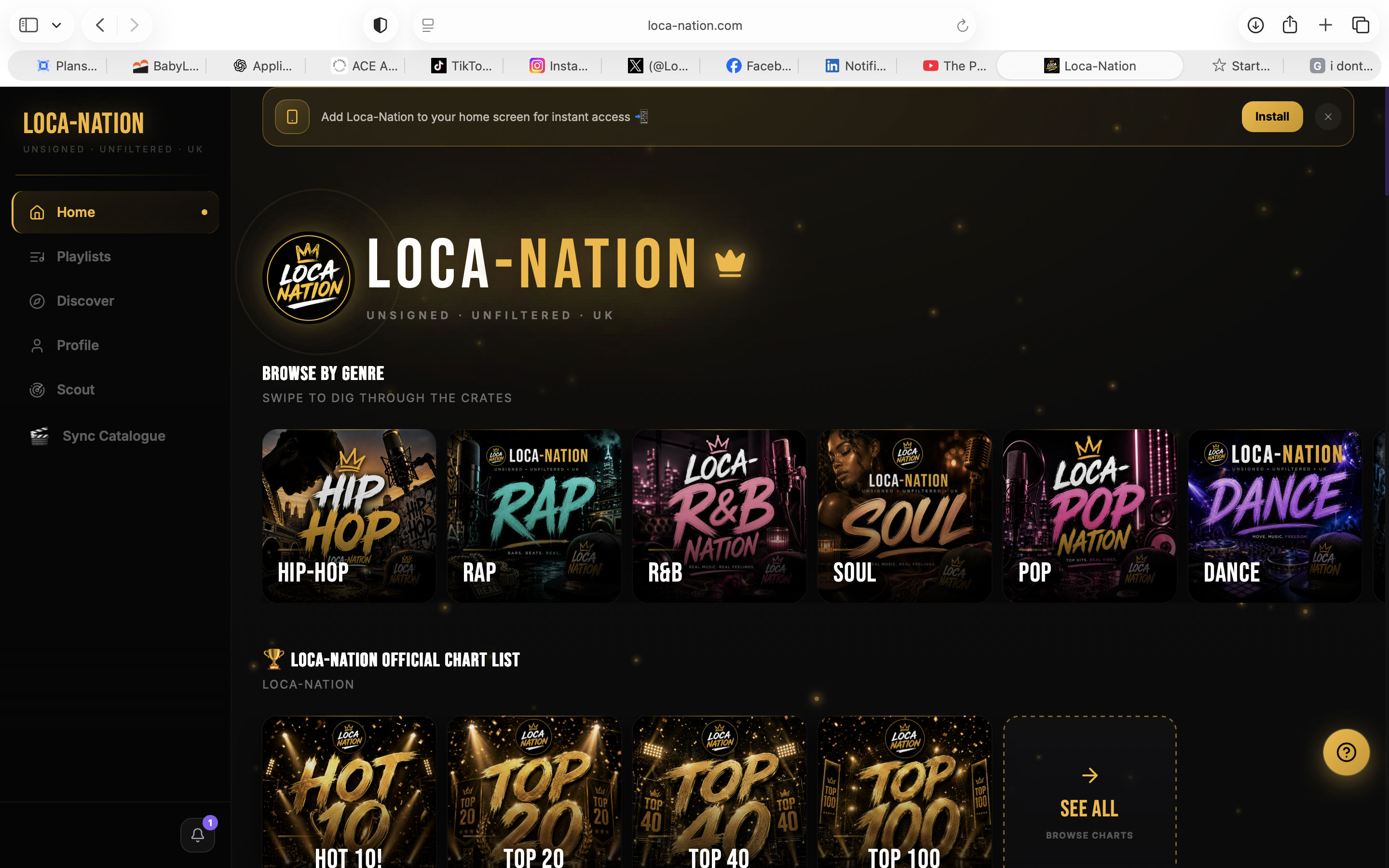
Loca-Nation runs its chart system on listener votes, not invoices. Artists build a public profile, upload music, and compete by location, genre, and eventually at national level, with progression tied to genuine audience engagement rather than a promotional budget.
That structure maps directly onto the vetting checklist above:
- Listener accounts are free, with no subscriptions, ads, or paid tiers that could quietly influence placement.
- Artist profiles and analytics give musicians a way to track real engagement, not vanity numbers.
- Promotional resources and sync licensing opportunities create paths to industry exposure that don't run through a pay-to-play gate.
A chart is only as trustworthy as the verification behind every vote. Platforms that build engagement systems around genuine listener action, rather than paid promotional tiers, give independent artists an honest shot at being heard by the people who actually decide what gets industry attention: real listeners.
The long-term value of fans you actually earn
Paid placement gives you a number. Fans who voted for you because they meant it give you leverage. That difference shows up years later, when a label, sync agency, or booking contact wants to know whether your audience is real, and streaming history tied to genuine engagement holds up in a way inflated numbers never do.
Resist the pressure to trade royalties or authenticity for a short-term visibility bump. Treat a platform's transparency about vote verification and methodology as a contract term, not a footnote. Choose based on what the data shows about actual engagement, not what a sales pitch promises about placement odds.
— Jason
Start Building Your Chart Journey on Loca-Nation
Building a fanbase that votes for you because they mean it takes more effort than buying a placement, but it's the only version that holds up over time. Loca-Nation gives you the infrastructure to do exactly that: a public profile, genre-based chart competition, and analytics that show you what's actually working.
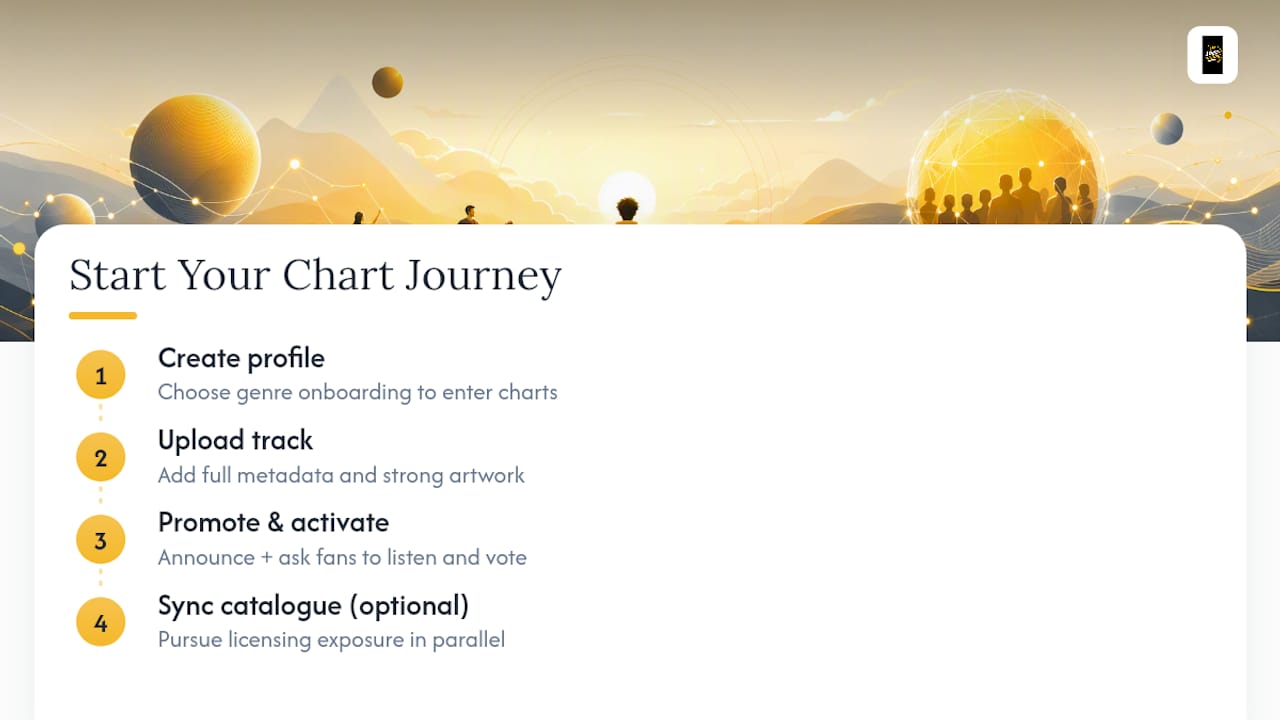
Getting started takes three steps. Create your artist profile and choose your genre onboarding path to enter chart competition in your category. Upload your track with complete metadata and strong artwork, then announce it to your existing audience with a direct ask to listen and vote. If you're also pursuing licensing opportunities alongside chart placement, the sync catalogue gives you a non-paid route to industry exposure worth exploring in parallel.
Your first week should follow a simple checklist: upload the track, announce it everywhere your fans already are, activate them with a specific CTA to vote, and check your analytics daily to see what's converting. Head to Loca-Nation to set up your profile and start your chart journey on your own terms.
Key Takeaways
Fair charting depends on verified listener engagement, published methodology, and platforms that reject payment as a path to placement.
| Point | Details |
|---|---|
| Define the standard | No pay to play means chart position earned through verified votes and streams, never through payment. |
| Recognize modern payola | Programs trading royalties for algorithmic boosts function like payola even when the label sounds neutral. |
| Vet before you submit | Confirm public methodology, vote verification, and fraud detection before trusting any chart with your music. |
| Prioritize fan activation | Short, focused campaigns with a single clear CTA convert listeners into chart support more reliably than paid ads alone. |
| Choose transparent platforms | Loca-Nation charts artists by genuine listener votes, with free profiles, analytics, and no paid placement tiers. |
Sources
- Pay-to-Playlist: The Commerce of Music Streaming (Duke scholarship)
- Pay to get playlisted? The accusations against Spotify’s Discovery Mode | The Guardian
- Rolling Stone reporting on bots and streaming fraud