
A music supervisor database is a searchable directory of the professionals who license songs for TV, film, and ads, built around their placement history and contact details. Independent musicians and sync-focused industry pros use one to find the right person for their sound, not just any name in the credits. The real value isn't the list itself, it's what comes next: matching your track to someone's actual taste and timing your pitch right.
TL;DR:
- Searching by recent placement history yields more relevant supervisor contacts than relying on outdated job titles or general credits.
- Prioritizing verified, recent contacts through IMDbPro and LinkedIn increases pitching effectiveness and reduces wasted outreach efforts.
- Paid directories with active production calendars and updated contact details justify their subscription cost by capturing timely opportunities.
- Personalizing pitches by referencing specific placements and timing outreach during active show windows significantly improves response rates.
- Combining supervisor database efforts with audience-driven platforms like Loca-Nation can broaden discovery and increase placement chances without relying solely on cold emailing.
Table of Contents
- What's inside a music supervisor database: profiles, placements, and filters
- How do you turn a database search into an outreach list that works?
- How do you evaluate contact quality and avoid wasted outreach?
- Free vs paid directories: what you actually get for the money
- A step-by-step outreach workflow you can run today
- Privacy and data protection when using or listing in a supervisor database
- How do you know if a supervisor database is actually reliable?
- Do supervisor databases work with other sync and royalty tools?
- Building relationships, not spam lists
- How Loca-Nation gives your music a second path to discovery
- Sources
What's inside a music supervisor database: profiles, placements, and filters
A useful profile shows more than a name and a job title. Expect credits (which shows or films a supervisor has worked on), current or recent employer, contact fields, and often social or LinkedIn links to confirm the person is still active in that role.
Placement history is the part that separates a real research tool from a glorified contact list. Knowing that a supervisor placed a lo-fi indie track on a Netflix drama last quarter tells you exactly whether your catalog fits, before you spend a single email. Placement-driven databases show what supervisors have actually placed, letting you search by genre, mood, and reference artist rather than guessing from a title alone.
Good directories give you several ways to narrow a search:
- Filter by show or project name to find who's currently sourcing music for it
- Filter by genre or mood to match your own catalog
- Search by reference track to find supervisors who've placed something sonically similar
- Save searches or build shortlists you can export or revisit later
- Flag placement history so you can reference specific credits in your outreach
The export and list-building layer matters more than it sounds. Without it, you're rebuilding your target list from scratch every time you open the tool, which is exactly the kind of friction that kills momentum on outreach.
How do you turn a database search into an outreach list that works?
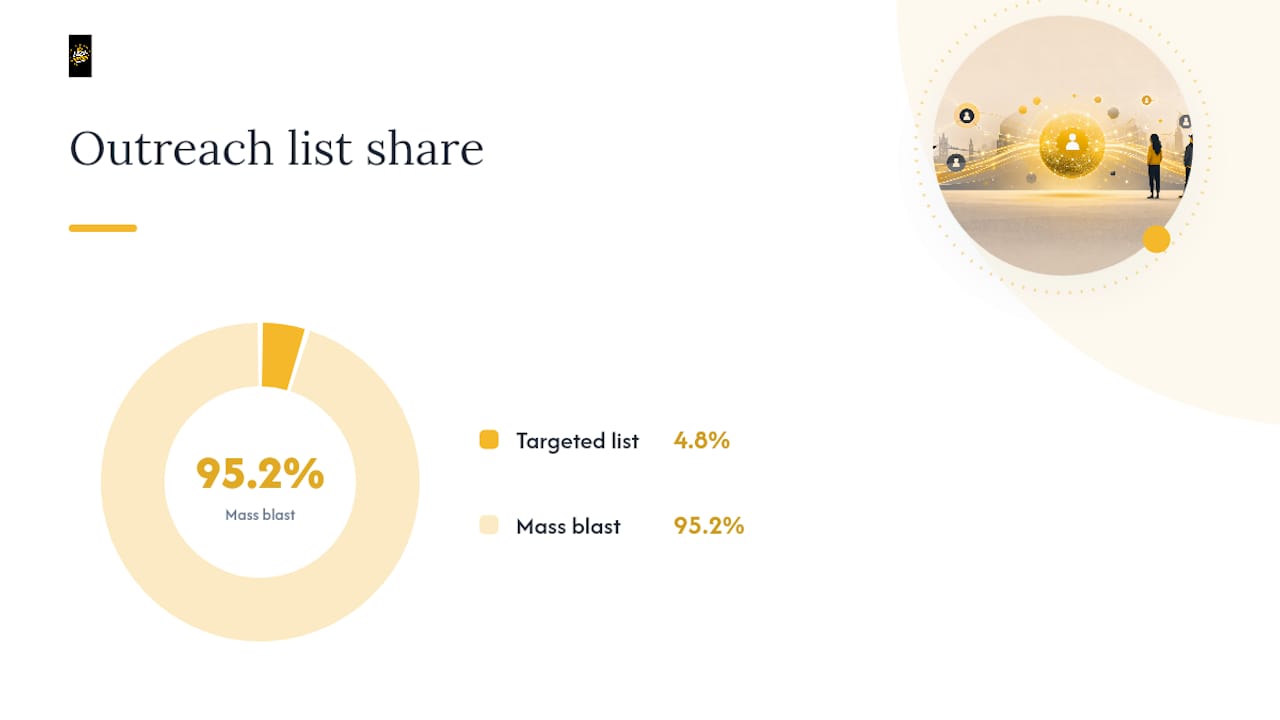
Building a list is easy. Building a list worth emailing takes a bit more discipline. The goal isn't volume, it's relevance: a shorter list of ten well-matched supervisors will outperform a spray-and-pray blast of two hundred every time.
- Search by past placements, not job titles. Look for supervisors who've placed music similar to yours on shows or films you'd genuinely fit.
- Read the placement context before saving anyone. A credit from three years ago on a canceled show tells you less than a credit from last month on an active series.
- Save the evidence, not just the name. Note the specific placement you found, you'll reference it directly in your pitch.
- Check the production calendar for active windows. Comprehensive directories often include TV and film calendars showing which shows are actively in production, and timing outreach to those windows raises your odds of a response.
Pro Tip: Skip the "hope this finds you well" opener entirely. Lead your first line with the specific placement you found. Supervisors get dozens of generic pitches a week; one that references their actual work stands out immediately.
Experts in the sync space consistently point to timing and evidence as the difference between a pitch that gets opened and one that gets deleted. According to SyncPlacement's guidance on outreach, success depends less on how many people you contact and more on matching the moment.
How do you evaluate contact quality and avoid wasted outreach?
Not every entry in a directory is worth pitching. A generic info@ address or a name that hasn't been attached to a credit in two years is a red flag, and pitching it wastes your time as much as theirs.
- Cross-check any credit against a second source before you rely on it
- Confirm the supervisor is still in an active licensing role, titles and studios change often
- Prioritize a verified or personal email over a general inbox
- Skip anyone whose most recent placement predates their current employer listing
IMDbPro is genuinely useful for verifying credits and confirming a supervisor's activity, but it rarely hands you a direct email. Cross-referencing credits with LinkedIn closes that gap. For commercial and advertising sync specifically, professionals often work backward from a trade outlet like AdWeek to identify the agency before they ever find a name to email.
One privacy note worth flagging here: contact details in any directory, paid or free, belong to a real working professional. Use them for genuine pitches, not list-building for its own sake.
Free vs paid directories: what you actually get for the money
Free lists tend to give you names, general credits, and maybe a studio affiliation. That's often enough for early research, but many free directories lack verified emails and the advanced search filters that make targeting efficient. You'll spend more time confirming details yourself.
Paid services typically add:
- Verified or unlocked personal contact details
- Production calendars showing active shows and hiring windows
- Deeper placement history tied to specific projects
- Regular data updates, many operate on subscription models with monthly refreshes
The budget math is simple: if a subscription costs less than the value of one placement you'd otherwise miss because a contact was stale, it pays for itself fast. If you're only submitting occasionally, run your own checks first, cross-reference credits on IMDbPro and LinkedIn, before paying for access you might not use often enough to justify.
A step-by-step outreach workflow you can run today
Treat this as a repeatable loop, not a one-time sprint.
- Find supervisors by placement, not by title. Search for credits that match your genre and collect the specific project as context.
- Verify recency and accuracy. Confirm the person is still active in that role and the contact isn't a dead general inbox.
- Write a one-paragraph pitch referencing the placement. Name the show or film you found, explain in one line why your track fits, and attach a single reference link.
- Schedule one follow-up, then track the response. A single, well-timed follow-up beats three reminders that read as pressure.
Pro Tip: Keep a simple spreadsheet with columns for supervisor, placement evidence, contact status, and follow-up date. It sounds basic, but it's the single biggest reason organized artists land more responses than talented ones with no system.
If you want a starting structure for the actual pitch, our playbook on contacting music supervisors breaks down message length, subject lines, and what to attach. Before any of that, make sure your metadata and files are pitch-ready, preparing your catalog for sync platforms covers what supervisors expect to receive.
Privacy and data protection when using or listing in a supervisor database
Contact data in these directories represents real people doing a specific job, not a marketing list to mine indefinitely. If you're listed as a supervisor yourself, check what a directory publishes by default, some include personal emails scraped from public credits without explicit consent, which raises fair use questions the directory operator should be answering, not you.
As an artist using a database, treat verified contact information with the same care you'd want applied to your own inbox. Don't forward a supervisor's personal email to other artists, and don't add contacts to a mass mailing tool without a clear, individual reason for reaching that specific person. Most reputable directories publish some form of data policy or opt-out process for professionals who no longer want to be listed; if a database doesn't, that's worth noting as a mark against it. None of this is legal advice, but the baseline courtesy is straightforward: use contact data for the specific, individual pitch you're making, and nothing broader.
How do you know if a supervisor database is actually reliable?
Reputation in this space comes down to a handful of concrete signals, not marketing copy on a homepage.
Check how often the data updates. A directory that hasn't refreshed its supervisor list in over a year is going to be full of dead contacts and outdated employers. Look for evidence of placement history tied to specific, recent projects rather than a static bio, that's a sign someone is actively maintaining the credits behind each profile. A visible production calendar or active-show tracker is another strong signal the operator is tracking the industry in real time, not just hosting a phonebook.
Pricing transparency matters too. A service that clearly states what a subscription includes, verified contacts, calendar access, update frequency, is easier to trust than one that hides its feature list behind a signup wall. Finally, ask around. Independent musicians who've used a given tool for actual placements are a better reference point than the directory's own testimonials.
Do supervisor databases work with other sync and royalty tools?
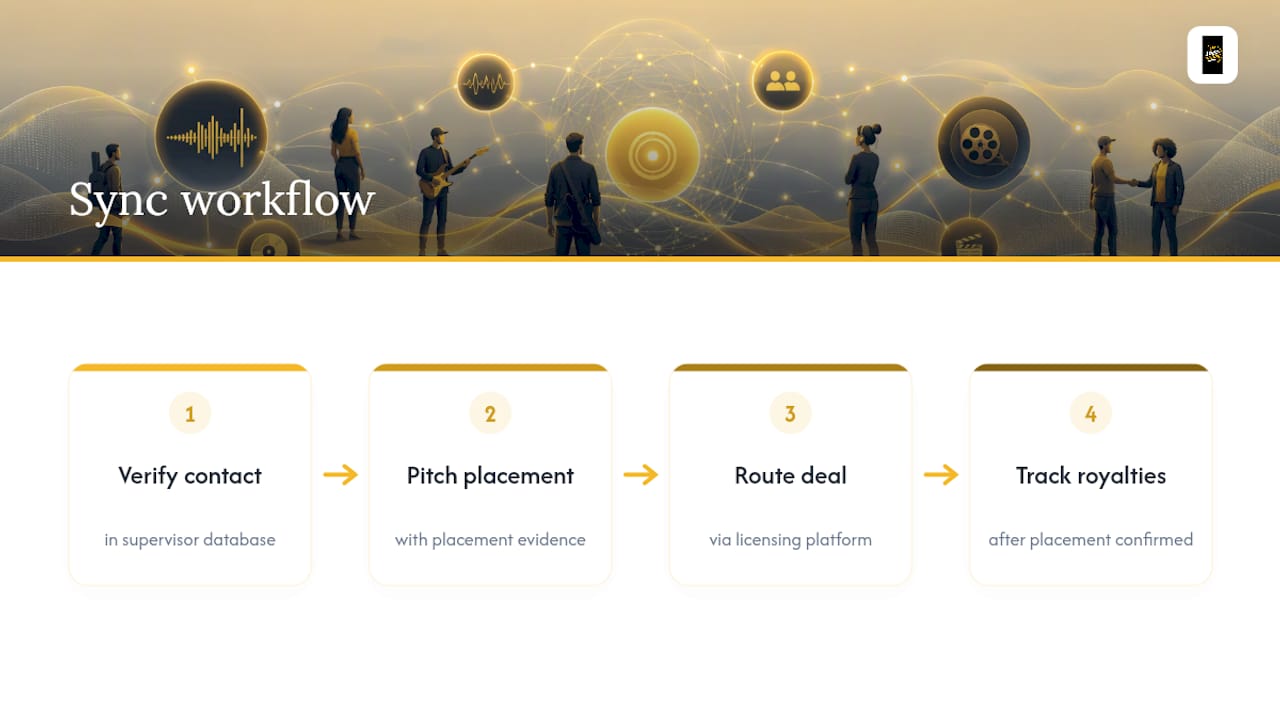
The most useful setups treat a supervisor database as one piece of a larger workflow, not a standalone destination. Once you've found and vetted a contact, the next steps usually involve a licensing platform to handle the actual sync agreement and a royalty tracking system to confirm you get paid once a placement airs.
Few directories handle licensing paperwork themselves, and that's by design. Their job is discovery and contact accuracy; the legal and financial mechanics belong to dedicated licensing and rights-management tools. If you're building a full sync pipeline, the practical sequence looks like: find and verify a contact in the database, pitch with placement evidence, route any resulting deal through a licensing platform, then track royalties separately once the placement is confirmed. Keeping these tools separate rather than expecting one platform to do everything tends to produce cleaner records if a placement ever needs to be verified for payment.
Building relationships, not spam lists
The biggest mistake I see artists make with any directory is treating it like a numbers game. A supervisor's inbox is finite, and their patience for generic pitches is even smaller. Timing and a specific, personalized reference to their actual work will always beat volume.
If you haven't already, read through our guide on contacting music supervisors and our notes on independent artist promotion for the broader context this fits into.
— Jason
How Loca-Nation gives your music a second path to discovery
Directories put you in front of supervisors, but they still require you to make the first move on every single contact. Loca-Nation works differently: it puts your music in front of listeners and industry professionals through chart competition, not cold outreach. Build a public artist profile, compete for chart positions in your genre and region, and get discovered by the labels, scouts, and sync-focused professionals who actively browse the platform looking for talent.
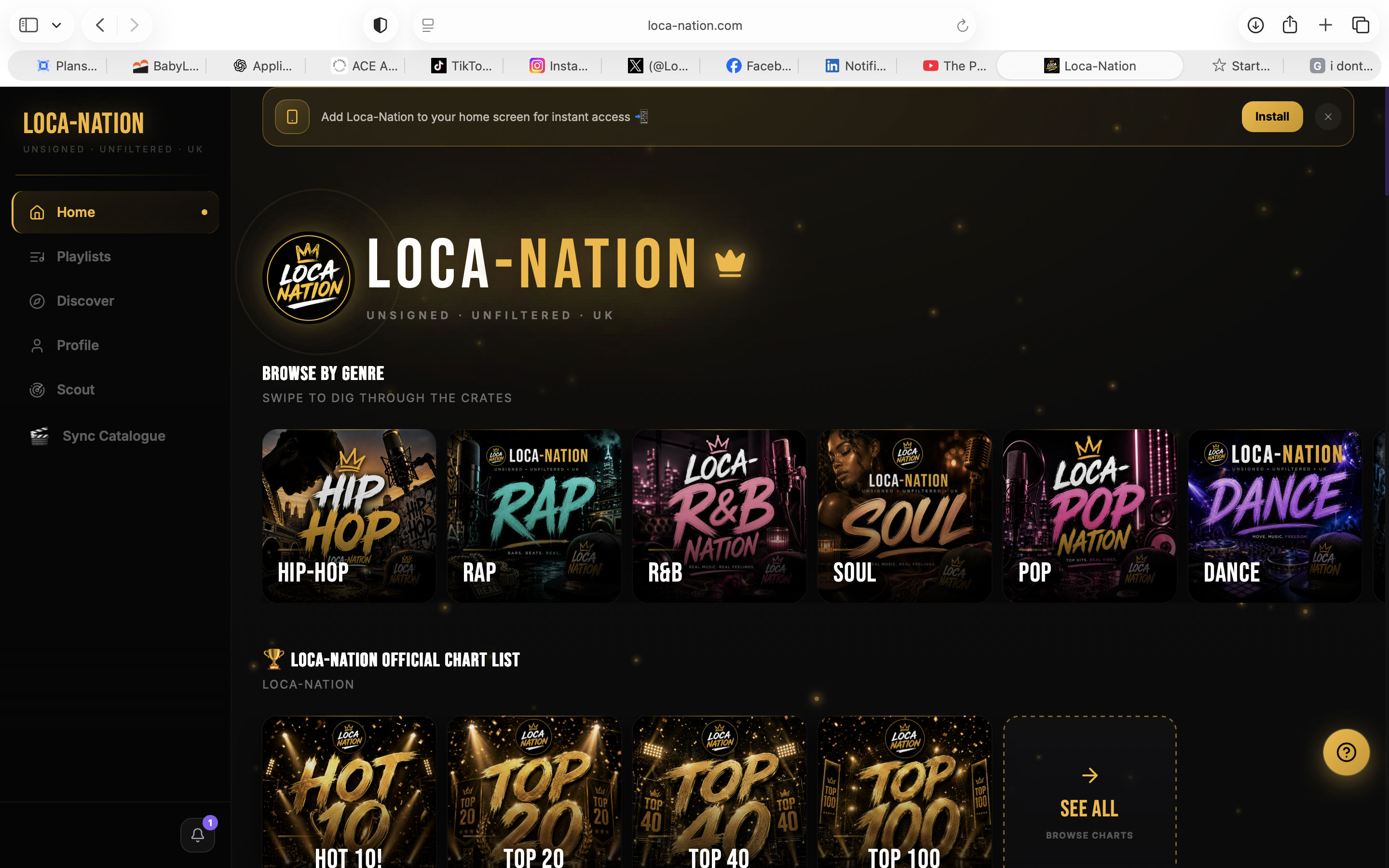
That's the real complement to a supervisor database. One approach is contact-led, you find them. The other is audience-led, genuine listener engagement puts your track in front of people actively looking for new music to place. Loca-Nation also opens sync licensing submission opportunities directly through the platform, so chart momentum and outreach can work side by side instead of competing for your time. Set up your artist profile at Loca-nation and start building the kind of track record that gets noticed without a single cold email.
Sources
- SyncPlacement | Find Music Supervisor Contacts
- theSYNCreport — Features & pricing
- Vidsyn — Definitive guide to reaching out to music supervisors