
A music split sheet is the signed, dated record of who owns what percentage of a song's composition, and every contributor must sign it before leaving the session. The single immediate action is to fill it out, get every signature, and keep a copy.
TL;DR:
- Using a properly filled and signed split sheet on the session day ensures accurate PRO registration and prevents royalties from being frozen or redirected.
- The split sheet should meticulously detail contributors' legal names, roles, PRO/IPI numbers, ownership percentages totaling exactly 100%, and signatures from all involved parties.
- Separate documentation of songwriting (composition) shares and master rights is essential, with clear sections for each to avoid costly mistakes.
- Retroactively reconstructing and re-signing a split sheet is necessary if songs were released without one, and updates should be promptly registered with PROs.
- Maintaining signed split sheets and consistent metadata simplifies licensing, discovery, and cross-border royalty flow, especially when working with international collaborators.
Table of Contents
- What Is a Music Split Sheet and Why Does It Matter?
- What Fields Belong on a Publisher-Ready Split Sheet?
- How Do You Create, Agree on, and Sign a Split Sheet?
- Publishing Splits vs. Master Splits: Keep Them Separate
- Common Split Methods and Example Allocations
- Choosing a Split Sheet Template or Generator
- From Signed Split Sheet to Registered Royalties
- Jason's Perspective: Split Hygiene as a Discovery Habit
- What Happens When Contributors or Splits Change
- How Do You Resolve a Split Disagreement?
- Are Split Sheets Legally Enforceable?
- How Split Sheets Affect Copyright Ownership
- Splitting Rights Across Borders
- Why Split-Sheet Discipline Beats Split-Sheet Templates
- How Loca-Nation Supports Clean, Discovery-Ready Metadata
- Sources
What Is a Music Split Sheet and Why Does It Matter?
A split sheet is a written agreement, not a verbal understanding, that assigns ownership shares in a song's composition. It answers one question with legal weight: who wrote what, and how much of it.
The distinction that trips up most new collaborators is composition versus master. Composition is the song itself, the melody and lyrics. The master is the specific recorded version. A split sheet almost always governs the composition side, which is exactly the side your performing rights organization (PRO) cares about for royalty collection.
PROs and publishers rely on split sheets as the source of truth for registration. Without one, you're relying on memory and goodwill months or years after the session, when memories fade and goodwill can too.
- Missing splits often mean rejected PRO registrations
- Conflicting registrations across contributors can freeze royalty payments until resolved
- Unregistered or disputed shares frequently end up as black-box royalties, collected but never paid out to anyone
What Fields Belong on a Publisher-Ready Split Sheet?
A split sheet built for real PRO registration needs specific fields, not vague credit lines. Skip one and you'll be chasing signatures again in six months.
Song metadata comes first: the title, any working or alternate title, and the session date or a session ID if you track multiple sessions, as discussed in song headings for accurate metadata management. Then each contributor's information:
- Full legal name (not a stage name)
- Role in the song (lyrics, melody, track, topline, and so on)
- PRO affiliation and unique IPI/CAE number
- Publisher name, if signed to one
- Contact information for future correspondence
The percentage section is where most homemade templates fail. Every ownership share must total exactly 100%, with a separate area for master splits if you're documenting those too. Close with dated signature lines for every contributor. No signature, no agreement, at least not one that will hold up when a distributor or PRO asks for proof.
How Do You Create, Agree on, and Sign a Split Sheet?
Do it the day you record, in the room, while everyone who touched the song is still there. Waiting until after mixing, mastering, or release is how splits become disputes.
- List every contributor who touched the composition, including anyone who wrote a hook or changed a chord during the session.
- Pick a splitting method (equal or contribution-based, covered below) before anyone starts negotiating percentages in isolation.
- Set the percentages together, out loud, so nobody signs something they haven't actually agreed to.
- Fill in every required field: legal names, PRO, IPI/CAE, roles, song title, date.
- Sign. Digital signing tools built into most split sheet generators create a binding PDF with a timestamp trail.
- Distribute a signed copy to every contributor immediately, not "I'll send it later."
Pro Tip: Store signed PDFs in one shared folder by song title and date, not scattered across email threads. When a PRO or sync licensor asks for proof six months later, you want a ten-second lookup, not an archaeological dig.
If you've already released songs without a split sheet, don't panic. Reconstruct the agreement now: contact every contributor, agree on percentages retroactively, sign it, and update your PRO registration to match.
Publishing Splits vs. Master Splits: Keep Them Separate
Confusing these two is the most common, and most expensive, mistake independent musicians make. The writer's share and publisher's share together make up the composition, the song as an idea. Master points are something else entirely: ownership in the specific recording.
A split sheet usually documents composition only. If you want to record master points on the same document, add a clearly separated section so nobody mistakes a producer's master percentage for a share of the underlying song.
- Writer's share: goes to whoever contributed melody, lyrics, or composition
- Publisher's share: goes to whoever administers or owns the publishing rights, often the writer themselves if unsigned
- Master points: negotiated separately, frequently through a producer agreement, and cover the sound recording, not the composition
A typical producer arrangement might grant the producer 50% of the master but 0% to a small percentage of the composition, depending on how much they contributed to the actual song versus the track. Document both, but don't let one bleed into the other.
Common Split Methods and Example Allocations
Two methods cover most sessions. The Nashville method, also called the equal split, gives every contributor an even share regardless of who did what. It's fast, it avoids arguments in the room, and it works well when contributions are genuinely close in weight.
Contribution-based splitting assigns percentages by actual input. A session might land like this: topline writer 40%, producer/composer 40%, additional lyric contributor 20%. Another might look like a lead songwriter at 60%, a co-writer at 25%, and a featured artist who added a verse at 15%.
- Use equal splits for genuinely collaborative writing sessions with no clear lead
- Use contribution-based splits when one person drove the song and others added smaller pieces
- Producer splits on the master side commonly range widely depending on genre and involvement, and should be documented separately from composition shares
Incomplete split information is a leading cause of black-box royalties, according to Songtrust's split sheet glossary, meaning even small independent releases can quietly lose revenue that nobody ever collects.
The 80/20 heuristic, giving 80% to primary writers and splitting 20% among smaller contributors, is a useful conversation starter, not a rule. Treat it as a guideline you can override the moment the real work doesn't match that ratio.
Choosing a Split Sheet Template or Generator
Not every downloadable PDF you find online is built for PRO registration. Before you trust one, check that it collects the fields your PRO actually asks for.
A usable template or generator should include:
- An IPI/CAE field for every contributor, not just a name and percentage
- A dropdown or field covering major PROs so nobody has to guess formatting
- A totals validation feature that flags anything not summing to 100%
- Free PDF export and, ideally, built-in digital signing
Templates from providers like Songtrust follow this same structural pattern, and generators such as The Vocal Market's split sheet tool typically support both composition and optional master fields alongside signing. Whichever tool you pick, adapt it to match your own PRO's registration format exactly, matching field names and number formatting reduces the chance of a mismatch when you submit.
From Signed Split Sheet to Registered Royalties
A signed split sheet only pays off once it's translated into matching PRO registrations. Each contributor needs to register their agreed percentage at their own PRO using their exact legal name and IPI number, not a nickname or a slightly different spelling.
- Send the signed split sheet to every contributor immediately after the session.
- Each contributor registers their share at their own PRO, quoting the same song title and percentage everyone agreed to.
- Cross-check that every registration lists the same title, the same total percentage, and the same collaborator names.
- Watch for registration conflicts. Mismatched entries are how royalties end up frozen or diverted to black-box collections until someone reconciles the paperwork.
- Re-verify a few weeks after registration that all parties show up correctly in each PRO's system.
Run this checklist any time you add a new song to your catalog, and revisit it if you ever change distributors or sign with a publisher.
Jason's Perspective: Split Hygiene as a Discovery Habit
Here's what I've come to believe after watching how independent catalogs actually fall apart: it's rarely one dramatic dispute. It's a slow accumulation of unsigned PDFs, half-finished agreements, and "we'll sort it out later" that never gets sorted.
The habit that separates artists with clean catalogs from everyone else is simple. Fill out and sign the split sheet before anyone leaves the room, centralize every signed PDF in one place, and cross-check PRO entries after registration rather than assuming they matched. None of that is glamorous. All of it is the difference between getting paid and chasing a black-box claim two years later.
There's a discovery angle too, one most songwriters underrate. Sync licensors and platforms move fast, and they move away from catalogs with messy metadata. A song with a clean, signed split sheet and matching registrations is a song a licensor can clear in a day instead of a month. Clean paperwork isn't just protection. It's part of being sync-ready and discoverable in the first place.
— Jason
What Happens When Contributors or Splits Change
Songs get reworked. A verse gets cut, a new producer gets added during a remix, or a feature verse gets swapped before final release. Every one of those changes means your split sheet needs an update, not a mental note.
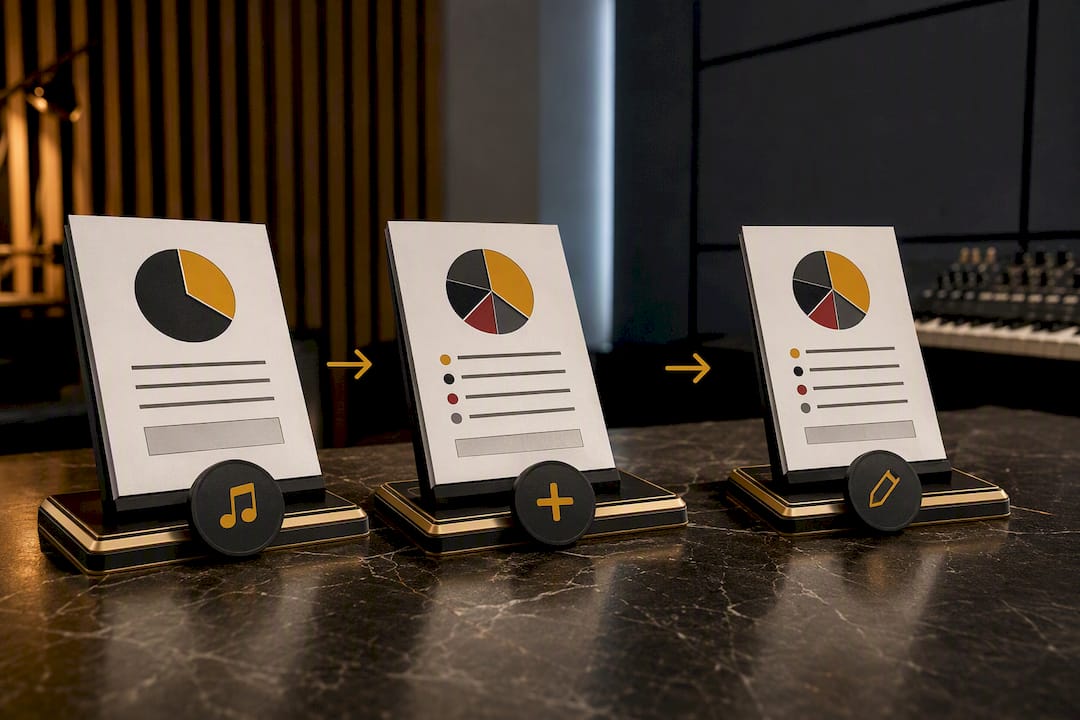
The safest approach is to treat any change in contributors as a full re-signing event, not a quiet edit to one line. Draft an amended split sheet reflecting the new percentages, get every current and former contributor to sign off on the change (yes, including the person being removed or reduced), and date it clearly so there's no ambiguity about which version governs the song going forward.
Keep the original split sheet on file even after an amendment. Version history matters if a dispute ever surfaces later, since it shows the full paper trail of who agreed to what and when. Number your versions or use the session date as a natural version marker, whichever makes sense for how you organize your files.
Once an amended split sheet is signed, update the PRO registration for every affected contributor immediately. This is the step people skip, and it's the one that causes the most damage. A signed amendment sitting in a folder does nothing if the PRO record still reflects the old percentages. Mismatched registrations after a change are just as likely to trigger a payment freeze as a missing split sheet was in the first place.
If a collaborator becomes unreachable after a change, whether they left the project on bad terms or simply went dark, document your attempts to reach them. A dated email or message thread showing a good-faith effort to get sign-off carries weight if the situation ever needs formal resolution.
How Do You Resolve a Split Disagreement?
Most split disputes come from one of two sources: a percentage nobody actually agreed to in the room, or a contributor added mid-project without ever renegotiating shares. Both are preventable, but once a disagreement exists, you need a way through it that doesn't end the collaboration or the song.
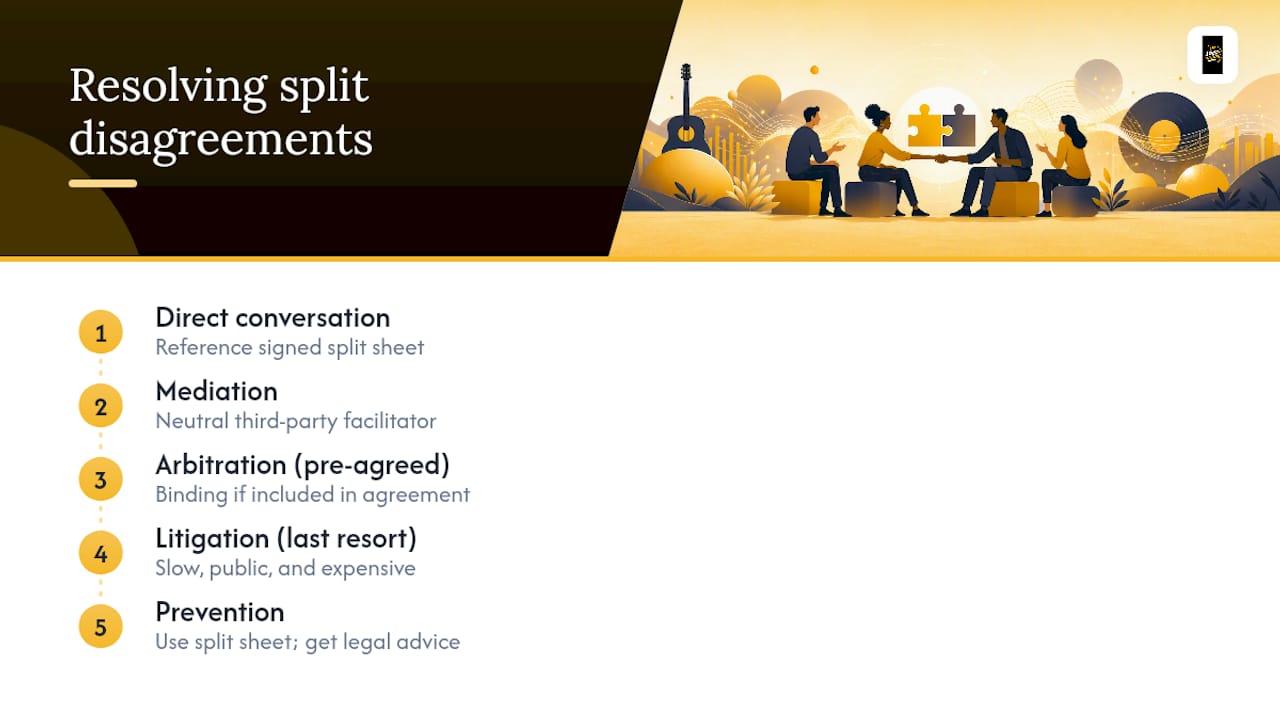
Start with a direct conversation, referencing the original split sheet if one exists. If everyone signed something at the time, that document is your anchor point, and most disagreements resolve once people re-read what they actually agreed to under time pressure in the studio.
When a plain conversation doesn't resolve it, mediation is the next reasonable step. A neutral third party, often someone with music industry or legal familiarity, can walk through contribution levels and help the group land on a number everyone can live with, without anyone feeling like they lost.
For higher-stakes catalogs or disputes involving significant money, arbitration clauses written into a broader collaboration agreement can specify a binding process in advance, saving everyone from an expensive court fight later. This only works if it was set up before the dispute, which is one more reason to pair your split sheet with a fuller collaboration agreement on valuable projects.
Litigation is the last resort, slow, public, and expensive, and it should stay that way. Most split disagreements are really disagreements about memory and perceived contribution, not fraud, and they respond better to a documented paper trail and a calm conversation than to lawyers.
The prevention here matters more than the cure: a split sheet is a record of agreement, not a full legal shield, and for high-value or genuinely contested rights, professional legal advice is worth the cost before a disagreement becomes a formal claim.
Are Split Sheets Legally Enforceable?
A signed split sheet functions as a contract, and courts and PROs generally treat it as evidence of the parties' agreed intent regarding ownership shares. That said, it isn't a substitute for full copyright registration or a producer agreement covering master rights, it's a record of what was agreed, not the entire legal picture.
Enforceability depends heavily on clarity. A split sheet with legal names, specific percentages, a song title, a date, and signatures from every party is far harder to challenge than a scrawled note or a text message thread.
For most independent releases, a properly filled and signed split sheet is sufficient documentation of composition ownership. Where the stakes rise, a song that's charting, a sync placement with real money attached, or a catalog acquisition, getting a lawyer to review the split sheet and pair it with a formal collaboration agreement is the more sound move. The split sheet establishes intent; the legal agreement gives that intent enforceable teeth.
How Split Sheets Affect Copyright Ownership
Copyright in a song exists the moment it's created, split sheet or not. What the split sheet controls is not whether copyright exists, but who owns which share of it.
This matters more than most first-time collaborators realize. Under the default rule in many jurisdictions, co-authors of a joint work are treated as equal owners absent any written agreement to the contrary.
A signed split sheet overrides that default with the percentages you actually agreed to. It's the mechanism that turns "we wrote this together" into "here is precisely who owns what," which is exactly the clarity a PRO or a court needs when royalties or rights are on the line.
Splitting Rights Across Borders
International co-writes are common now, a producer in one country, a topline writer in another, a featured vocalist somewhere else entirely, and they add a layer of complexity that a same-city session doesn't have.
What changes is the PRO landscape. Each contributor typically belongs to their own country's PRO, and international reciprocal agreements between PROs are what allow royalties to flow back to each writer regardless of where a stream or play happens. Getting each contributor's correct PRO and IPI/CAE number on the split sheet is what makes that cross-border flow actually work.
Currency, tax withholding, and publisher administration can also vary by country, which is one more reason a split sheet works best as the foundation, not the entire legal framework, for an international collaboration. When real money is at stake across multiple territories, pairing the split sheet with professional advice on cross-border royalty flows is worth the cost.
Why Split-Sheet Discipline Beats Split-Sheet Templates
The template matters less than most guides suggest. What actually protects a songwriter isn't which PDF they downloaded, it's whether every contributor signed it in the room, on the day, before anyone's memory of "who did what" started to drift.
Conventional advice spends most of its energy on which fields to include. That's necessary but not sufficient. The bigger failure point I keep seeing is timing: split sheets filled out weeks after a session, sent around by email, half-signed, then forgotten until a royalty statement looks wrong. By then, reconstructing intent is guesswork dressed up as documentation.
Prioritize the signature over the software. Any reasonably complete template, filled and signed on session day, beats a perfect template signed months later or not at all. Pair that habit with a quick cross-check of your PRO registrations after you submit, since that's the step almost everyone skips and the one most likely to cause a frozen payment down the line.
Get the habit right first. The paperwork follows naturally once signing on the day becomes non-negotiable in your workflow.
— Jason
How Loca-Nation Supports Clean, Discovery-Ready Metadata
Good split-sheet habits protect your royalties. Clean, centralized artist metadata is what helps you get discovered in the first place, and that's where Loca-Nation fits into the picture.
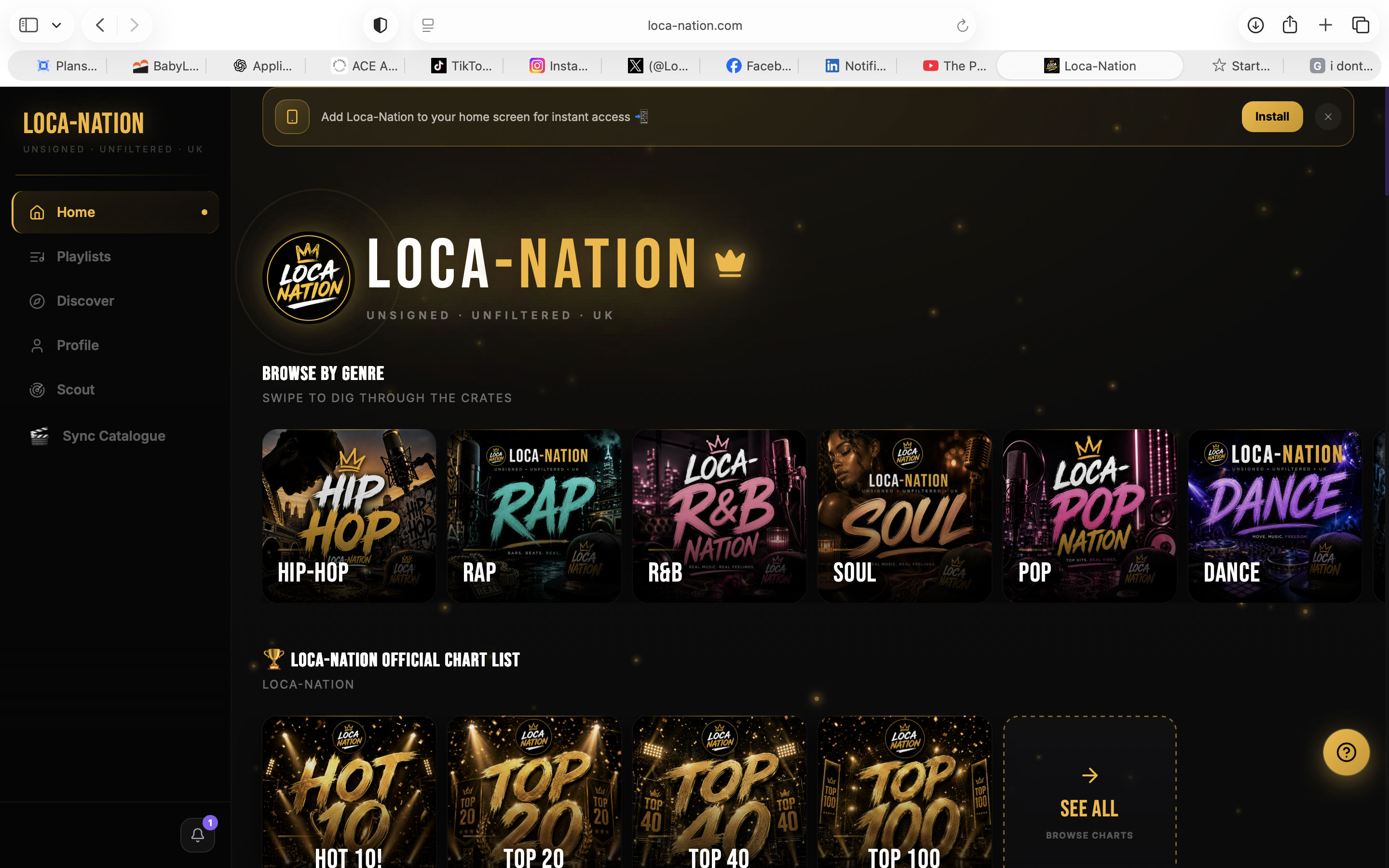
The platform gives independent artists a public profile to centralize their catalog, access to chart competitions based on genuine listener engagement, and analytics that show how music is actually performing across regions and genres. For artists building a sync-ready catalog, the platform also connects to sync licensing opportunities, where accurate, well-documented songs move through licensor review far faster than catalogs with loose or missing metadata. None of that replaces your split sheet or your PRO registration, but a centralized profile makes it easier to keep your release information consistent across every platform that touches your music.
If your split sheets are signed and your registrations are clean, the next step is making sure the right people can actually find and hear the song. Visit the Loca-Nation landing page to set up your artist profile and see where your music fits in the current chart competition.
Sources
- Collaboration & split sheets — Maori Music Publishing
- The complete guide to split sheets — Songkeeper
- Music split sheet template — Vandall