
Release one strong single on a Friday, backed by a 6 to 8 week campaign that prioritizes pre-saves, editorial pitching, and short-form content. Then repeat that cadence every 6 to 8 weeks. This is the simplest model that works for most independent artists, and it beats the “big album, no plan” approach almost every time.
Do these five things this week:
-
Confirm your master is finished and locked, no more revisions.
-
Pick your release date, a Friday, with sufficient lead time for preparation.
-
Open your pre-save link and add it to your bio and email signature.
-
Draft a 150 to 250 word editorial pitch for Spotify for Artists.
-
Book one short-form video shoot for teaser content.
Pro Tip: Set your release date before you finish anything else. Every other deadline in this plan works backward from that single date.
Key Takeaways
A repeatable 6 to 8 week release cadence built on pre-saves, early editorial pitching, and consistent short-form content outperforms sporadic, unplanned drops for most independent artists.
| Point | Details |
|---|---|
| Start with the date | Pick your Friday release date first; every deadline works backward from it. |
| Pitch early, not minimum | Submit editorial pitches 4 to 6 weeks out, not the 7-day platform minimum. |
| Saves matter more than streams alone | Ask fans directly to save tracks since saves drive algorithmic playlist placement. |
| Document every campaign | Track what worked so your next release improves on this one. |
| Use Loca-Nation for real discovery | Chart competitions and the sync catalogue put releases in front of new listeners and industry professionals based on engagement, not budget. |
Table of Contents
-
Choosing Your Music Release Strategy: Format, Goals, and Metrics
-
How to Prepare Audio, Artwork, and Metadata for Distribution
-
Music Release Notes for UK Artists: Timing and Chart Practicalities
-
Utilizing Email Marketing and Fanbase Communication Effectively
Choosing Your Music Release Strategy: Format, Goals, and Metrics
A single with a focused multi-week campaign beats a rushed album almost every time, because it lets you concentrate your pitching, content, and budget on one moment instead of spreading thin. Choose a single if you have limited budget or want to test a sound; choose an EP if you already have 3 to 4 finished tracks and a modest following; save albums for when you have a real marketing budget and a fanbase that streams your back catalog consistently.
Set one primary goal and two supporting ones. If your primary goal is first-week streams, support it with save rate and email signups, not five unrelated metrics.
Pro Tip: Pick one primary KPI, like first-week streams, and two supporting ones like save rate and email conversion. Chasing every metric at once is how campaigns lose focus.
A Week-by-Week Music Release Strategy Timeline You Can Copy
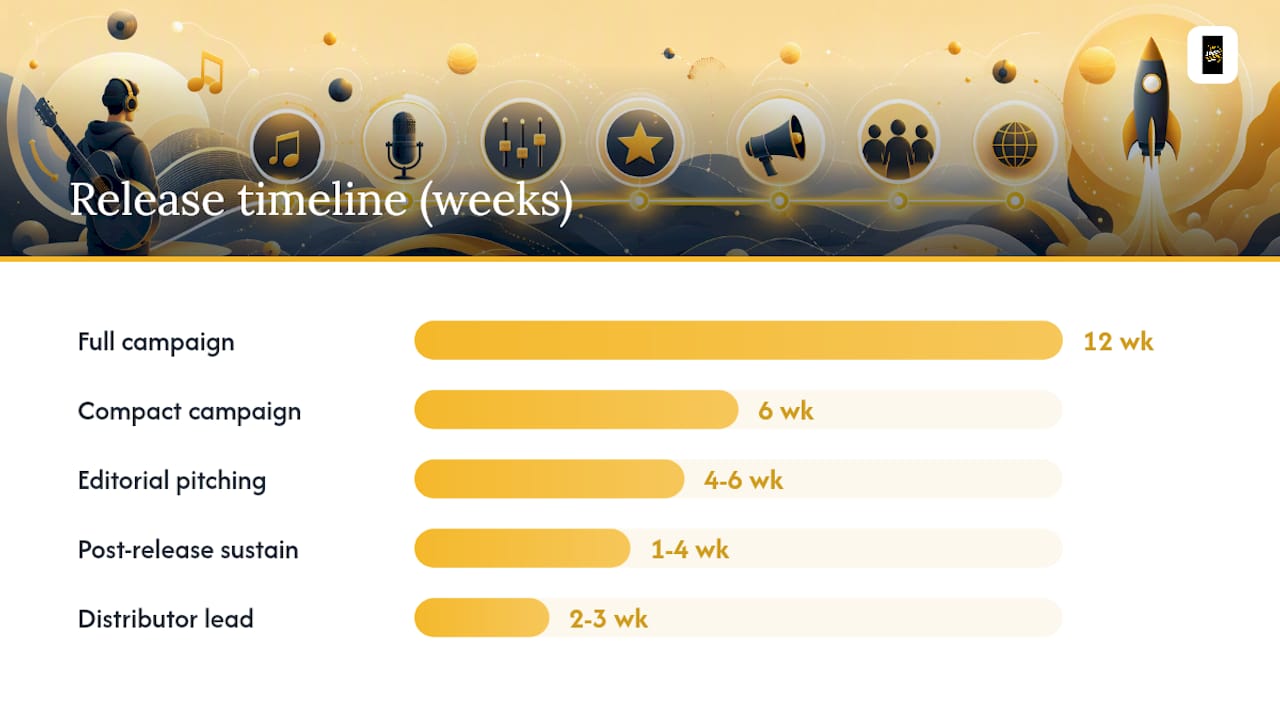
Two timelines work for most independent budgets: a standard 12-week campaign for singles with real pitching ambitions, and a compact 6-week version when you’re moving fast or releasing frequently under a waterfall strategy. The trade-off is simple: 12 weeks gives editorial curators time to notice you; 6 weeks trades some playlist reach for speed and momentum.
Mastering should wrap around week 12 before your street date, and distributors typically want final audio, artwork, and metadata 2 to 3 weeks before release for reliable processing. Editorial pitching works best 4 to 6 weeks out, not the 7-day minimum most distributors list.
-
Weeks 12 to 10: Finish mastering, lock the release date, register metadata (ISRC, splits, PRO).
-
Weeks 9 to 7: Finalize artwork (3000×3000px), upload to your distributor, submit your editorial pitch.
-
Weeks 6 to 4: Launch pre-save, start teaser short-form content, confirm any premiere or press placement.
-
Weeks 3 to 1: Ramp content cadence, send email reminders, lock release-day logistics.
-
Release week: Publish, post, email, and reply to every comment for 48 hours.
-
Weeks 1 to 4 after: Sustain content, review metrics, and start planning the next single.
The compact 6-week version compresses weeks 12 to 7 into a tighter 3-week prep window. You lose editorial lead time but keep momentum for a waterfall cadence.
Copy this checklist into your calendar:
-
Mastering deadline (WAV, 24-bit, 44.1kHz minimum)
-
Artwork deadline (3000×3000px, RGB, JPG)
-
Metadata lockdown (titles, ISRC, splits)
-
Distributor upload date
-
Editorial pitch submission date
-
Pre-save launch date
How to Prepare Audio, Artwork, and Metadata for Distribution
Send your master to mastering with 2 to 3 weeks of buffer before your distributor deadline. Deliver WAV or FLAC files at 24-bit, 44.1kHz or higher, and don’t chase overly loud masters. Streaming platforms normalize loudness anyway.
Artwork needs to be 3000×3000 pixels, RGB, JPG or PNG, with no blur or pixelation at full size. If you’re on Spotify, a looping Canvas video (a short vertical clip) adds motion to your track page and costs nothing extra to create.
Your metadata checklist before uploading:
-
Correct track and artist titles, spelled exactly the same everywhere
-
ISRC code assigned and recorded
-
Featured artists and collaborators tagged correctly
-
Split sheets signed before release, not after
-
PRO registration complete (PRS for Music in the UK)
-
Mechanical Licensing Collective registration if applicable
Distributors like CD Baby need your final assets 2 to 3 weeks before street date for reliable processing across platforms. Leave a buffer for metadata corrections, because DSPs sometimes reject submissions over mismatched titles or missing ISRCs.
Pro Tip: If your track samples or covers another song, clear it before you upload anything. Bandcamp pre-orders can also drive real first-week sales if you open them alongside your pre-save, giving fans who buy physical or digital copies a reason to act early.
When Should You Pitch Playlists, Press, and Radio?
Pitch Spotify for Artists editorial 4 to 6 weeks before release, not the 7-day minimum the platform technically allows. Curators need lead time to actually listen and slot your track into upcoming playlists, and last-minute pitches almost never make the cut.
Your pitch should run 150 to 300 words and include your genre, mood tags, a short story about the track (a feature, a tour, a personal angle), and links to your best previous work. Keep it tight:
-
Track title, release date, and genre/mood tags
-
One or two sentences on what makes this release notable
-
Links to your artist profile and previous streaming numbers
-
High-resolution artwork and a private streaming link
-
Contact information and social handles
Blogs and online music press generally want assets 2 to 3 weeks out; radio, especially community and regional stations, often needs 4 weeks or more to slot a track into rotation.
The strongest pitches avoid generic language entirely. They name a specific reason a curator should care right now, whether that’s a tour date, a feature artist, or a genre moment the track fits into.
Pro Tip: Follow up once, politely, about a week after your first pitch. If a curator responds with interest, coordinate the premiere date before you announce anything publicly.
Building a Promotion Plan: Content, Pre-Saves, and Paid Ads
Think in three channels: owned (email, your website), rented (social, DSPs), and earned (press, playlists), a framework NotNoise outlines well for independent campaigns. Owned channels convert best, so lean on them first.
A simple 4-week pre-release to 2-week post-release calendar:
-
Weeks 4 to 3: Teaser clips, behind-the-scenes content, pre-save link live everywhere.
-
Week 2: Short-form video hooks (15 to 30 seconds), countdown posts, email reminder.
-
Release week: Daily posts, email blast, reply to every comment.
-
Weeks 1 to 2 after: Lyric videos, fan reposts, live performance clips if available.
Pre-saves convert existing fans more reliably than they attract new ones, so launch them 3 to 4 weeks out and push them through every owned channel you have. Only test paid ads once you have a working smart-link and at least one piece of content proven to convert organically; start with $50 to $100 toward retargeting people who already engaged with your content.
Budget roughly: $0 to $200 for a lean campaign (organic only), $200 to $800 for a growth campaign (light ads plus a pitch service), $800+ for an ambitious push (video production, paid playlist campaigns, press outreach support).
Overloading fans with “buy my song” posts kills engagement fast.*
Your Release-Day Checklist for Maximum First-Day Impact
Release day runs on execution, not creativity. Post your scheduled content the moment your track goes live, update your smart-link, and send your email blast within the first hour.
-
Update your artist profile: pin the release, set your Spotify Artist Pick, refresh your Canvas.
-
Post across every social channel using your pre-scheduled content.
-
Send your email blast with a direct streaming link.
-
Reply to every comment and share for the first 48 hours.
-
Ask fans to save the track, not just stream it. Saves feed algorithmic playlists more directly than a single play.
If you have a premiere or radio play lined up, coordinate the timing so it doesn’t cannibalize your own release-day clicks.
Quick troubleshooting list:
-
Track missing on a platform: check distributor status before panicking.
-
Wrong metadata live: contact your distributor immediately for a correction window.
-
Smart-link broken: test every link yourself before you post it.
Reading Your Release Data and Planning What’s Next
Compare your first-day streams to your first-week total. A strong ratio means your day-one push (email, social, pre-saves) converted well; a weak ratio, where streams trickle in slowly, points to a discovery problem rather than a conversion problem.
| Result | Diagnosis | Next Move |
|---|---|---|
| Low saves, decent streams | Fans listen but don’t return | Rework your call-to-action, ask directly for saves |
| Strong first day, weak week two | Owned audience converted, no new discovery | Add light ad spend or renew pitch efforts |
| Steady growth across two weeks | Playlists picking up the track | Sustain content, don’t rush the next release |
Track where your streams originate: playlist, algorithmic (Discover Weekly, Release Radar), or direct. Geographic spread also tells you where local radio or regional playlists might be worth targeting next time.
Give a single release 3 to 4 weeks before deciding whether to sustain or move on. If you’re following a waterfall cadence, that timeline lines up naturally with planning your next single 6 to 8 weeks out.
Document what worked: which pitch got a response, which content format got shares, which day-of-week performed best. That log becomes your playbook for every release after this one.
Waterfall Singles, Surprise Drops, or a Full Album Rollout?
Three rollout types dominate independent releases right now. Waterfall singles release every 6 to 8 weeks and roll into a cumulative EP or album, letting stream counts merge when you reuse ISRCs correctly. Surprise drops skip pre-release pitching entirely and rely on an existing engaged fanbase to spread the news fast. Traditional album rollouts front-load singles over months before the full project lands.
-
Waterfall: Best for building momentum with a modest fanbase; low resource need per release.
-
Surprise drop: Works only if you already have a large, responsive audience; almost no lead time needed.
-
Album rollout: Needs the biggest budget and longest runway, but rewards artists with strong existing catalogs.
| Approach | Discoverability | Resource Need | Ideal Audience Size |
|---|---|---|---|
| Waterfall singles | High, repeated chances | Low per release | Small to mid-sized |
| Surprise drop | Low unless already famous | Very low | Large, highly engaged |
| Album rollout | Medium, front-loaded | High | Established with prior singles |
Reuse ISRCs only when a track’s stream history should merge, such as re-releasing a single as part of an EP. Never reuse one for a genuinely new mix or version, since that corrupts your streaming data.
For small budgets, waterfall singles almost always win. They spread your limited resources across multiple discovery windows instead of gambling everything on one drop.
Music Release Notes for UK Artists: Timing and Chart Practicalities
If you’re releasing in the UK, a few practicalities differ. Bandcamp pre-orders count toward chart eligibility once you’re registered with a chart-registered retailer, so set those up alongside your pre-save, not as an afterthought. Official Charts reporting has specific requirements around release windows and formats, so check registration status early if chart position matters to your campaign.
BBC Introducing accepts uploads directly from artists and often needs several weeks of lead time before it considers airplay, longer for national shows than local ones. Build a short, genre-appropriate UK press list: regional online publications, genre blogs, and community radio stations tend to respond faster than national outlets and are worth pitching 4 weeks out.
Pro Tip: A single well-timed UK gig around your release date can drive more algorithmic signal than a week of extra social posts. Local radio plays and in-person shows both generate the kind of concentrated listening spikes that platforms notice.
Legal Considerations Before You Release Anything
Rights and clearances are the part of a release plan artists skip until something goes wrong. Sort them out before your distributor upload, not after.
Split sheets need signatures from every writer and producer before release, listing exact percentages. Verbal agreements don’t hold up if a dispute happens later, and disputes happen far more often once a track starts earning money.
Register with a Performing Rights Organization, PRS for Music in the UK, so your public performance royalties get collected. Register with the Mechanical Licensing Collective if your distribution reaches US streaming platforms, since mechanical royalties there run through a separate system entirely.
If your track samples another recording or covers a song you didn’t write, clear it before release. Sample clearance can take weeks, and an uncleared sample risks a takedown after you’ve already spent a campaign’s worth of effort building momentum.
Featured artists need a written agreement covering royalty splits, credit, and promotional obligations, even for a favor between friends. Producers typically expect a percentage or flat fee, spelled out in a simple contract, not a text message.
None of this needs an entertainment lawyer for a straightforward single release. Templates exist for split sheets and feature agreements, and most PROs publish clear registration guides. The goal is documentation before money starts moving, not after.
Utilizing Email Marketing and Fanbase Communication Effectively
A modest, engaged email list often converts better than a much larger social following. Even 200 genuinely engaged subscribers can outperform thousands of casual followers when it comes to actual day-one streams, because email reaches inboxes directly instead of competing with an algorithm.
Build your list before you need it. Add a signup form to your website, offer something small in exchange (an unreleased demo, early access to tickets), and mention it at every show.
Send three emails around a release: a teaser 3 to 4 weeks out with the pre-save link, a reminder the week of release, and a release-day email with direct streaming links. Keep each one short. Fans skim, and a long email about your creative process loses them before the link.
Segment your list if you can. Fans who bought merch or attended a show respond differently than someone who signed up once for a giveaway. A slightly more personal note to your most engaged segment often outperforms a mass blast to everyone.
Collaborations and Featuring Artists Strategy
A well-chosen feature expands your reach into an entirely different fanbase overnight, but it only works when both artists’ audiences overlap enough to care. A feature with someone whose sound and audience feel completely disconnected from yours rarely converts, no matter how big their following.
Reach out to potential collaborators with a clear pitch: what the track needs, what you’re offering (royalty split, promotional push, credit), and a realistic timeline. Confirm the split sheet and release logistics before recording, not after the track is finished, since disagreements about credit or promotion get harder to resolve once everyone’s invested.
Coordinate promotion so both artists post on the same day, tagging each other and cross-posting to each fanbase. A feature loses most of its value if only one artist promotes it.
Leveraging Live Performances Around Your Release
A show booked around your release date does double duty: it builds anticipation beforehand and gives you fresh content afterward. Announce a gig 3 to 4 weeks before release, using it as another reason for fans to pre-save and follow along.
Perform the new track live before release if you can, even at a small local show. It builds familiarity and gives you clips for short-form content weeks before the official release date. After release, film the track’s live debut and post it as a follow-up content piece; live footage tends to outperform studio promo content for engagement.
If touring isn’t realistic, a single local show timed around release week still generates real signal, both for content and for the kind of concentrated local streaming activity that platforms and regional radio notice.
The Mistakes That Sink an Otherwise Good Release
The timeline isn’t the strategy. It’s a container. Too many artists treat scheduling as the work itself, then over-invest in production while under-investing in pitching and content, and go quiet the moment release day ends. The corrective habit that actually works: a weekly campaign review, even five minutes, checking what moved and what didn’t, using the same checklist every single release.
How Loca-Nation Can Amplify Your Independent Release
Most of this plan gets your release in front of the fans you already have. Loca-Nation is built for the harder problem: getting your track in front of people who’ve never heard of you, judged on the track itself rather than your follower count or industry connections.
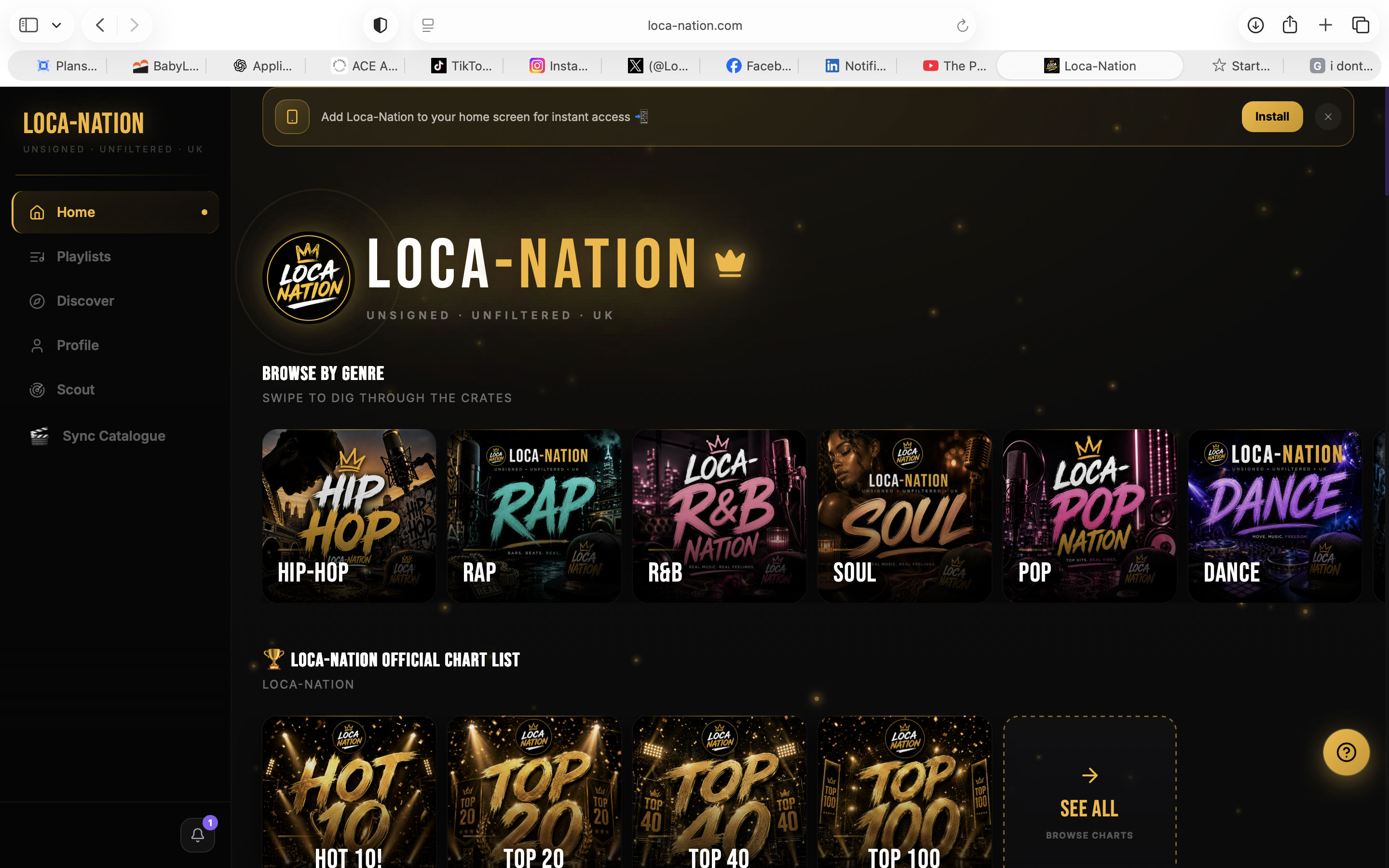
Once your release is live, submitting it to Loca-Nation’s chart competitions puts it in front of genuine listeners voting by genre and location, a discovery path that runs on engagement rather than playlist politics or paid placement. If sync licensing is part of your long-term goal, the sync catalogue gives industry professionals a direct way to find and license your music without you chasing supervisors cold. Setting up genre onboarding correctly also means your track gets categorized right from day one, so it surfaces in the charts where your actual audience is looking. Create your artist profile and upload your next release to see where it lands.
Sources
Read the LANDR release planning guide for a foundational checklist, and the NotNoise marketing framework for the owned/rented/earned channel model. Use Spotify for Artists for editorial pitching and analytics, CD Baby for distribution, LANDR for mastering, and Bandcamp for direct sales and pre-orders that count toward first-week momentum.