
A music press release earns coverage when it gives a journalist one clear news hook, a Release Details block with direct streaming links, and a quote they can use without rewriting it. This article shows you what that looks like in practice: annotated samples for the five most common announcement types, a template you can fill in tonight, and the pitching mechanics that decide whether an editor opens your email or deletes it.
TL;DR:
- Including a clear, newsworthy hook focused on milestone achievements or unique angles increases the chances of media coverage.
- The Release Details block must contain precise information such as the release date, format, and direct streaming links, formatted as a short bulleted list.
- Links should be specific and direct to verify the content quickly, avoiding vague phrases like "available on all platforms."
- Most releases are ignored because they lack a compelling story, incomplete details, or artist quotes that sound promotional rather than natural.
- Hosting press assets in a stable, easily accessible location with consistent naming helps journalists find materials instantly and encourages ongoing coverage.
Table of Contents
- Music Press Release Examples for Every Announcement Type
- The Music Press Release Format Every Editor Expects
- Adjusting the Template for Different Announcements
- Sending It: Pitching Without Getting Ignored
- Why Most Music Press Releases Get Ignored
- What Actually Moves the Needle in Music PR
- Where to Host Your Press Materials and Release Assets
- Sources
Music Press Release Examples for Every Announcement Type
Every strong release starts with a hook a stranger would care about, not just a fact you're proud of. Below are five compact samples showing that pattern in action. Copy the structure, not the wording.

Single announcement. Headline: "Portland Singer-Songwriter Mara Voss Releases 'Static Bloom,' Her First Single Since Signing With [Local Label]." Lead: one sentence naming the milestone (the label deal), followed by a release date and one-line description of the sound. The hook here is the signing, not the song itself. That's what gives an editor a reason to write about it now.
Album announcement. Headline: "The Quiet Static Announce Debut LP 'Harbor Lights,' Out March 2026." The lead answers who, what, when, and why in one breath, then the body expands on the concept behind the record. The credibility signal is a named producer or a prior placement (sync deal, festival slot). Journalists scan for that kind of anchor before deciding the story is real.
Tour announcement. Headline: "Folk Duo River & Rowe Add 12 U.S. Dates, Tickets on Sale Friday." The scannable element is a dated list of cities and venues, which belongs directly in the Release Details block. Concrete dates, ticket links, and promoter names make tour stories far more actionable for local outlets, since editors in each city can lift their own date without digging through a full itinerary.
Video release. Headline: "Director Ana Cruz Debuts Music Video for 'Low Tide' by Coastal Static." The news hook is the director's name or a visual concept worth describing in a sentence, plus a direct embed link so the editor can watch it in one click.
Award or recognition. Headline: "Producer Nate Wells Nominated for [Award Name], Ceremony Set for June 2026." Keep it to the award name, the date, and one sentence on why the nomination matters to the artist's story.
- Each sample leads with the hook, not a description of the music.
- The Release Details block sits in the same spot every time, formatted as a short list.
- Quotes are short, specific, and sound like something the artist would actually say.
The Music Press Release Format Every Editor Expects
A Release Details block with direct streaming links is what separates a release journalists can use from one they skim past. The structure below covers every required element in the order editors expect to see them.
- Headline. One line, active verb, under 100 characters. Formula: [Artist] + [Action] + [What] + [Why It Matters]. Example: "Nashville Duo Redwood Hour Release Sophomore Album, Their First Since Signing With [Label]."
- Subhead. One sentence adding context the headline couldn't fit, often the release date or format.
- Dateline. City, state, and date, formatted like "AUSTIN, TX, February 12, 2026."
- Lead paragraph. Answers who, what, when, where, and why in 40 to 60 words. Example: "Independent artist Jules Ferro releases her debut EP 'Low Light' on February 14, following a string of sold-out shows across the Pacific Northwest."
- Body, paragraph one. Expand on the story: what inspired the project, who collaborated on it, what makes it different.
- Body, paragraph two. Add context: prior press, chart or playlist placements, tour plans, or a relevant milestone.
- Artist quote. One or two sentences, conversational, never marketing copy.
- Release Details block. Title, artist, label, release date, format, and direct streaming links, formatted as a short bulleted list.
- Boilerplate. Two to three sentences on the artist's background, written in third person.
- Media contact. Name, email, and phone number, if available.
Aim for 300 to 500 words total. Anything longer buries the story; anything shorter usually skips a required element.
Pro Tip: Write the Release Details block first, before the narrative. It forces you to confirm you actually have a release date, format, and working streaming links before you waste time polishing prose around gaps.
Adjusting the Template for Different Announcements
The skeleton above stays constant, but what you emphasize inside it changes with the announcement type.
- Singles: Lead with the streaming link and a one-line hook. Skip lengthy backstory. If you're pitching playlist curators alongside press, mention that in the note, not the release itself.
- Albums: Add a short line on the concept or theme, mention the tracklist, and include pre-order or pre-save details in the Release Details block.
- Tours: Push dates, venues, and ticket-on-sale information to the top of the body. Local hooks (a hometown show, a venue's reopening) tend to matter more than the tour's overall size.
- Videos: Name the director, include the embed link, and note where high-resolution stills are hosted.
- Awards: State the award name, the date of the ceremony, and one sentence on why the nomination is significant to the artist's trajectory.
Sending It: Pitching Without Getting Ignored
A well-built release still fails if the pitch email buries it. The mechanics below matter as much as the writing.
- Subject line. Keep it to eight words or fewer and lead with the news, not your name: "New Single + UK Tour Dates: [Artist Name]." Personalize the first line of the email itself, referencing a piece the journalist actually wrote.
- Skip attachments. Link to a hosted EPK and direct streaming URLs instead of zip files or PDFs. Attachments trigger spam filters and slow down a journalist who's scanning fifty emails before lunch.
- Time it right. Send Tuesday through Thursday mornings when possible, and segment your list by genre and by local versus national outlets so each pitch matches what that outlet actually covers.
- Follow up once. Wait five to seven business days, then send a short two-line follow-up. If there's no response after that, move on rather than pushing a third email.
Why Most Music Press Releases Get Ignored
Most rejected releases share the same handful of problems, and all of them are fixable in under ten minutes.
- The story is blurry. If a journalist can't tell what the news is in the first sentence, the release usually fails. Pick one angle and cut everything that competes with it.
- The Release Details block is missing or incomplete. No release date, no format, no direct link. Missing a dateline, boilerplate, or contact detail can get a release rejected outright.
- Links say "available on all platforms" instead of linking directly. Journalists and curators need to verify in one click, not go searching.
- The copy is overlong or hyperbolic. "Groundbreaking" and "unlike anything you've heard" tell an editor nothing. A concrete detail always beats a superlative.
- The quote reads like marketing copy. Quotes should sound like something the artist would actually say, not a tagline.
Pro Tip: Name your EPK folder and press assets consistently across every release ("ArtistName_PressKit_2026") so editors who cover you twice can find the new material instantly.
What Actually Moves the Needle in Music PR
Most guides treat the press release as a formality, something to check off before the "real" promotion starts. That's backwards. The release is the story you're asking someone else to retell, and if it's blurry, no amount of follow-up email charm fixes that. The artists who get consistent coverage aren't the ones with the best music. They're the ones who hand journalists a usable story with a working link attached.
Loca-Nation's chart system exists partly because so much independent talent never gets past that first hurdle: no press contact, no hosted assets, no clear hook. A free chart placement or a milestone tied to genuine listener votes is exactly the kind of concrete detail that turns a vague pitch into a usable one. Adapt the template here, but don't skip the boring parts. The boilerplate and the media contact line are what get you covered twice.
— Jason
Where to Host Your Press Materials and Release Assets
Once your release is written, it needs somewhere stable to live: high-res photos, streaming links, and your boilerplate, all in one place a journalist can find without digging. Loca-Nation's Press Centre gives independent artists exactly that, alongside chart placement that adds a genuine credibility signal to your next pitch instead of an empty claim about buzz.
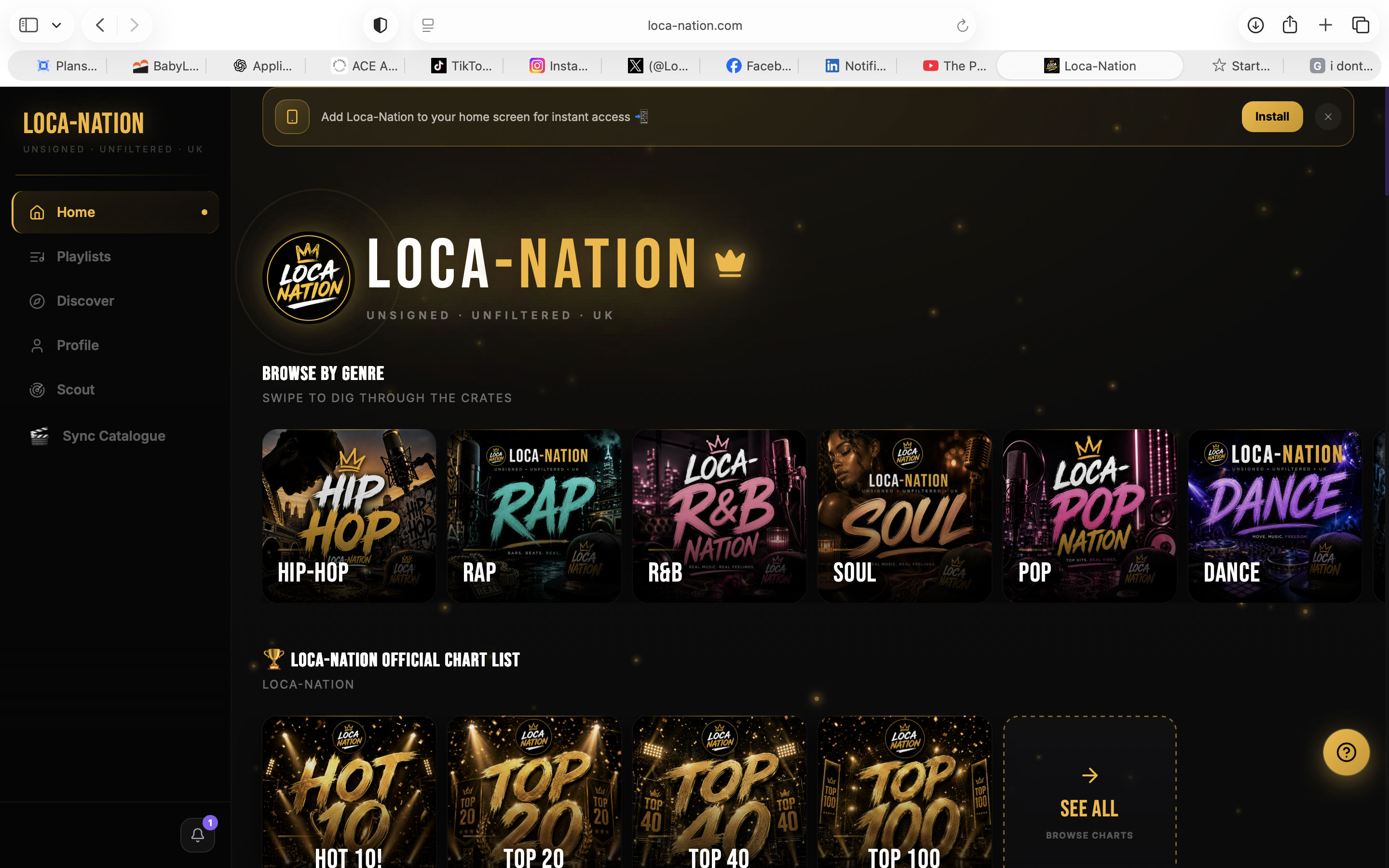
A few reasons artists pair a press release with these tools:
- Host your EPK, images, and release details in one stable link instead of scattered attachments.
- Use chart exposure and genre categorization as a real, listener-driven credibility signal in your quote or boilerplate.
- Surface your catalog to industry professionals browsing for sync licensing opportunities, a natural follow-on story angle after a release lands coverage.
If you're getting ready to pitch, set up your Press Centre profile first. It's the single fastest way to make sure every link in your next release actually works when an editor clicks it.