
A one page music marketing plan maps six things: your goal, your audience, your flagship asset, your owned channel, your timeline, and four execution steps. That structure is what moves a release forward, not a longer to do list. The plan works because it forces sequencing: goal and audience decide messaging, assets feed every channel, and the timeline dictates when PR and playlist pitching actually happen.
The plan at a glance:
- Goal: one measurable target (e.g., a specific measurable number of saves in the first week)
- Audience: one primary listener profile, not three
- Flagship asset: a lead single or video that repurposes into 5+ pieces
- Owned channel: an email or SMS list you control
- Timeline: pre-release, release week, post-release phases
Do these two things in the next 48 hours:
- Write your one sentence campaign goal and pick your primary audience.
- Submit your track to Spotify for Artists before your release date, since the editorial pitch window closes once a song goes live.
Budget-wise, industry guidance consistently points to content and distribution first, PR second, playlist pitching third, and paid social last.
Key Takeaways
A music marketing plan succeeds when it sequences one goal, one audience, complete assets, and owned-channel growth before any paid spend enters the picture.
| Point | Details |
|---|---|
| Start with one goal | Pick a single measurable target and audience before building any content. |
| Assets come first | Finish masters, artwork, and press kit before pitching press or playlists. |
| Budget follows a sequence | Prioritize content and distribution, then PR, then playlist pitching, then paid social. |
| Owned channels win long term | An engaged email list converts better than follower count for retention. |
| Use Loca-Nation for discovery | Chart competitions and analytics help surface engaged regions and connect artists to industry scouts. |
Table of Contents
- How does a music marketing plan actually flow?
- What goals and audience should your campaign target?
- What brand assets do you need before launch?
- How do you set up distribution and DSP profiles?
- What should your content calendar and platform strategy look like?
- How do you pitch press and playlists effectively?
- What does a sample release timeline look like?
- How much should you budget and where should it go?
- Which KPIs matter and how often should you check them?
- The one-page campaign checklist
- What actually separates a plan that works from one that stalls?
- Where does Loca-Nation fit into this plan?
- Frequently Asked Questions
- Sources
How does a music marketing plan actually flow?
A working music marketing strategy moves through four phases, each with its own job and its own signals to watch.
- Foundation (weeks 1 to 2): lock your goal, audience, brand assets, and distributor setup.
- Pre-release (weeks 3 to 6): pitch playlists and press, build anticipation content, grow your email list.
- Release week: launch content in a tight burst, track early engagement, respond to comments fast.
- Post-release / sustain (weeks 7 onward): repurpose top content, follow up with curators, convert listeners into repeat fans.
| Phase | Core objective | Key signal watched |
|---|---|---|
| Foundation | Assets and infrastructure ready | Metadata accuracy, profile completeness |
| Pre-release | Anticipation and pitching | Pre-saves, email signups |
| Release week | Momentum and algorithmic pickup | Saves, repeat listens, playlist adds |
| Post-release | Retention and repurposing | Follower growth, email conversion |
Singles typically need six to eight weeks of lead time; EPs and albums need eight to twelve. Skipping the foundation phase is the single most common reason artists scramble during release week.
What goals and audience should your campaign target?
Vague goals like "grow my fanbase" don't tell you what to build. Specific goals do. Try one of these templates and attach a number and a date:
- Stream growth: "10,000 streams in the first 14 days"
- Email signups: "300 new subscribers by release day"
- Ticket sales: "50 tickets sold for the release show within 3 weeks"
- Playlist adds: "15 independent playlist placements before launch"
For audience mapping, answer three questions: Where does this listener already spend time online? What other artists do they follow? What problem or feeling does this song solve for them? Cross-reference Spotify for Artists audience data with your Instagram and TikTok insights to confirm the overlap.
Pick one primary audience segment and one measurable conversion (a stream count, an email signup, a ticket sold) rather than tracking five vague metrics at once.
What brand assets do you need before launch?
Build these assets before you touch a single ad dollar or pitch email, since a DIY release plan starts with timeline planning and asset creation, not the other way around.
- Final audio masters and stems (for remixes, sync, and video work)
- Cover artwork in every required DSP dimension
- Three to five short-form video clips cut from the same session
- A one-page press kit: bio, photo, links, past coverage
- A smart link landing page for every ad and post
- Email copy drafted for the announcement and release-day send
A strong artist bio follows a pattern: who you are, what makes your sound distinct, and one concrete proof point (a placement, a chart run, a milestone). Reuse that same positioning line across your Spotify bio, press kit, and pitch emails so every touchpoint reinforces the same identity.
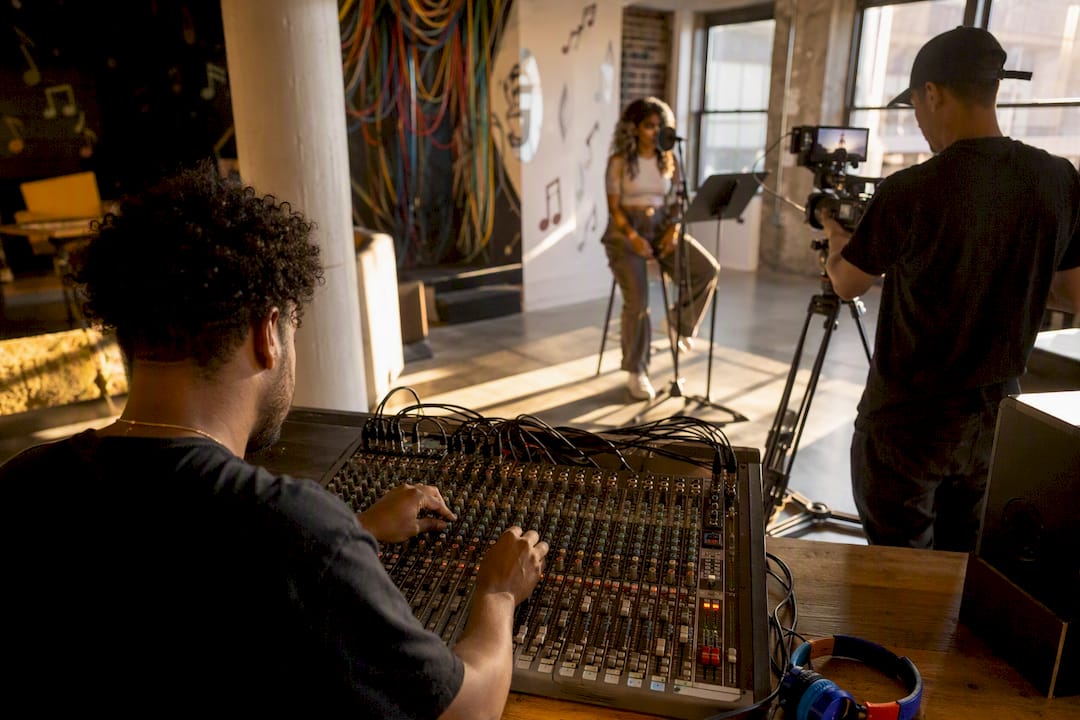
Pro Tip: Treat your master recording session as a content shoot too. One afternoon in the studio, filmed properly, becomes your single cover art, three TikTok clips, a YouTube Short, and B-roll for your press kit.
How do you set up distribution and DSP profiles?
Infrastructure work is unglamorous but it decides whether any of your later pitching lands.
- Claim and verify your Spotify for Artists profile.
- Confirm ISRC codes and metadata accuracy with your distributor.
- Register your release with a Performing Rights Organization before it goes live.
- Submit to your distributor at least four weeks ahead of release day for standard processing windows.
Once live, optimize each profile:
- Write a bio that matches your press kit language exactly.
- Upload high-resolution images sized for each platform's specs.
- Add Canvas loops or artist visuals where the DSP supports them.
- Set your artist territories correctly if you have region-specific plans.
A smart link that routes every ad and post through one tracked landing page, then out to the destination DSP, gives you a measurable conversion path instead of guessing which platform actually drove a stream.
What should your content calendar and platform strategy look like?
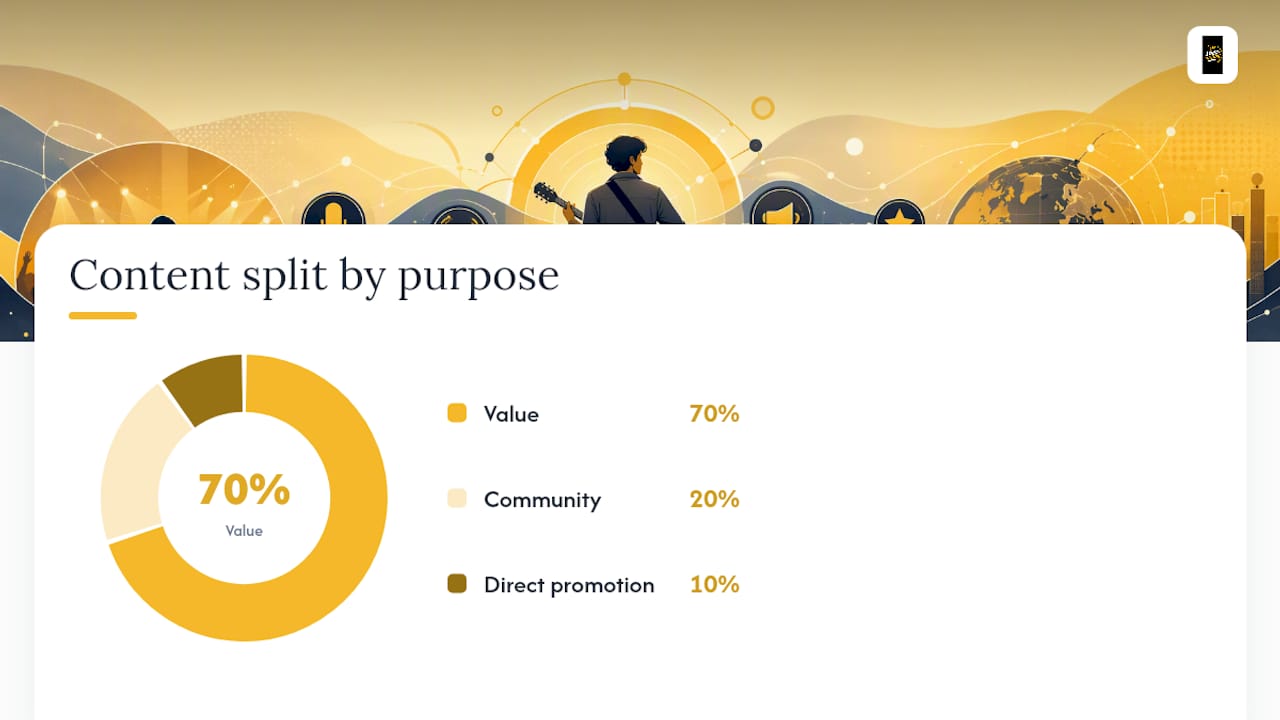
A workable content split is 70% value, 20% community, 10% direct promotion, and batching a month at a time keeps you from scrambling weekly.
| Week | Focus | Sample post |
|---|---|---|
| 1 | Behind the scenes | Studio clip, writing story |
| 2 | Community | Fan question, poll, duet request |
| 3 | Anticipation | Countdown clip, lyric teaser |
| 4 | Release push | Full video, link in bio, pinned post |
Each platform plays a different role. TikTok drives discovery through creator seeding and sound uses. Instagram handles follow-up: Stories, saves, and DM conversations with people who already found you elsewhere. YouTube Shorts compounds over months because it's indexed by search, so a clip posted today can still surface listeners a year from now.
Batch record four weeks of clips in one session, then test different hooks on the same footage rather than shooting new content every time. Watch saves, sound uses, and profile visits as your signal metrics, not just view counts.
Pro Tip: Seed your track to five to ten mid-size creators before release day instead of only posting it yourself. A creator's audience trusts their taste more than an unfamiliar artist account, and that's often what triggers the first wave of algorithmic pickup.
How do you pitch press and playlists effectively?
Three playlist tiers exist, and relying on just one rarely sustains discovery:
- Editorial: submit through Spotify for Artists at least seven days before release.
- Algorithmic: driven by early saves and repeat listens in the first 24 to 48 hours after launch.
- Independent curators: direct outreach to playlist owners on Spotify, SoundCloud, or YouTube.
A short curator pitch works better than a long one: your name, the track, one sentence on why it fits their playlist, and the smart link. Follow up once after five to seven days if you hear nothing.
For press, decide early whether you're pitching yourself or hiring help. DIY outreach works when you have existing local press relationships or a strong story angle. A PR service makes sense when you need broader reach across blogs you don't already know, though expect it to add cost rather than guaranteed placements.

Sequence outreach so editorial pitches go out first, independent curator emails follow a week later, and press pitches land two to three weeks before release day.
Pro Tip: Pitch playlist curators and press at the same time you finalize your artwork, not after. Curators need lead time just like editors do.
What does a sample release timeline look like?
Here's a compressed schedule for a single release, counting weeks relative to release day (week 0):
- Week -8: Finalize masters, artwork, and metadata; submit to distributor.
- Week -6: Begin content batching; set up smart link and pre-save page.
- Week -4: Send editorial and press pitches; launch pre-save campaign.
- Week -2: Follow up with curators; finalize release-week content.
- Week 0 (release week): Publish content daily; monitor saves and playlist adds.
- Week +4: Repurpose top-performing clips; follow up with press for reviews.
- Week +8: Evaluate KPIs and plan next release cycle.
Before release day, confirm: metadata is locked, the pre-save link works on mobile and desktop, your landing page loads fast, and every pitch has been sent. Map each task into Google Calendar or a project tool like Trello with a due date and an owner, so nothing depends on memory during release week.
How much should you budget and where should it go?
Budget priority follows a consistent order across industry guidance: content and distribution first, PR and outreach second, playlist pitching third, paid social last.
A $0 strategy built on organic content, curator outreach, playlist pitching, and email growth is slower but tends to be more durable than a paid-first approach.
Paid ads make sense once a piece of content already shows organic traction, since amplifying what already works reduces wasted spend compared to boosting unproven posts.
Pro Tip: Run a $20 to $50 test ad pointing to your smart link before committing real budget. If click-through rate is healthy but saves stay flat, the problem is your landing page, not your ad spend.
Which KPIs matter and how often should you check them?
Track these in order of priority: smart link click-through rate, email signups, saves-per-stream, repeat listeners, follower growth, and conversion rate from ads to streams or email signups.
Check daily during week one, weekly through month one, then monthly afterward.
- High clicks but low saves: your landing page or artwork isn't converting, fix that first.
- High saves but low follower growth: retarget engaged listeners with a follow-focused ad or post.
- Flat email signups: your lead magnet or signup incentive likely needs rework.
An engaged email list consistently outperforms raw follower counts for actual conversion, so weight that metric heavily when deciding what to scale.
The one-page campaign checklist
Copy this into your task manager, grouped by phase:
Foundation (artist, 1 to 2 weeks): lock goal and audience; finalize masters and artwork; submit to distributor.
Pre-release (artist plus collaborator, 3 to 4 weeks): pitch editorial and curators; build email list; batch content.
- Confirm Spotify for Artists profile is claimed and complete.
- Send all playlist and press pitches.
- Launch pre-save campaign and email signup flow.
Release day (artist, 1 day): publish content across all platforms; monitor first 24 hour signals.
Post-release (artist, ongoing): repurpose top clips; follow up with curators; send email recap.
What actually separates a plan that works from one that stalls?
Prioritize your owned email list before you chase follower counts. It's the channel nobody's algorithm can take away from you, and it converts better than almost anything else in this plan.
The mistakes that cost artists the most time follow a pattern. Starting paid ads before any content shows organic traction wastes money on unproven creative. Skipping metadata and ISRC checks causes playlist and royalty headaches months later. Sending one playlist pitch and calling outreach "done" ignores that editorial, algorithmic, and independent curator tracks work in parallel, not as a single shot.
Fix each one by sequencing correctly: content first, then pitching, then paid amplification, and never skip the boring infrastructure step.
Where does Loca-Nation fit into this plan?
Loca-Nation gives independent artists a discovery layer built specifically for the campaign structure above, not another generic streaming profile buried among millions of tracks. Where DSPs treat every unsigned artist the same, Loca-Nation runs an official chart system where your position moves based on genuine listener votes, giving your release week momentum a place to actually show up and get noticed by industry scouts.
During pre-release, set up your genre-specific profile so your track is positioned correctly for local, regional, and genre chart competition from day one. Post-release, use the platform's analytics to see which regions are engaging most, then focus your email and content follow-up there. If sync placement is part of your monetization plan, the sync catalogue puts your track in front of industry professionals actively searching for new music to license. Create your artist profile and enter your first chart competition before your next release date.
Frequently Asked Questions
How long should a music marketing plan take to build? A basic plan covering goals, audience, assets, and timeline can be drafted in a single afternoon. Execution across the full pre-release to post-release cycle typically spans six to twelve weeks depending on release type.
Do I need a big budget to run an effective campaign? No. A $0 strategy built on organic content, curator outreach, and email growth can work, though it moves slower than a campaign with even a modest paid budget.
What's the biggest mistake independent artists make in their music promotion strategy? Starting paid social ads before any content has shown organic traction. Test organically first, then amplify what already works.
How many playlists should I pitch for one release? Aim across all three tiers—editorial, algorithmic, and independent curators—rather than relying on just one. Independent curator outreach involves multiple individual pitches.
Should I hire a PR service or handle outreach myself? DIY works well if you already have local press contacts or a strong story angle. A PR service helps when you need reach into blogs and outlets you don't have existing relationships with.
Sources
- How To Build An Effective Music Marketing Strategy In 2026: Step-By-Step Plan, Tools, And Mistakes To Avoid - Magnetic Magazine
- Music Marketing Strategy: The Complete Guide for Independent Artists in 2026 | NotNoise
- Music Marketing Strategy Guide for Independent Artists - Discovery Music Group