
Labels sign measurable traction and artists who make A&R's job easy. That is the entire formula. If you want to get noticed by labels, the first move is not a bigger ad budget or a "viral" moment. It is proof, packaged so a busy A&R person can absorb it in under a minute.
Your task for the next seven days: build one Electronic Press Kit (EPK) link for your best track and pull one hard number, either your 30-day listener growth or your current monthly listener count from your streaming dashboard.
- Pick your strongest, fully mastered track (not a rough mix)
- Write a 3-line bio and grab two press-worthy photos
- Pull one growth metric from Spotify for Artists or similar
- Upload the track and profile to a discovery platform like Loca-Nation so the traction starts compounding publicly
Pro Tip: If you have zero press or playlist history yet, lead with growth rate instead. A 40% month-over-month jump on a small base often reads better to an indie label than a flat 5,000 monthly listeners.
Key Takeaways
Getting noticed by labels comes down to documented growth, a professional EPK, and outreach that respects an A&R's time and inbox.
| Point | Details |
|---|---|
| Start with one metric | Pull your monthly listener count or 30-day growth rate before writing any pitch. |
| Build a one-page EPK | Include a mastered track, short bio, photos, press quotes, and direct contact info. |
| Target 10 to 15 labels | Research roster fit and recent signings instead of blasting a generic list. |
| Lead pitches with numbers | Use three bullets showing growth, engagement, and one upcoming show or release. |
| Build proof on Loca-Nation | Upload tracks and compete on the official independent chart to generate real, visible traction data. |
Table of Contents
- How to Get Noticed by Labels: What A&R Actually Looks For
- Building Label-Ready Assets: EPK, Track, and Web Presence
- Which Metrics Actually Prove Traction to a Label
- Finding the Right Labels and A&R Contacts
- How to Pitch a Label Without Getting Ignored
- Mistakes That Get Your Pitch Deleted Instantly
- Networking That Actually Builds Label Visibility
- How Long It Actually Takes to Get Discovered by a Label
- Using Social Media and Online Communities to Get on a Label's Radar
- The Playbook Beats the Wish List
- Why Loca-Nation Is the Fastest Free Route to Build Label Proof
- Frequently Asked Questions
- Sources
How to Get Noticed by Labels: What A&R Actually Looks For
A&R teams are not talent judges in the abstract. They are risk managers looking for artists who make their job easy, combining strong music with professional, low-drama communication and documented growth. That's the whole job description, boiled down.
The signals they weigh most:
- Growth trajectory: are your numbers climbing, flat, or spiking off one viral moment?
- Engagement, not just reach: saves, shares, and repeat listens matter more than raw plays
- Live draw: can you sell tickets in your own city, not just stream well from a bedroom?
- Press and sync interest: has anyone outside your circle already validated the work?
- Team signals: do you have a manager, lawyer, or producer who can vouch for you?
Genre and roster fit outweighs chasing the biggest names. A boutique house label with 12 artists cares more about whether you sound at home next to their existing roster than whether you have major-label numbers. Realistic listener thresholds for indie labels run far lower than major-label benchmarks, so compare yourself to artists one step ahead of you, not to platinum acts.
Pro Tip: Before pitching any label, listen to their last five signings back to back. If your track would sound out of place on that playlist, you're wasting both your time and theirs.
Building Label-Ready Assets: EPK, Track, and Web Presence
Labels expect a finished, mastered track paired with a single press-ready page before they'll seriously listen. Sending a demo mix or a naked Dropbox link signals you're not ready, even if the song is good.
Your EPK needs exactly these pieces:
- A one-page bio (three to five sentences, no life story)
- Your best mastered track with an inline player, not a forced download
- Two or three press quotes or blog mentions, if you have any
- Two to three high-resolution photos
- Direct contact information, not a "DM me" instruction
Technical basics matter more than people admit. Export masters at 16-bit/44.1kHz WAV minimum, use smart links (Linkfire, Feature.fm, or similar) so the track plays inline instead of forcing a click-through, and host everything on a single URL you control rather than scattering it across five platforms.
Your website and email list function as your home base, the one place that doesn't disappear if a platform algorithm changes overnight. If you're also investing in higher-end promo photography or physical merchandising, a supplier like Temple of Sound can help you get studio-grade materials without hiring a full production team.
Pro Tip: Name your EPK file with your artist name and track title, not "EPK_final_v3.pdf". A&R inboxes are chaos; make yours findable six months later.
Which Metrics Actually Prove Traction to a Label
Numbers do the talking before your music even gets pressed play. The metrics that carry weight: monthly listeners, month-over-month growth rate, save rate (saves divided by streams), top five cities by listener count, playlist adds, ticket sales from your last two shows, and email subscriber count.

Growth rate is simple math: subtract last month's monthly listeners from this month's, divide by last month's number, multiply by 100. A jump from 2,000 to 2,800 monthly listeners is a 40% increase, a number worth leading with even though the raw total is modest.
A&R teams also check for conversion, not just reach: are listeners becoming subscribers, ticket buyers, or repeat streamers, or did you get one big playlist add that spiked and vanished?
Indie labels respond better to steep growth curves on small numbers. Majors want scale first. Pull your screenshots directly from the Spotify for Artists dashboard, export the growth chart, and crop it clean, no clutter, no unrelated tabs visible.
Finding the Right Labels and A&R Contacts
Depth beats breadth here. A tightly researched list of 10 to 15 labels will outperform a blast to 200 every time.
Start with roster research:
- List labels whose recent signings (last 12 to 18 months) sound like you
- Check artist credits on Spotify and Bandcamp to find which label or publisher backs a similar act
- Search LinkedIn for the specific A&R rep, not just a generic "info@" inbox
- Look at conference lineups (SXSW, The Great Escape) for A&R attendees in your genre
Warm introductions still beat cold blasts by a wide margin. Managers, lawyers, producers, and other artists remain the most reliable path to getting an A&R's attention, since cold submissions get filtered harder every year.
- Ask a producer you've worked with for one introduction, not a mass forward
- Comment meaningfully on A&R posts before ever pitching them anything
- Track every contact in a simple spreadsheet: name, label, date contacted, response
How to Pitch a Label Without Getting Ignored
The email body:
- Two to three sentences: who you are, the track, why it fits their roster specifically
- Three bullets: your standout metric, a press or playlist mention, one upcoming show or release date
- Two links only: the track (inline player) and your EPK
A&Rs favor pitches that make their job effortless: concise copy, real numbers, and playback that works without a download. A researched opening line referencing their actual roster beats any generic compliment.
Follow up once, after 10 to 14 days, only if you have something new to add, a fresh press mention, a growth spike, an upcoming show. If an A&R responds asking for more, have stems, a rights summary, and a rough release timeline ready to send within 24 hours.
Pro Tip: Never attach files directly. A bloated email gets flagged or ignored; a clean link gets clicked.
Mistakes That Get Your Pitch Deleted Instantly
Unfinished or unmastered tracks kill credibility on the first listen. A dead website, missing contact info, or a bio full of typos does the rest.
Red flags that stop an A&R cold:
- Purchased streams or bot-driven playlist adds (easily spotted in analytics)
- Inconsistent branding across platforms (different artist photo, different genre tags)
- Unclear rights ownership, especially on tracks with uncredited co-writers or samples
Before signing anything, understand that advances are typically loans recouped from future royalties, not free money, and an entertainment lawyer should review any offer before you sign. Fix the fixable items above within 48 to 72 hours; there's no reason a broken link or a stale bio should cost you a deal.
Networking That Actually Builds Label Visibility
Most artists treat networking as an event they attend twice a year. Real industry networking is closer to a habit: showing up consistently in rooms, DMs, and comment sections where the people who matter already are.

Curators and gatekeepers frequently discover talent through peers and local scenes, not cold outreach. That means your producer, your mixing engineer, the headliner you opened for last month, and the artist one rung above you on a local bill are all potential bridges to an A&R contact. Treat every collaborator relationship as a long-term asset, not a one-off transaction.
Practical moves that compound over time:
Attend genre-specific showcases and local scene nights rather than generalist "networking mixers." Volunteer at a small festival or radio station if you're early career; proximity to decision-makers matters more than a polished pitch from a distance. Join genre-specific Discord servers, subreddits, or Facebook groups where working producers and label staff actually participate, and contribute before you ever ask for anything.
A single strong referral from a working professional carries more weight than a hundred cold emails. Labels trust their own networks far more than an inbox full of strangers, which is exactly why warm introductions convert at a dramatically higher rate. Build the relationship first. The ask comes later, and it should feel small when it finally does.
How Long It Actually Takes to Get Discovered by a Label
Patience is not passive waiting. It's active building while the slow parts of the industry catch up to you.
Realistic timelines vary enormously by genre, output, and luck, but a useful pattern holds across most independent artist journeys: six to twelve months of consistent releasing and metric-building typically precedes any serious label conversation, and that's for artists already putting in the work weekly. Artists expecting a single viral track to trigger a signing within weeks are almost always disappointed. The exceptions exist. They are not the plan.
What separates artists who get noticed within a year from those who stall out for three: consistency of output, not intensity of one campaign. Releasing every six to eight weeks, even smaller singles, keeps your profile active in algorithms and in the minds of anyone tracking you. A single big push followed by six months of silence resets whatever momentum you built.
Treat rejection or silence from a label as data, not verdict. A "no" from one A&R this quarter often becomes a "let's talk" once your growth curve looks different in six months. Keep the same target list, keep re-engaging with fresh metrics, and don't burn a contact by pitching the same static profile twice.
Using Social Media and Online Communities to Get on a Label's Radar
Social platforms matter to A&R teams as evidence, not as a popularity contest. A modest, engaged following on one platform reads better than scattered, inactive profiles across six.
Pick the platform where your genre's audience actually lives; TikTok favors short hook-driven clips, Instagram rewards consistent visual identity, and genre-specific forums or Discords reward depth over polish. Post evidence of your process, not just finished tracks: a snippet of a session, a lyric draft, a soundcheck clip. A&R reps scroll for signs of a real working artist, not a highlight reel.
Engage inside genre communities before you ever post your own music there. Comment thoughtfully on tracks you genuinely admire, join conversations in subreddits or Discord servers built around your specific sound, and let people discover your profile organically rather than through a hard pitch. Communities notice artists who contribute before they notice artists who only self-promote.
Cross-post your growth wins, a new playlist add, a milestone listener count, but do it sparingly. Constant self-congratulation reads as noise. One well-timed post about a genuine milestone, tagged appropriately, does more work than daily updates nobody asked for.
The Playbook Beats the Wish List
Most advice about getting signed treats "getting noticed" like a mystery involving luck, connections, or a magic viral moment. It isn't. The artists who get real label conversations are the ones who turn themselves into a low-effort yes: a clean EPK, a growth number that tells a story, and a genre fit an A&R doesn't have to squint to see.
Where conventional advice falls short is the obsession with big totals. Chasing 50,000 monthly listeners before pitching anyone wastes months an artist could spend building relationships and refining a smaller, sharper trajectory. A 40% growth curve on a modest base is often more persuasive than a plateaued big number, because it tells a label the momentum is still rising, not stalled.
Prioritize proof over polish. A slightly rough photo with a real, documented growth story beats a perfect photoshoot with vague, unverifiable claims. Start capturing your metrics now, even if the numbers feel small; the artists who get signed almost always have a paper trail of growth stretching back further than the pitch email that finally landed.
Why Loca-Nation Is the Fastest Free Route to Build Label Proof
Building an EPK and chasing metrics is the right work, but you still need somewhere for that traction to actually happen in public, where the right people can see it. That's where Loca-Nation is different from any promo service that charges you to shout into the void: it's a genuine chart, built specifically for unsigned and independent artists competing on listener engagement, not ad spend.
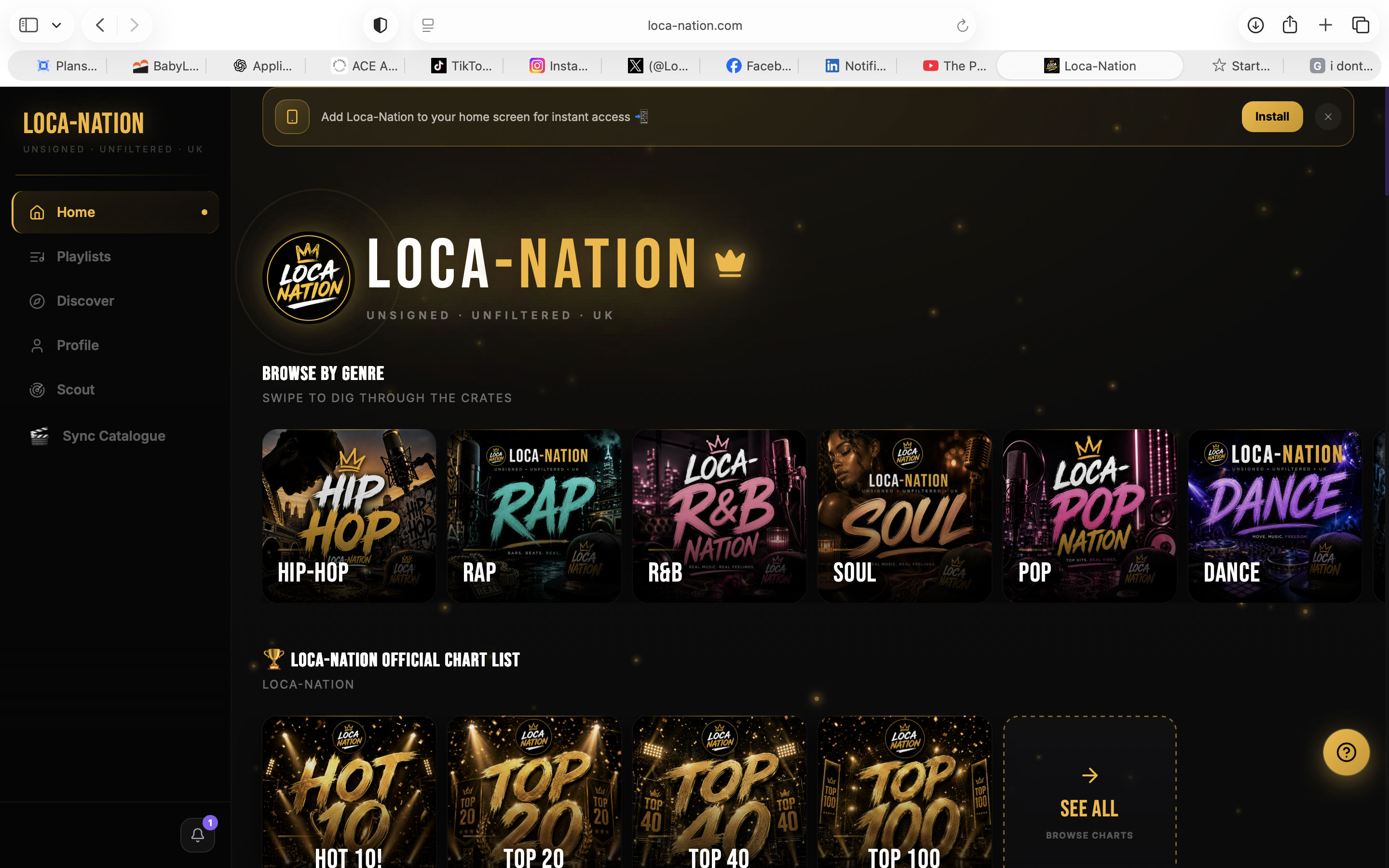
Loca-Nation gives you an artist profile, built-in analytics, and a structured chart journey by local area, region, genre, and national level. That means the growth metrics labels want to see: listener engagement, chart movement, and audience reach get generated in a place industry professionals already watch. The platform also runs a sync licensing catalogue for artists whose tracks might fit film, TV, or ad placements, and a press centre with resources for building the exact promotional materials this article walks through.
Getting started takes minutes: upload your best mastered track, complete your profile with a bio and photos, and start tracking your chart position and listener stats from day one. If you're ready to put your traction where labels are actually looking, start your genre onboarding with Loca-Nation today.
Frequently Asked Questions
How do independent artists get discovered by record labels? Independent artists get discovered mainly through documented streaming growth, playlist adds, live show attendance, and warm introductions from managers, producers, or other artists, not cold blasts to generic label inboxes.
What metrics do labels actually care about most? Monthly listener growth rate, save rate, playlist adds, ticket sales, and top city concentration matter more than a single large but flat listener total, especially for indie labels evaluating trajectory over scale.
How long does it typically take to get signed as an independent artist? Six to twelve months of consistent releasing and metric building typically precedes a serious label conversation for artists actively working their audience, though timelines vary widely by genre and output pace.
Should I submit music to labels before I have a manager? You can pitch labels directly without a manager, but warm introductions through a manager, lawyer, or fellow artist convert at a noticeably higher rate than cold email submissions.
What is the biggest mistake artists make when pitching labels? Sending unfinished or unmastered tracks, incomplete contact information, or a generic pitch that shows no research into the label's actual roster and recent signings.
Sources
- How to Get a Record Label to Notice You — Hypeddit
- How to submit your music to record labels (Noiseyard)
- A&R explained: what they do and how to pitch — DropCue