
The fastest realistic path to an A&R rep is a targeted email to a verified address, built around one streaming link and one sharp credential, sent to someone whose roster actually fits your sound. Expect a low reply rate. Send one polite follow-up after two weeks, then move on to the next name on your list. This guide covers the channels, the verification steps, a working template, and the assets you need ready before you hit send.
TL;DR:
- Verified email contacts yield the highest response rate, but only if the email address is current and correctly sourced from official websites or known domain patterns.
- Building a focused outreach list involves verifying each contact’s current role and affiliation through official label sites, recent press, and LinkedIn before reaching out.
- A short, personalized email highlighting one strong track, a relevant credential, and a specific reason for contact significantly improves your chances of engagement.
- Response rates are low overall, so patience and a single polite follow-up after two weeks are more effective than multiple persistent messages.
- Platforms like Loca-Nation can help generate verifiable chart data and streaming metrics that strengthen outreach credentials for independent artists.
Table of Contents
- Which Channels Actually Get You in Front of an A&R?
- How Do You Find and Verify Current A&R Contacts?
- What Should Your Outreach Email Actually Say?
- How Long Should You Wait Before Following Up?
- What Do A&R Reps Look For in a Pitch?
- What Materials Should You Have Ready Before You Reach Out?
- How Charting and Platform Data Become Outreach Credentials
- Persistence Beats Volume
- Build Your Track Record on Loca-Nation
- Where to Verify Contacts and Keep Learning
- Sources
- FAQ
Which Channels Actually Get You in Front of an A&R?
Not every contact method carries the same odds. A verified email address delivers the highest return because it skips the gatekeepers, but only if the address is current. Direct email to a verified A&R contact with a short pitch and one listening link remains the most effective route, and the bottleneck is almost always finding accurate contact information, not writing the pitch.
Here's how the main channels stack up:
- Direct verified email — the highest conversion when you can confirm the address is current.
- Paid industry databases — speed up discovery but charge a subscription; useful when time matters more than budget.
- Label submission pages — common and free, but heavily filtered and slow to respond.
- Warm referrals — the highest-converting channel by far, though hardest to manufacture.
- LinkedIn or Instagram DMs — a last resort, or a follow-up to a warm intro rather than a cold open.
Submission platforms like Groover or SubmitHub add a filtering layer between you and the A&R, which helps with sync placements and publishing leads but slows down direct label contact. If you're chasing a publishing deal or sync opportunity, a platform submission often makes sense. If you're targeting a specific label A&R whose roster matches your sound, skip the middleman and go direct.
Pro Tip: Before you spend money on a database, check whether the label already lists a current A&R contact on its own site. Half the "verified" databases are just reselling public information.
How Do You Find and Verify Current A&R Contacts?
Stale contact information wastes more outreach than bad songwriting ever will. Work through these steps in order:
- Check the label's official website first, especially any "submit" or "contact" page. Atlantic Records, for example, publishes contact information and submission guidance directly.
- Cross-reference the label's Spotify or Apple Music "About" section and recent press releases to spot who signed the last few artists in your genre.
- Search trade press and label announcement posts for the A&R credited on a recent signing.
- Confirm the person's current title and employer on LinkedIn before you send anything. People move labels often, and a bounced email or a note to someone who left six months ago is a wasted shot.
- Cross-check the email format against the label's known domain pattern if you're inferring rather than confirming an address.
Once you've got a name, tracking outreach in a spreadsheet keeps you from repeating mistakes:
- Name and title
- Label or company
- Verified email
- Date contacted
- Response status
This sounds tedious. It's also the difference between a focused campaign of 15 well-researched contacts and a scattershot list of 200 addresses, half of which bounce.
What Should Your Outreach Email Actually Say?
Keep it short. A concise pitch of roughly 100 to 150 words, one streaming link, and a clear reason for reaching out beats a long bio every time. A&R inboxes are crowded, and the people reading them decide in seconds whether to keep scrolling.
Structure it like this:
- One sentence identifying who you are and why you're contacting this specific person (not "to whom it may concern").
- One streaming link, ideally your strongest single track, not a full discography.
- One credential: a chart position, a notable support slot, a placement, or a real engagement number.
- A short, low-pressure close. No demands, no deadlines.
A single verifiable metric, like a chart position or a notable support slot, makes a short pitch far more convincing than vague promises about future potential.
A subject line like "New single, [genre] fans of [comparable artist]" works better than "Please listen to my music." Specificity signals you did your homework.
Sample email:
Subject: Indie pop single, fans of [comparable artist]
Hi [Name], I'm [Artist Name], an independent [genre] artist. Given your work with [recent signing], I thought "[Track Title]" might be a fit. It's currently charting on Loca-Nation's regional [genre] board: [link]. Would love your thoughts.
A DM version trims this to a single line: name, one link, one reason it's relevant to their roster. Send from a professional email address, not a shared band inbox with a joke handle, and use link shortening only for private or unlisted tracks so you can track opens.
How Long Should You Wait Before Following Up?
Patience matters more than persistence here. Wait about two weeks, send one brief, polite follow-up, then stop. A third message rarely helps and can mark you as someone who doesn't read a room.
Response rates run low across the board. Reply rates at major labels are typically low, while independent labels and publishing-focused A&Rs tend to respond more often, though still far from most of the time. That's simply the math of a crowded inbox, not a reflection of your music.
- If someone replies with interest, respond within a day and have your full EPK ready to send immediately.
- If you're tracking email opens or link clicks, prioritize follow-ups with people who engaged but didn't reply.
- A polite decline is still useful data. Note it in your spreadsheet and move to the next name.
Two weeks feels long when you're refreshing your inbox, but it gives a busy A&R enough runway to actually listen.
What Do A&R Reps Look For in a Pitch?
A&R reps are scanning for a small set of signals, and putting them up front saves everyone time. Fit with roster is one of the biggest filters: reps and labels tend to sign artists who sound adjacent to what they've already signed, so name-drop that connection early if it's genuine.
Beyond fit, here's what tends to move the needle:
- One standout track that proves you can finish a song, not a demo folder of half-ideas.
- A clear roster connection, referencing a recent signing or artist in a similar lane.
- Real engagement numbers, such as monthly listeners, recent growth, or playlist adds.
- Live performance credibility, including a recent gig, tour support slot, or festival booking.
- Professionalism, meaning a manager or point of contact if you have one, and a pitch free of typos and vague claims.
Pro Tip: Genre-fit targeting beats celebrity-name targeting. Aim for the A&R signing artists next to your sound rather than the biggest name at the biggest label.
What Materials Should You Have Ready Before You Reach Out?
Nothing kills momentum faster than an interested reply followed by twenty minutes of scrambling for links. Build this kit before you send your first email:
- One streaming link to your best track, hosted on a stable URL you won't need to update later.
- A one-page EPK with a short bio (one paragraph), one high-quality promo photo, social handles, and a one-sentence highlight reel of your biggest accomplishment to date.
- An analytics snapshot showing current monthly listeners, top territories, and any recent growth spike worth mentioning.
- A short live clip, even a phone-recorded one, if it shows real performance ability.
- Clear contact details, including a professional email and, if applicable, manager information.
Getting noticed by labels usually comes down to having these materials ready before the ask, not after.
How Charting and Platform Data Become Outreach Credentials
A chart position is easier to verify than a vague claim about "buzz." Listener-driven charts give independent artists something concrete to cite, especially useful when you don't have a manager or label connection opening doors for you.
Practical steps to turn platform activity into a credential:
- Upload your best track and compete in your genre and regional chart.
- Track your position over a few weeks rather than citing a single day's snapshot.
- Export chart history and engagement analytics to reference directly in your pitch.
- Mention the specific chart and rank, not a vague "trending" claim.
A line mentioning a specific current regional hip-hop chart rank reads as verifiable. It gives the A&R something to check in ten seconds.
Persistence Beats Volume
Mass-blasting fifty A&Rs with the same generic email rarely works, and it usually shows. What actually moves the needle is a smaller list, researched carefully, contacted once, followed up once, and improved between cycles based on what you learn.
Treat every outreach round as a chance to sharpen your metrics and your pitch. Chart data, streaming growth, or a new placement are exactly the kind of evidence that makes round two stronger than round one.
— Jason
Build Your Track Record on Loca-Nation
Most of the credentials A&R reps respond to (chart rank, listener growth, playlist momentum) take time to build on your own, especially without a label or manager pushing your numbers. Loca-Nation gives independent artists a direct route to that evidence: upload your best track, compete in your genre and regional chart, and pull exportable analytics you can drop straight into an outreach email.
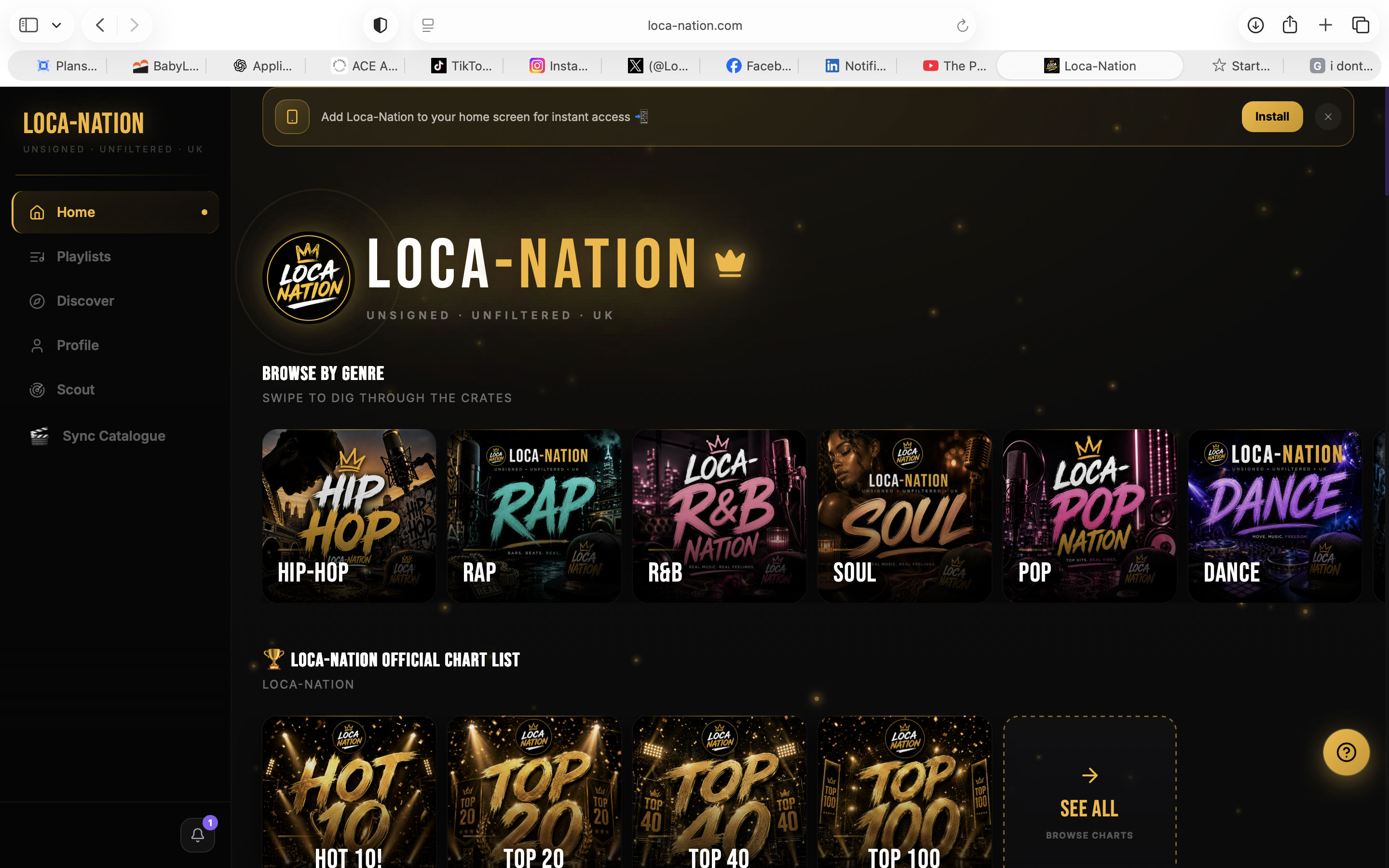
The platform is free for artists to join, and it puts your music in front of industry professionals scouting for new signings, without requiring a warm introduction first. If you're building your outreach kit, start by creating a profile on Loca-Nation and uploading your strongest single. A verified chart position beats a vague claim about buzz every time you send an email.
Where to Verify Contacts and Keep Learning
Check label sites directly, like Atlantic Records' contact page, before paying for a database. For broader outreach tactics, see how to contact music supervisors and how to get noticed by labels.
Sources
- How to Contact A&R Reps in 2026 (The Complete Guide) - Major Contacts
- A&R explained: what they do and how to pitch (2026) | DropCue
- Submit Music to A&Rs: How to Get in Touch with A&Rs (Groover blog)
- Interview / industry perspective on independence and discovery | NPR
FAQ
What Do A&R Reps Do?
A&R reps scout and develop talent, splitting roughly into label A&R, who sign and shape an artist's recorded output, and publishing A&R, who focus on songwriting and catalog deals rather than the artist's overall career.
How Can I Contact Atlantic Records?
Atlantic Records publishes a contact page with submission guidance, and that page is a more reliable starting point than a third-party database, since labels update their own pages first.
Can You Contact Record Labels Directly?
Yes. Many labels list submission pages or general contact addresses, though a verified individual email to the right A&R for your genre typically gets a faster response than a general inbox.
How Can I Submit My Music to A&Rs?
Send a concise email of about 100 to 150 words with one streaming link and one credential to a verified contact, or submit through a platform like Groover if you don't yet have a direct contact confirmed.